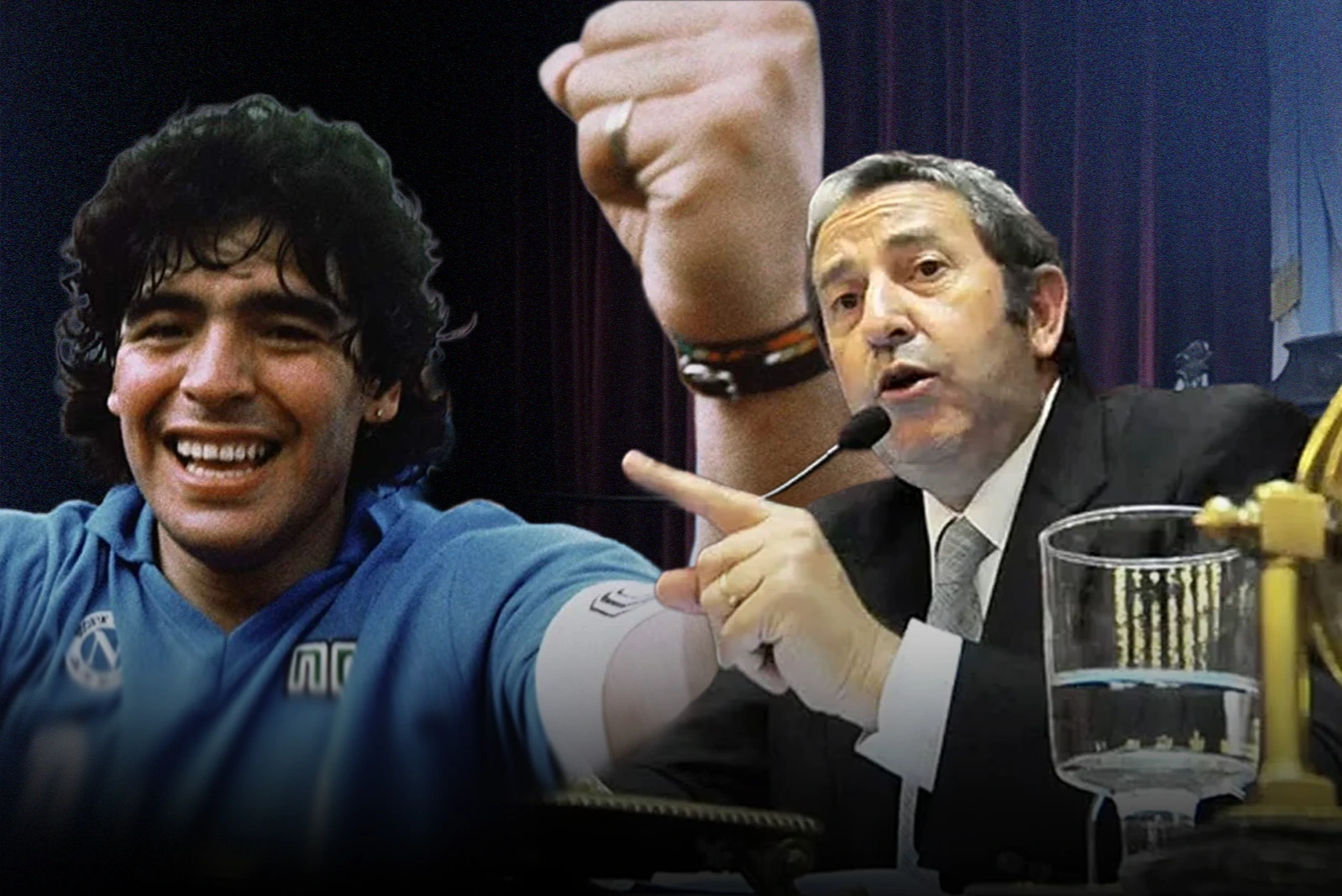
In television statements, Maradona made no secret of his excitement when the Senate rejected the bill.
Nuevo
Agregar La Derecha Diario en
Compartir:
In the midst of one of the most tense political moments in recent Argentine history, Diego Armando Maradona surprised with a strong public definition after the Senate vote that stopped the delusional mobile withholding scheme promoted by the government of the corrupt and convicted Cristina Kirchner in 2008.
The former captain of the Argentine national team did not hide his emotion when then-vice-president Julio Cobos cast the vote that ended up rejecting the measure in Congress.
For Maradona, that decision represented a direct response to the social climate that existed in the country after months of conflict between the government and the agricultural sector, supported by the majority of society.
Diego Maradona and Julio Cobos.
In television statements made in July of that year, the soccer idol recounted how he experienced that political moment: “I shouted as if it were a goal. I shouted it for my country, for my flag, because since the day before people had said enough,” Maradona
said.
The phrase reflected the impact of the discussion of the so-called Resolution 125, a measure that had generated a profound political, economic and social crisis for several months.
Although the former soccer player acknowledged that he had accompanied the presidential election of Cristina Fernández de Kirchner, he also expressed criticism of the direction the administration was taking: “I was doing everything backwards”.
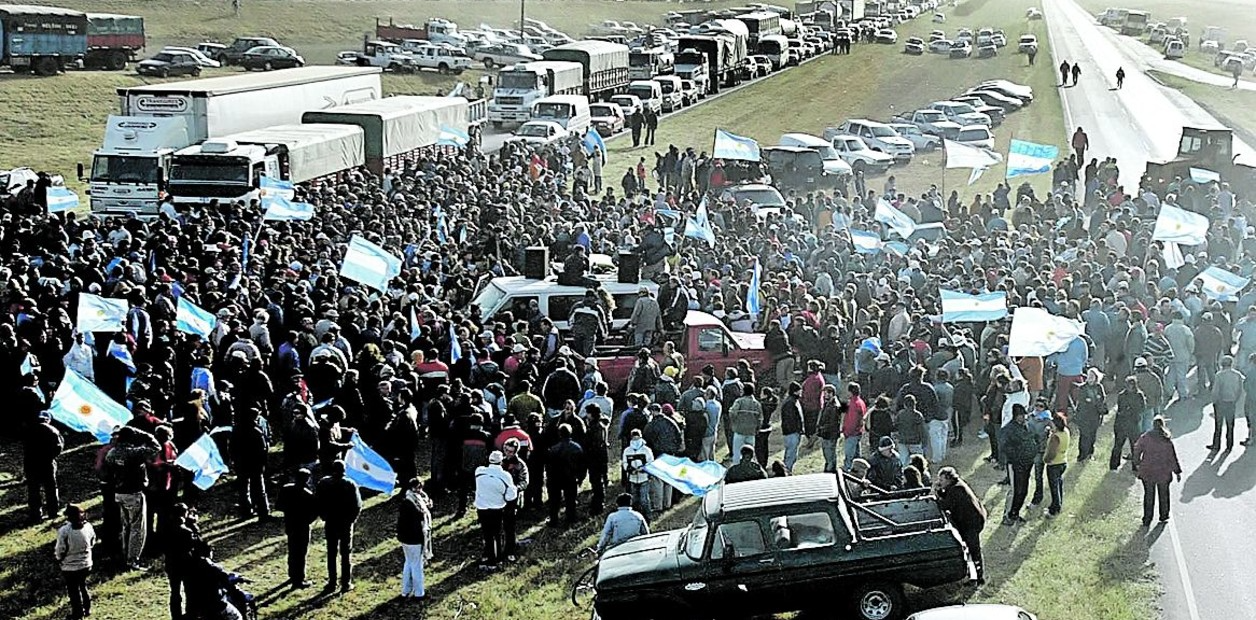
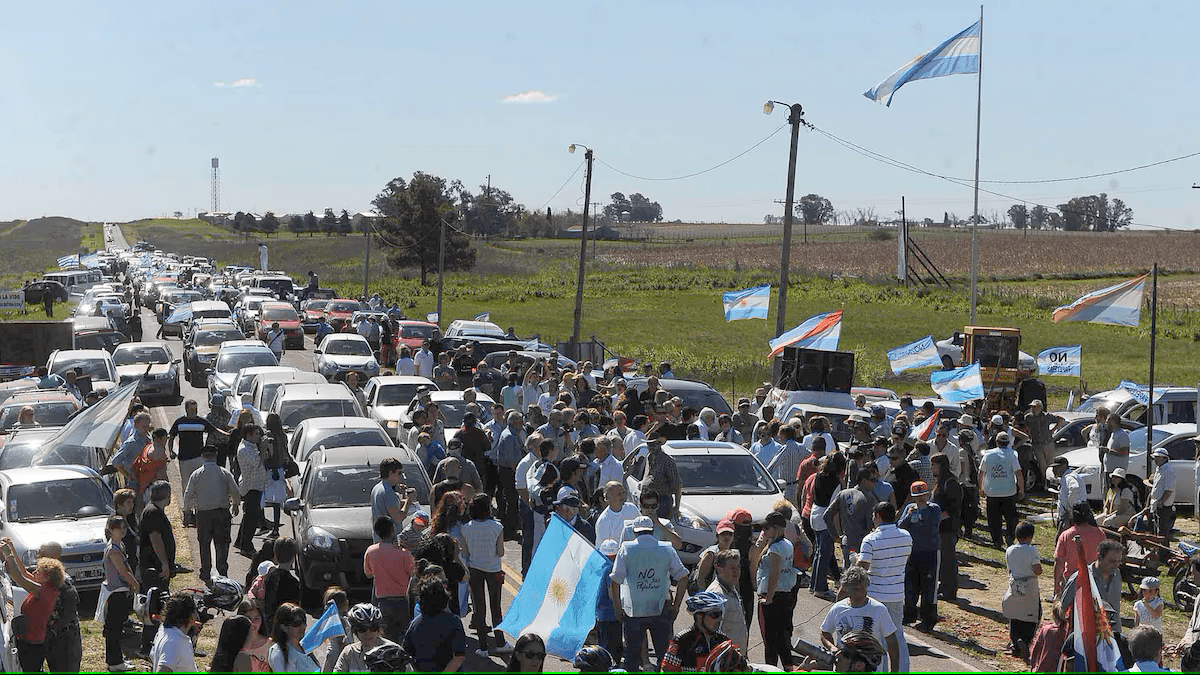
Protests for the 125.
The controversial Resolution 125
The conflict that resulted in that historic vote began on March 11, 2008, when the then Minister of Economy Martín Lousteau announced a new scheme of withholding agricultural exports through
Resolution 125.
The system introduced a mobile retention mechanism for agricultural products such as soybeans, corn and wheat. Unlike fixed withholding, the tax percentage varied automatically depending on the international price of
grains.
Using a formula, the higher the value of commodities in the international market, the greater the proportion of exports that remained in the hands of the State. The official objective was to increase tax collection in a context of rising international prices
.
However, the measure generated an immediate reaction in the agricultural sector and society. Rural producers began a strike that included road blockades and protests in different parts of the country. The conflict lasted 129 days and turned into one of the most profound political crises of the
time. Protests for the 125.
Criticism of Resolution 125
The mobile scheme of Resolution 125 prevented producers from knowing in advance what their profit margin would be when harvesting, making it difficult to
plan future campaigns.
For many small and medium-sized producers in the interior of the country, the combination of withholding, logistics costs and operating expenses could reduce the profit margin to minimum levels or even to zero.
Added to this was another recurring criticism of the rural sector: while the State captured a large part of the income generated by rising international prices, it did not absorb losses when production costs increased or when climatic factors affected crops.
At the peak of the 2008 price cycle, the mobile withholding scheme could push the tax burden to levels above 44% and even approach 50%, which was described by rural leaders as an authoritarian confiscation.
The conflict ended up being resolved in Congress, where the bill was approved in the Chamber of Deputies but was tied in the Senate. The definition came with the recalled "no positive vote" of Cobos, who decided to reject the measure and put an end to the attempt to apply the mobile withholding scheme