The Israel Defense Forces (IDF) confirmed on Thursday a new attack against facilities linked to the Iranian regime's nuclear program.
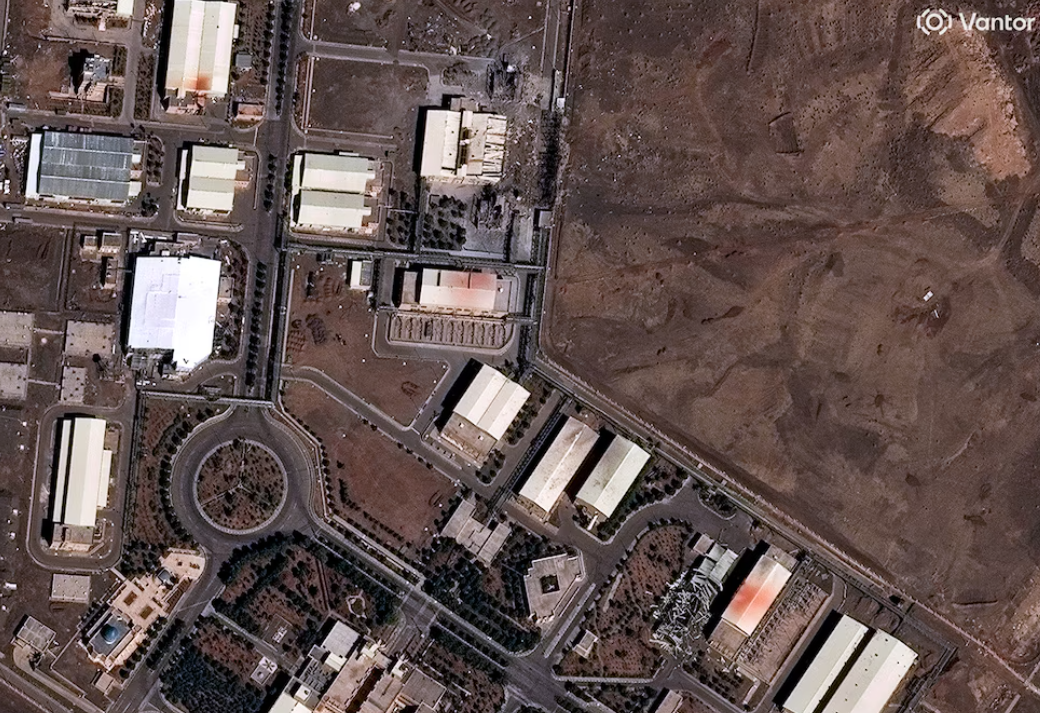
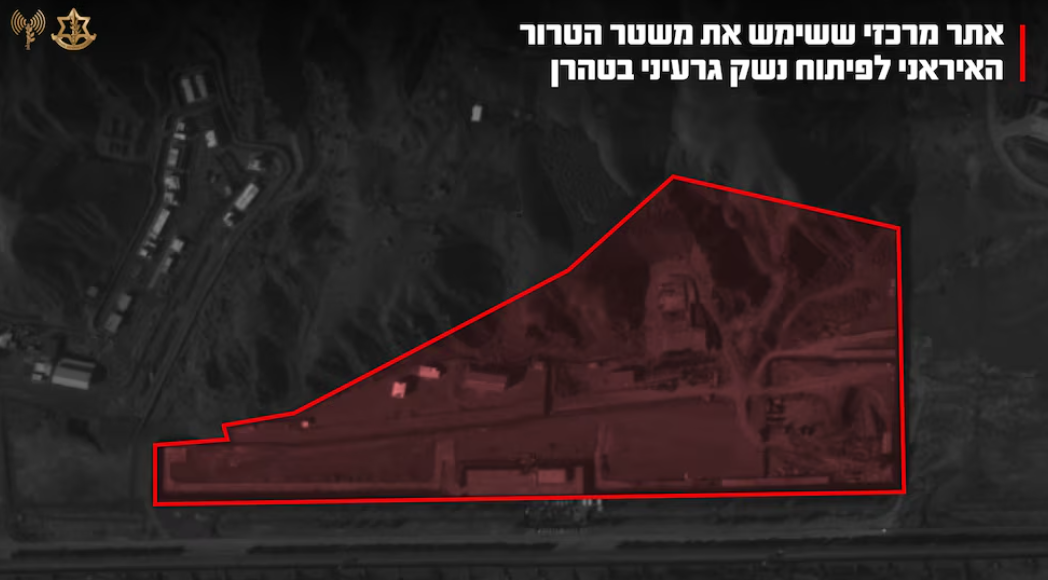
According to the official statement from the Israeli army, the operation aimed at the Taleghan complex, a facility located near Tehran that, according to Israeli military intelligence, was used to advance capabilities related to the development of nuclear weapons.
“The Israeli Air Force, acting with precise IDF intelligence, attacked an additional site of the Iranian nuclear program,” the army said in its statement.
The offensive is part of the joint operation that Israel is carrying out with the United States to neutralize the Iranian nuclear threat.
The Taleghan complex and the secret nuclear project
The attacked complex is located in the Parchin military zone, southeast of
Tehran.
According to the Institute for Science and International Security analysis center, this facility would have been used to carry out covert military activities related to the Iranian nuclear program.
According to Israel, the place was linked to the secret Amad project, a nuclear weapons development program that Iran would have carried out during the 2000s.
The IDF maintains that advanced explosives and sensitive experiments related to nuclear weapons were being developed in this complex.
The Israeli army also indicated that the Iranian regime had recently begun rebuilding the site
after previous attacks.
Israel also hits drone infrastructure In addition to the
attack on the nuclear complex, Israel reported that in recent days it destroyed much of the Iranian regime's drone infrastructure
.
According to the IDF, the operations made it possible to eliminate:
more than 250 drones
multiple unmanned aerial vehicle launchers
several launch sites used for attacks against Israel
.
In one of the recent operations, Israeli forces detected Iranian soldiers preparing drones for
an immediate attack.
After identifying the threat, Israeli aircraft destroyed the launcher and neutralized the personnel involved.
These actions are part of a strategy aimed at reducing the Iranian regime's offensive capacity.
Operation to Dismantle the Nuclear Threat
Attacks on Iranian nuclear facilities have intensified since February 28, when Israel and the United States launched a joint offensive against
the regime's strategic objectives.
The stated objective of the operation is to eliminate what Israel describes as an existential threat derived from the Iranian nuclear and ballistic missile program.
Israeli officials maintain that Iran accelerated its efforts to obtain a nuclear weapon in recent years.
Tehran, for its part, denies developing nuclear weapons.
The war is expanding on multiple fronts.
The conflict has also spread to other regional scenarios
.
Iran responded by launching missiles and drones against Israeli territory, with warning sirens going off in several cities, including Jerusalem.
In addition, the terrorist group Hezbollah launched nearly 200 rockets at northern Israel overnight.
Faced with this escalation, the Israeli Defense Minister, Israel Katz, warned that if the government of Lebanon does not stop Hezbollah's attacks, Israel could expand its military operations in that territory.
Impact on the global energy market The
war also caused a severe
international energy crisis.
The conflict affected transit through the strategic Strait of Hormuz, where approximately one-fifth of the world's oil circulated before the conflict.
The International Energy Agency described the situation as the biggest oil supply disturbance in the history of the global energy market.
World production fell by at least 10 million barrels a day, while the price of Brent oil momentarily exceeded $100 per barrel.