Polish authorities arrested a member of their armed forces accused of collaborating with Russian intelligence services, in a new case that once again highlights the growing threat of espionage in Eastern Europe in the context of the war in Ukraine.
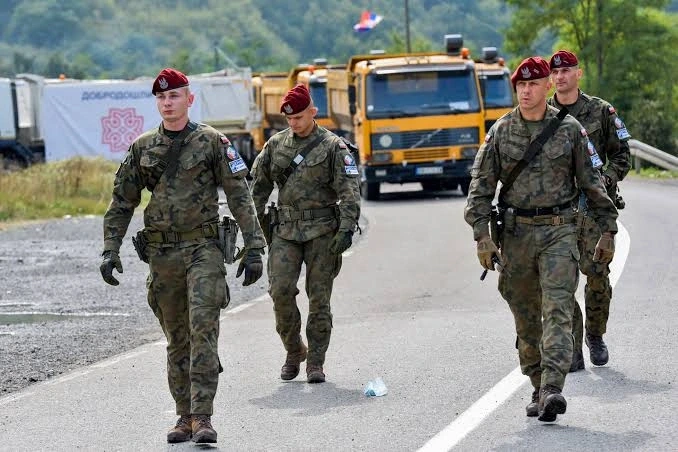
The suspect, identified as Jarosław K., was part of the Territorial Defense and was arrested after an investigation carried out by counterintelligence services.
According to the prosecution, the military man allegedly participated in espionage activities for Russia between 2023 and 2024, facing serious charges under Polish criminal law.
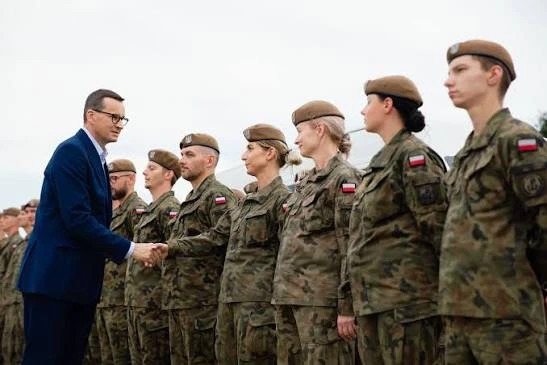
The Polish Prime Minister greeting soldiers of the Polish army
According to the investigations, the defendant had access to sensitive information and was acting as a radio operator, allowing him to handle data considered restricted
.
Some sources even indicate that he was recruited by Russian agents before formally joining the armed forces, which further aggravates the situation.
After his arrest, the soldier was immediately expelled from service, in a clear sign of the tightening of internal security policies.
The case is treated as a matter of the utmost gravity, in a country that has become a key player in the NATO defense scheme against Russia.
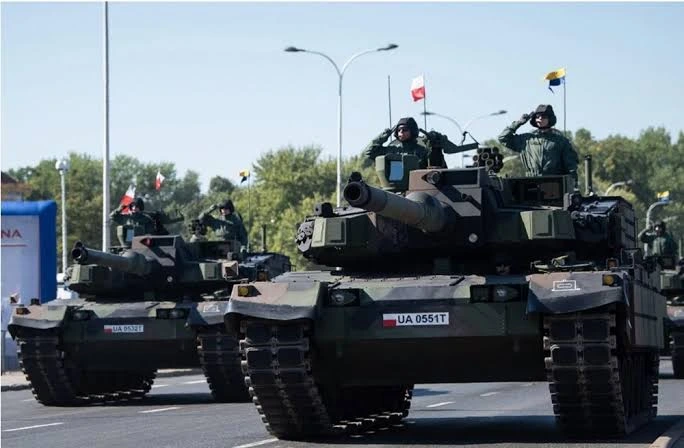
Battle tanks of the Polish Army
This episode is not an isolated one. In recent months, Poland has intensified investigations into possible infiltrations and spy networks linked to the Kremlin, in a context where the war in Ukraine has also transferred the conflict to the field of intelligence and hybrid warfare
.
From a critical perspective, the case reflects the extent to which Russia seeks to influence and penetrate sensitive structures in European countries, exploiting internal weaknesses or recruitment processes.
The use of undercover agents within the armed forces themselves represents one of the most worrying scenarios for regional security.
At the same time, the episode reinforces the position of Eastern European countries, which for years have been warning about the advance of Russian influence at different levels. For Poland, which maintains a firm position vis-a-vis Moscow, such incidents only justify the tightening of its defense and counterintelligence policies
.
In an increasingly tense international scenario, espionage is once again occupying a central place as a tool of power.
The arrest of this soldier not only exposes a specific vulnerability, but it also highlights the magnitude of a dispute that is no longer limited to the battlefield, but extends to all spheres of the State.