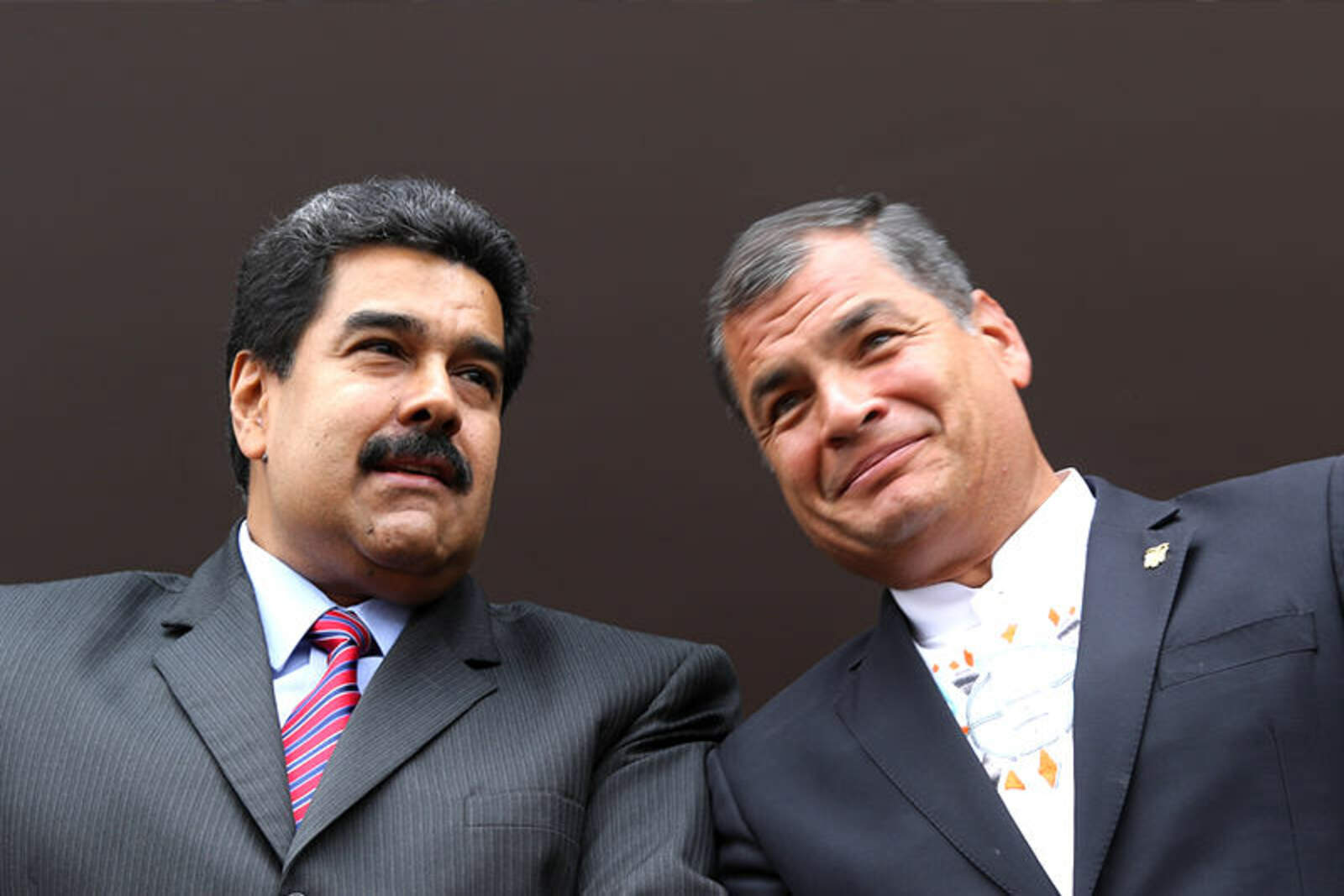

The government of former dictator Rafael Correa, influenced by Bolivarian socialism, left a profound impact on Ecuador, marking the beginning of a security crisis that favored the rise of narco-terrorism in the country.
During his term of office (2007-2017), Correa implemented a series of policies and decisions that, according to critics and specialists, facilitated the development of drug trafficking, weakened the institutions of democracy and generated a context of impunity that still persists.
The relationship with the United States
In 2009, Correa ordered the closure of the US base in Manta, which since 1998 had been a strategic point for anti-drug operations in
the region.This infrastructure was key to the country's security, contributing to the detection of drug trafficking routes and preventing the infiltration of FARC, the left-wing terrorist organization in Colombia, into Ecuadorian territory.
However, the dismantling of the base marked a radical change in Ecuador's international cooperation policy, seriously damaging its capacity to confront organized crime.
Correa's decision was not an isolated one. Since coming to power, he stood out for confronting the then Colombian president Álvaro Uribe, whose government made significant progress against
the FARC.Instead of collaborating in the fight against narco-terrorism, Correa adopted a position that, according to documents and testimonies, was marked by alleged links with the FARC, who would have financed his first presidential campaign with contributions that reached $500,000.
Policies that weakened security The
Correa government also adopted measures that weakened the internal security framework. In 2009, the socialist dictator promoted a process of "pacification" with gangs such as the Latin Kings and Los Ñetas, which he described as "legitimate social organizations”. These groups were later linked to drug trafficking
.In addition, Correa issued Decree 1440, which allowed the mass release of people convicted of drug trafficking.