Abelardo's model
De la Espriella's campaign was centered on a clear and forceful agenda, focusing on restoring order, economic growth, and the fight against drug trafficking.
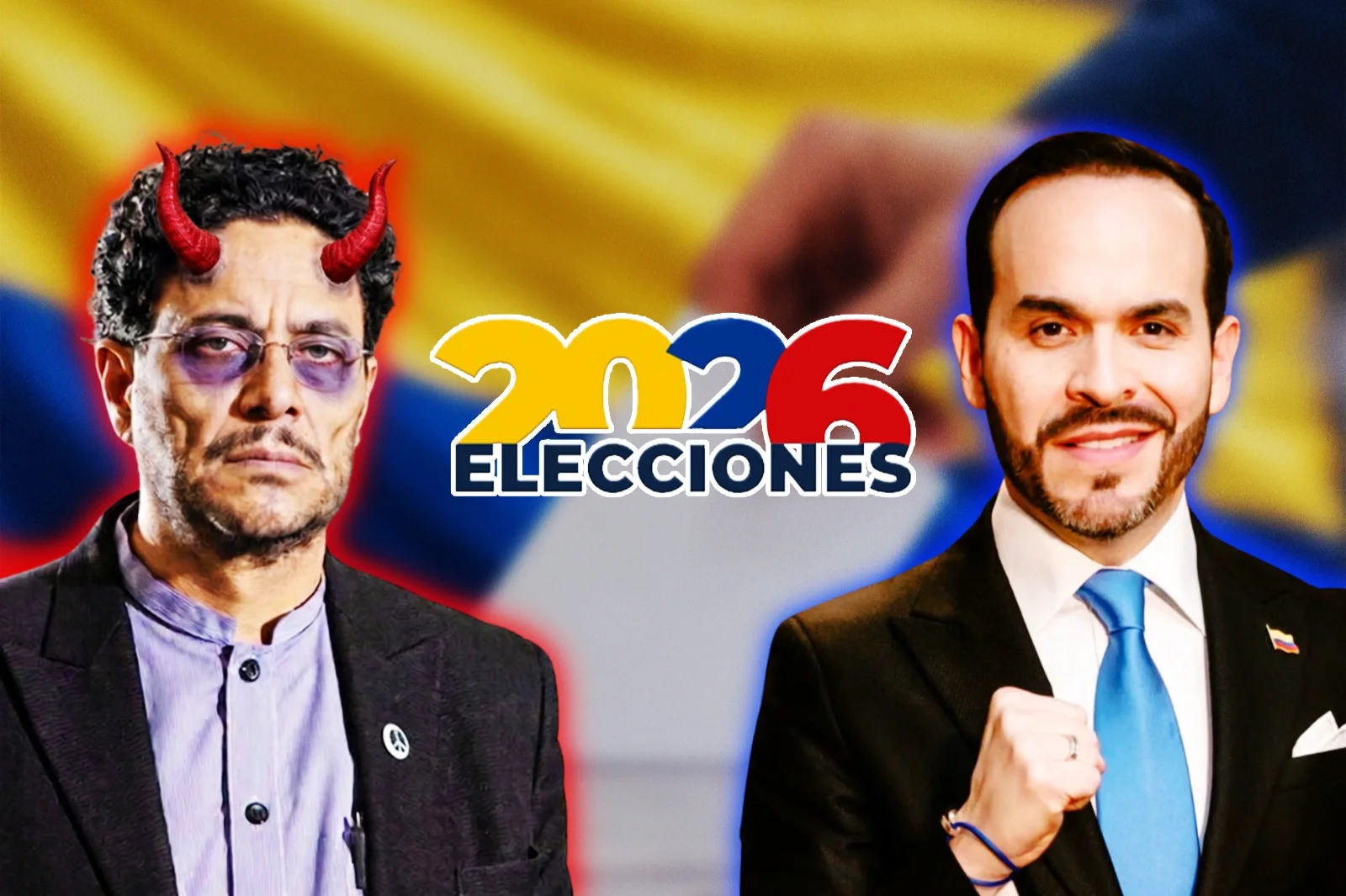

The right-wing candidate secured first place with a clear lead over the communist establishment.
De la Espriella's campaign was centered on a clear and forceful agenda, focusing on restoring order, economic growth, and the fight against drug trafficking.






The right-wing candidate Abelardo de la Espriella won this Sunday in the first round of the presidential elections in Colombia, consolidating himself as the main alternative for change against the communist establishment.
With 90% of the polling stations counted, the candidate from the Defensores de la Patria party achieved 43.77% of the votes, surpassing the far-left candidate from the Pacto Histórico, Iván Cepeda, who obtained 41.08%.
The results, released by the National Registry, confirm a scenario of high political polarization and leave the presidential definition open for the runoff on June 21. The day recorded a participation rate of 51%, in a key election for the country's future.

The most relevant political fact was De la Espriella's clear leadership, as he managed to become the most voted candidate, capitalizing on the discontent with the current management of Gustavo Petro and positioning himself as the main reference for a change of direction in Colombia.
In contrast, Cepeda, representative of the continuity of the leftist model promoted by the outgoing government, was relegated to second place despite the massive official apparatus.

Among his main proposals are a “hardline” security plan against organized crime, corruption, the construction of mega-prisons, and strengthening security forces to combat illegal structures.
On the economic front, the candidate proposes an ambitious program for sustained growth, with tax reductions to attract investments, support for the private sector, and modernization of the State. He also suggests cutting the size of the state apparatus and eliminating inefficient bureaucratic structures to free up resources.
On the other side, the communist Cepeda proposes deepening a failed model based on greater state intervention, tax increases, and negotiations with criminal groups, which represents the continuity of policies that have not managed to resolve the structural problems of the country.
With two competing models for the country, one oriented towards order, investment, and growth, and the other centered on communism, Colombia is heading towards an electoral definition that will not only mark its political future but also its positioning in the region.



