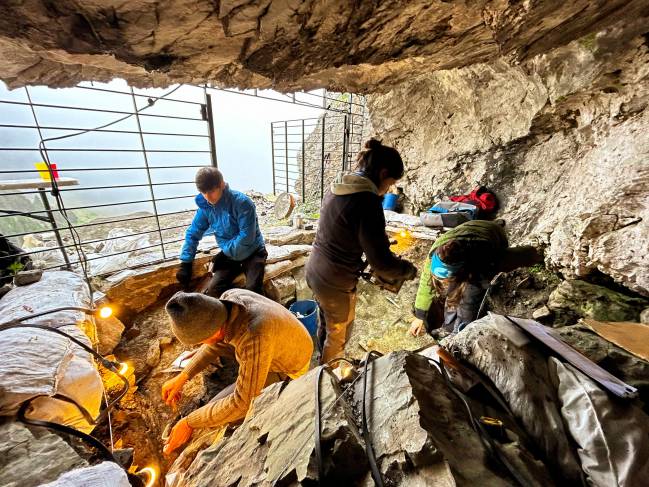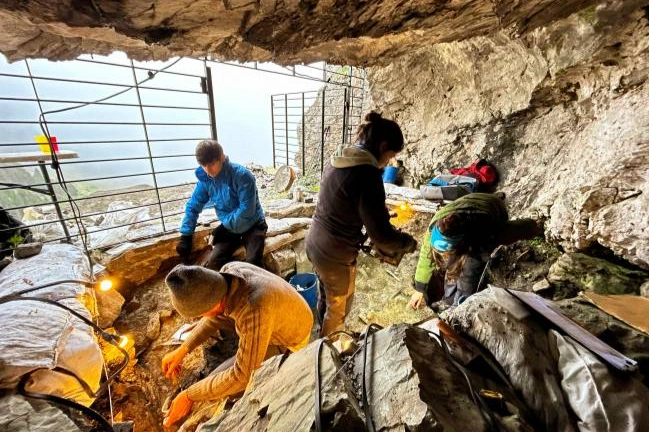

Archaeologists from the University of Murcia have found remains of a Roman temple in Cerro de los Santos, in Montealegre del Castillo (Albacete). The researchers have located and determined the precise location of a temple with an Italic plan, built at the end of the 1st century BC, which was only known from a drawing of excavations carried out in the 19th century.
A team led by Professor Sebastián Ramallo, a professor of Archaeology at the University of Murcia, has located and determined the precise location of a temple with an Italic plan, built at the end of the 1st century BC, at the site of Cerro de los Santos (province of Albacete), one of the most emblematic sites of Iberian culture.
The first excavations at this site date back to 1870 and are intertwined with the origins of archaeology as a scientific discipline in Spain, the researchers point out. The archaeologists have specified the dimensions of the building, as well as its orientation, construction characteristics, and state of preservation of a temple that was only known from a drawing of excavations carried out in the 19th century, and which was believed to have been destroyed shortly after its exhumation.
Alongside direct work at the Cerro itself, where archaeological test pits have also been conducted to analyze the different layers of soil and the evolutionary process of the site, systematic prospecting of the entire territory has been carried out to establish the degree of relationship between the sanctuary and the Iberian and Roman settlements with their surroundings. The team from the University of Murcia, which also includes the director of the Archaeological Museum of Caravaca, Francisco Brotóns, and the director of the Museum of Albacete, Rubí Sanz, resumed investigations at this important site at the end of 2013, after several decades of archaeological inactivity.