Private reports and those from the BCRA indicated that the real exchange rate returned to 2017 levels thanks to exchange rate stability, the energy surplus, and the economic strategy promoted by Milei's government.
To ensure that this appreciation does not affect competitiveness, the Government of Javier Milei has advanced in the reduction of withholdings and the elimination of export duties for key sectors such as wheat, corn, sunflower, soybean, and the automotive industry.
This is a bold response to the fact that taxes on foreign trade represented a suffocating 1.65% of GDP, a figure much higher than that of regional competitors like Brazil or Chile.
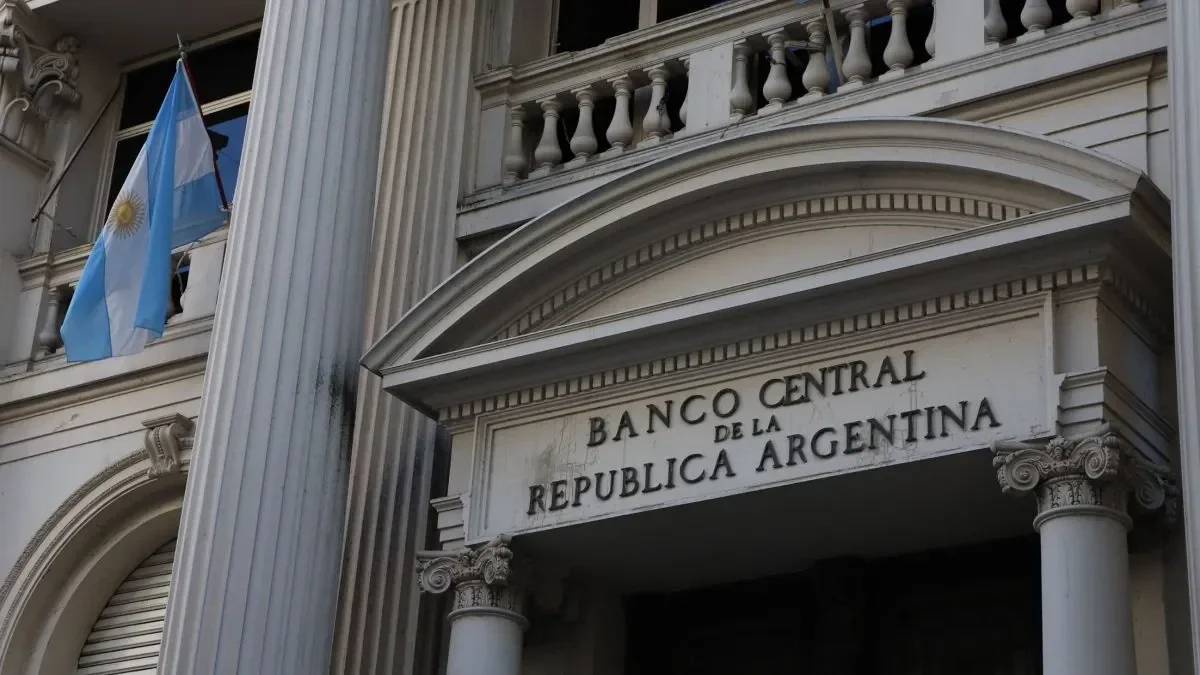
Central Bank of the Argentine Republic
Finally, the patriotic management of public accounts allows Argentina, unlike 2017, to face this process with a growing energy sector surplus and an exceptional grain harvest, factors that will strengthen the current account to close 2026 with a positive balance.
Despite attacks from sectors warning of a supposed exchange rate lag, the Government defends that the current situation responds to structural conditions and not to imbalances, maintaining the cepo prudently but progressively freeing foreign trade operations to facilitate investment. The path to economic freedom is already a tangible reality in the value of our peso.
The Argentine economy is experiencing a historic milestone under the administration of Javier Milei. In recent months, the Argentine peso has achieved unprecedented strength, reaching levels not seen since 2017. This remarkable recovery is the direct result of a policy of exchange rate stability, strategic interventions, and a model that prioritizes the inflow of genuine foreign currency through market freedom and the promotion of exports.
In general terms, the consolidation of the Super Peso is supported by compelling figures provided by leading market analysts. According to the consulting firm LCG, exchange rate calm is total: “the depreciation of the official exchange rate was only 0.8% (comparing monthly averages) and a similar variation in the CCL of 0.3%”.
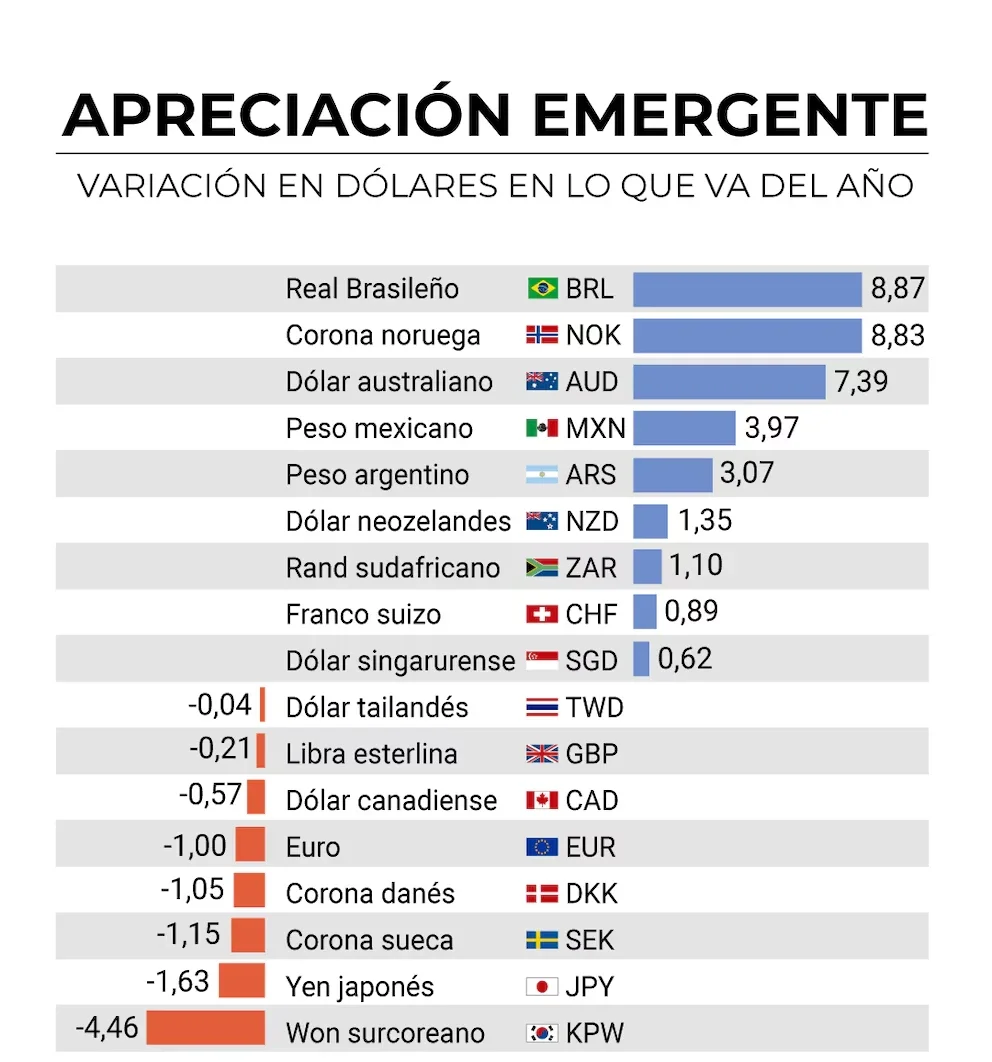
Dollar variation in 2026 / Infobae
Even more impressive is the evolution of the ITCRM (Multilateral Real Exchange Rate Index), which accumulated an appreciation of 0.4% in the month, climbing to 6.4% when compared to the first quarter and a robust 11.3% compared to the averages of December of the previous year. This demonstrates a sustained real appreciation against an inflation that, although inherited, has not managed to break the firmness of the local currency.
Diving into the technical details of this economic victory, the report from IOL confirms that the appreciation trend remained firm throughout the first half of 2026. With accumulated inflation exceeding 13%, the official dollar lost 3.7% of its nominal value, which translates into an increasingly strong and respected peso.
The Central Bank (BCRA) itself, under the leadership of Santiago Bausili, confirmed in its monetary policy report that the TCRM returned to levels similar to those of 2017, an era prior to past exchange rate crises, with the difference that today we have a structural energy surplus thanks to the development of Vaca Muerta.
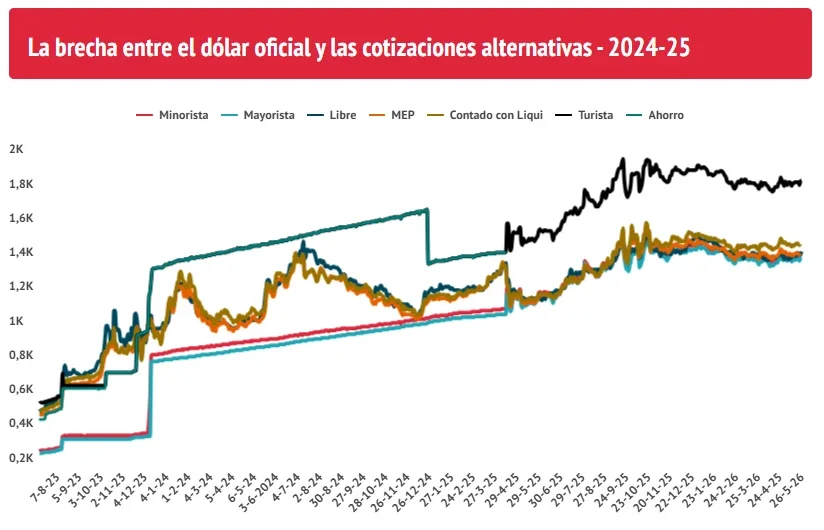
Gap between the official dollar and alternative quotes
The strategy designed by the Minister of Economy, Luis Caputo, and the president of the BCRA, Santiago Bausili, has been surgical. Through what some call a “dirty float”, the Government has used targeted interventions and the absorption of pesos to avoid sharp jumps. Delphos Investment highlights that the current regime combines “spot market sales and futures operations”, achieving that the official dollar drops from 1457∗∗to∗∗1403 so far this year, while the CCL remains stable near $1487.