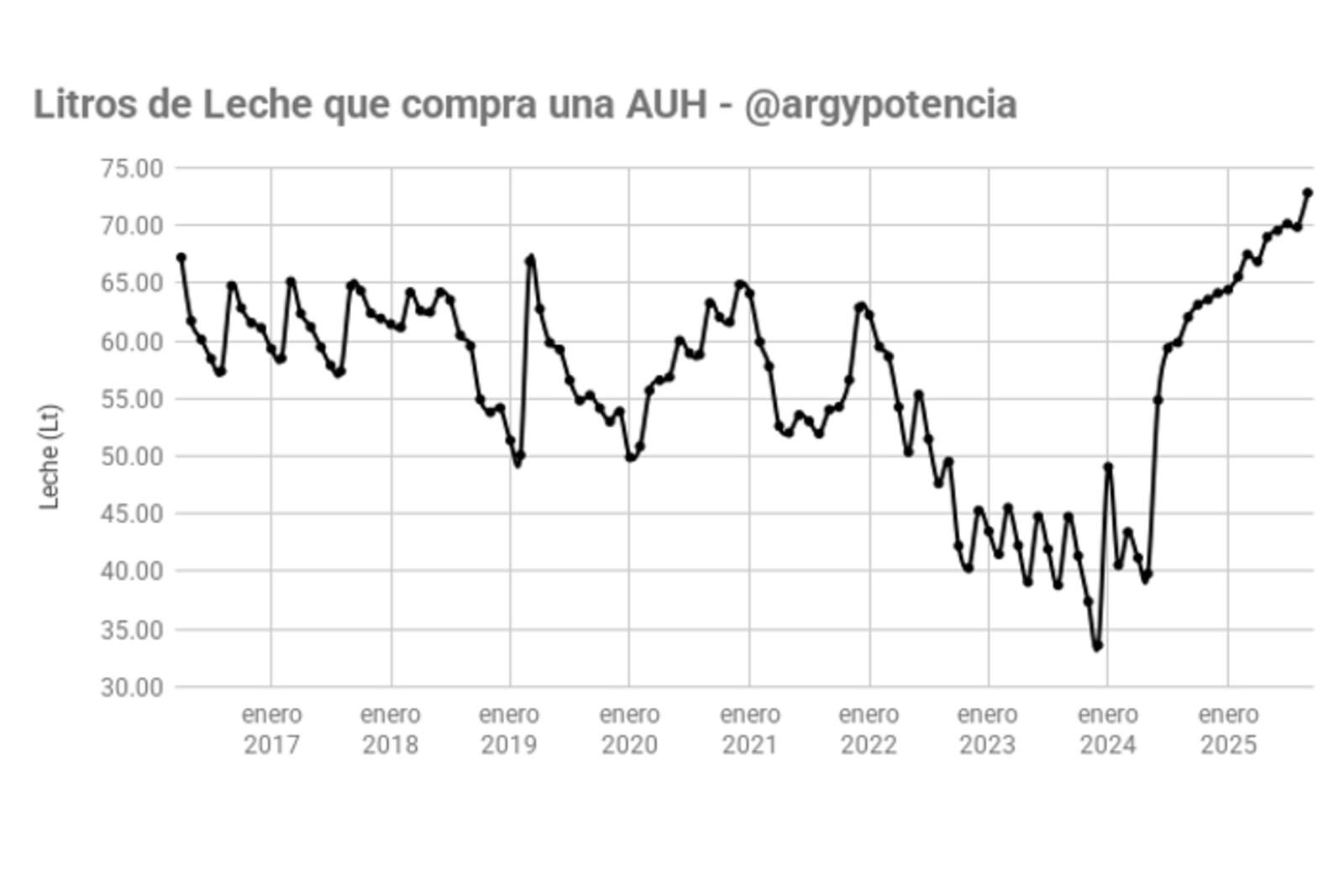
All-time high for the purchasing power of a Universal Child Allowance (AUH) in liters of milk. One AUH buys 72.83 liters of milk
Nuevo
Agregar La Derecha Diario en
Compartir:
In September, the purchasing power of the Universal Child Allowance (AUH) reached a historic record: with the monthly amount, it is possible to buy 72.83 liters of milk, the highest recorded since the program was created. This figure comes from the evolution of the official benefit amount and the price of milk published by INDEC, and reflects how Javier Milei's government's economic direction is beginning to show concrete results in people's lives.
Gráfico publicado en la red social X
Meanwhile, during the Kirchnerism years, patches and inflation destroyed any income, today the reality is different: a social policy without intermediaries and without clientelism can fulfill its real objective. The AUH once again serves its intended purpose, ensuring that aid reaches families directly, without party operatives or bureaucrats enriching themselves in the process.
The Ministry of Human Capital led by Sandra Pettovello set this course from day one: social assistance for Argentines impoverished by years of decline, but in a transparent and efficient manner.
Ministra de Capital Humano, Sandra Pettovello.
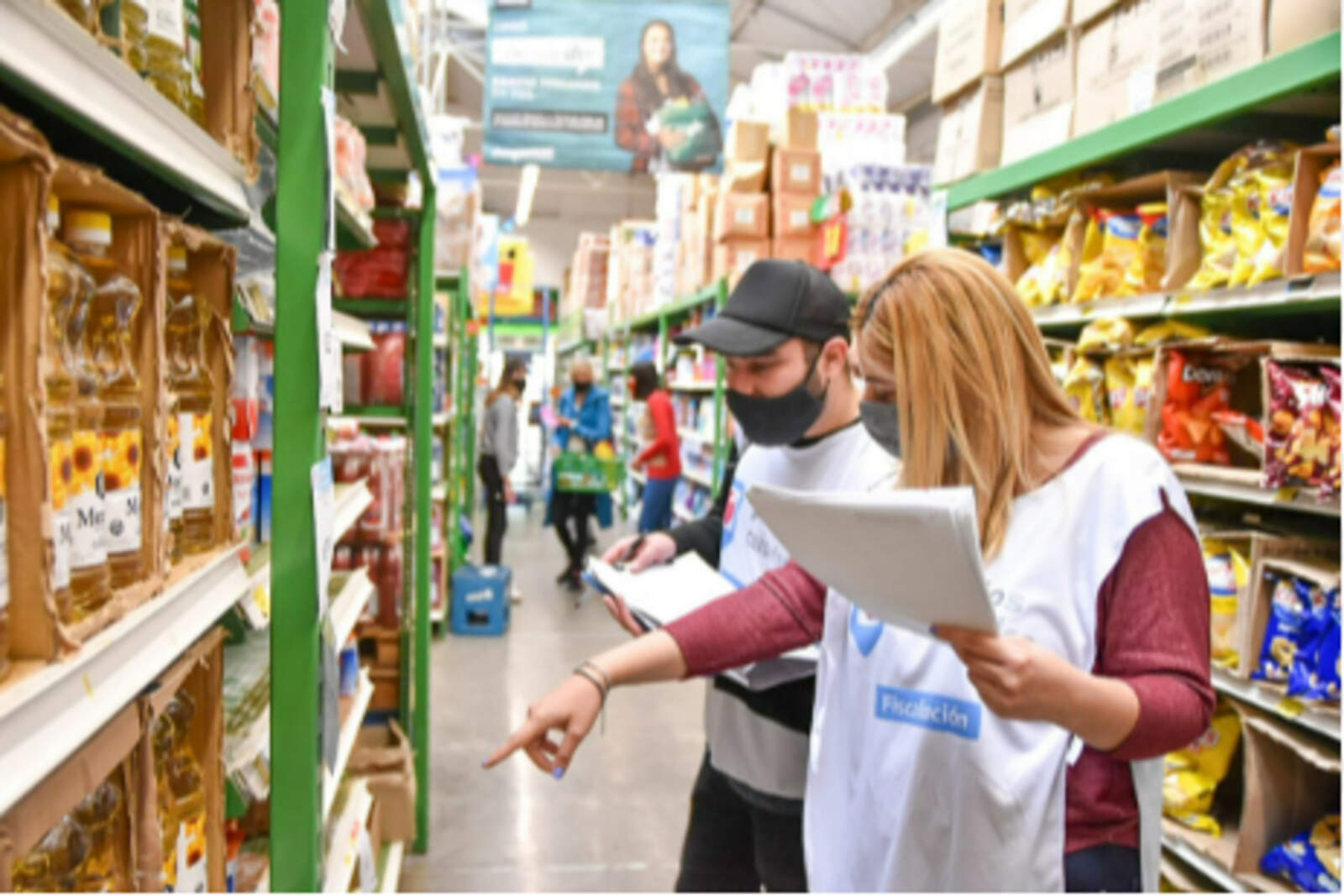
The contrast is clear. It is enough to recall the failed "Precios Cuidados" program under Kirchnerism, when the government sent police officers to monitor supermarket shelves to sustain a fiction of frozen prices that never worked. That policy not only failed to stop inflation, but ended up distorting the market and reducing supply, punishing the poorest consumers. Today, without absurd controls, prices are stabilizing and families' purchasing power is improving.
Inspectores controlando las góndolas durante el gobierno kirchnerista.
The relationship between the AUH amount and the price of an essential product for a child's early years, such as milk, demonstrates that today this social assistance is once again effective in lifting people out of poverty. Meanwhile, the efforts of Argentines who pay their taxes go to truly vulnerable people, victims of the model that impoverished us so much.
The numbers are compelling: when intermediaries are eliminated and resources are managed responsibly, they return to the people. September's record confirms that the direction is correct: less wasteful government, more power in the hands of families, and a social policy that is finally beginning to fulfill its true objective.