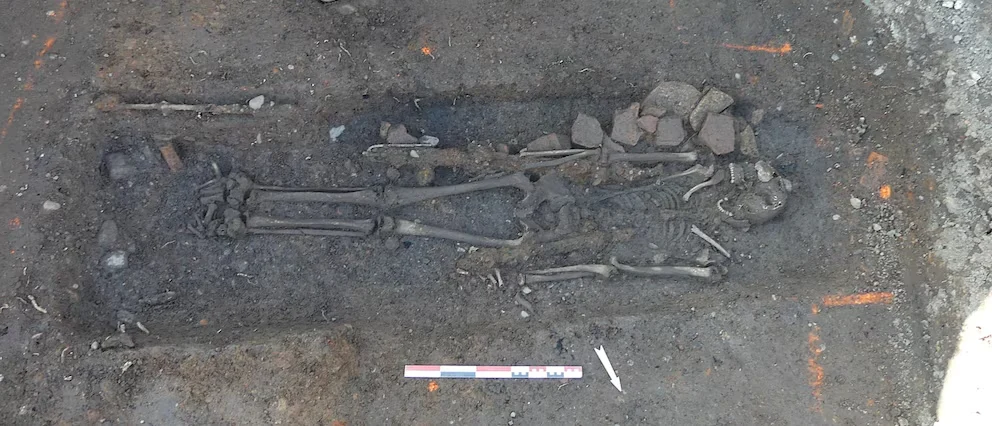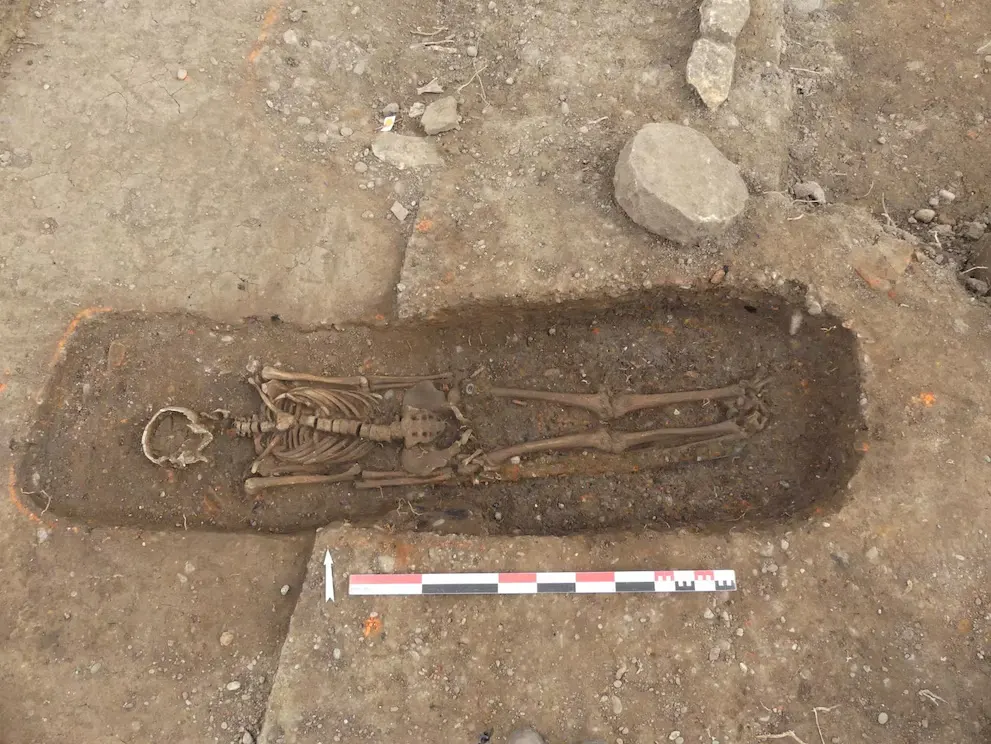







In the northeast of France, near Colmar, a team from the National Institute for Preventive Archaeological Research (INRAP) excavated a cemetery dated to the 5th century AD. The site was in use between approximately the year 450 and 500, during the height of the collapse of the Roman Empire.
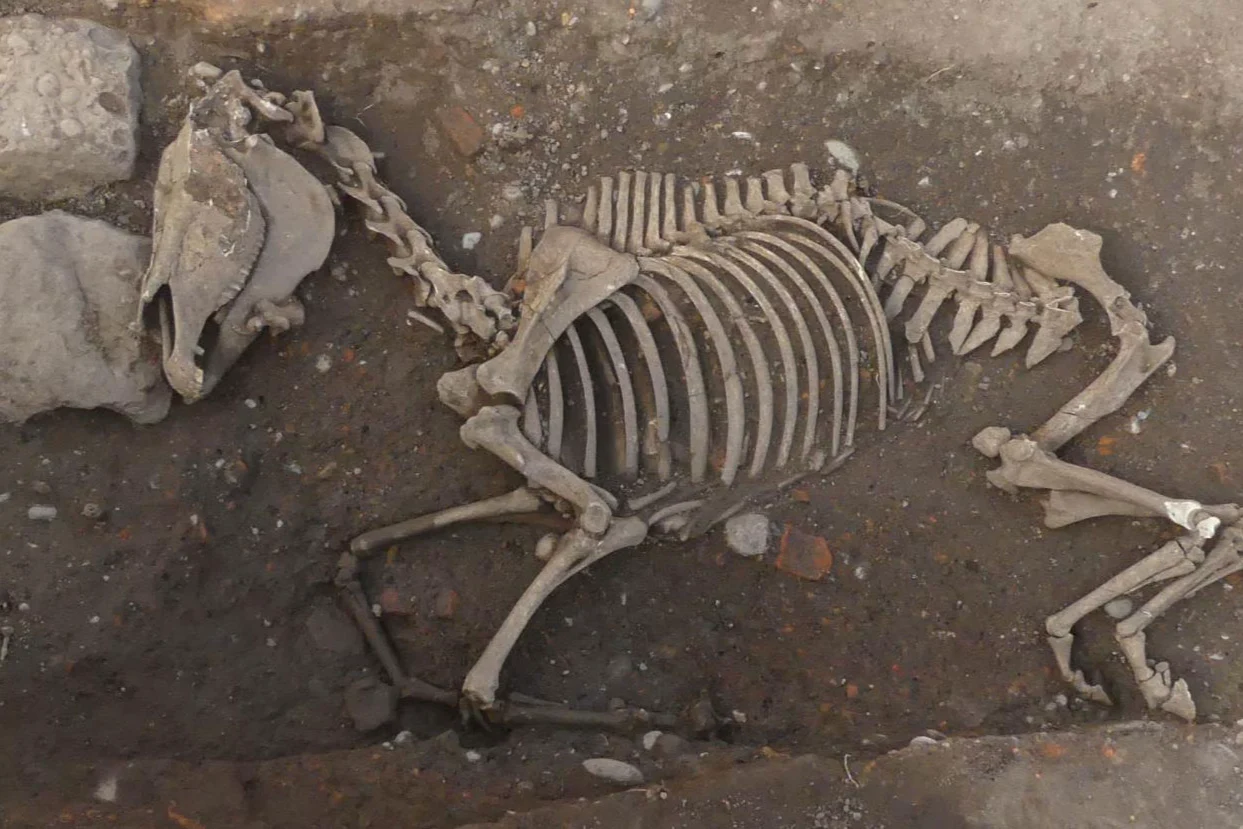
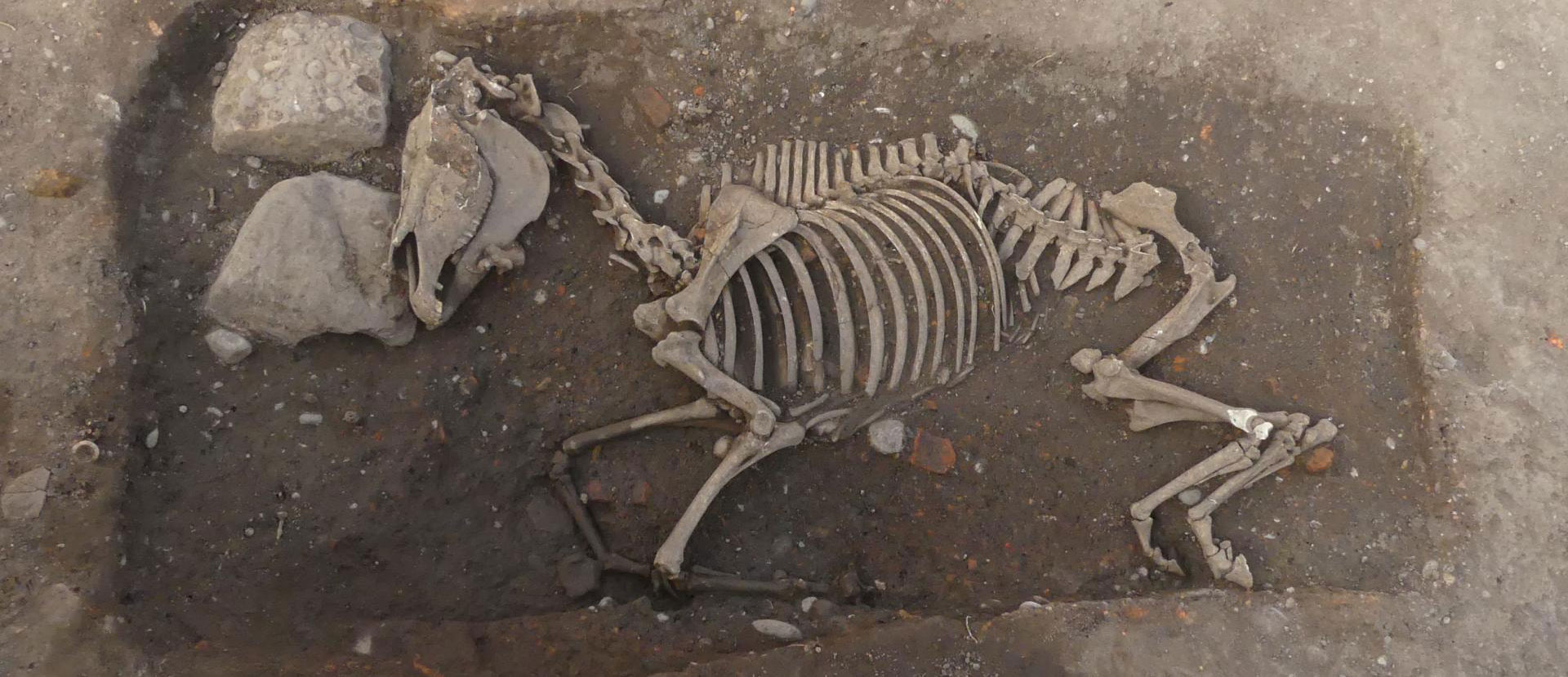
There, the graves of eleven adults, three children, and two horses buried with their harnesses were found. The collection offers a direct glimpse into the funerary practices of a community that experienced the end of Roman order and the emergence of new groups in the region.
In the female burials, silver brooches shaped like birds, glass bead necklaces, and a bone comb were recovered. These objects speak of particular care in the women's grave goods and of aesthetic traditions characteristic of the period.
The male burials, on the other hand, contained weaponry: a sword, a wooden scabbard, a shield, and a spear. Among the findings, a scramasax stands out, a short Germanic sword decorated with a gold and garnet accessory.
Indicators of Rank and Violence
This type of weapon frequently appears in the graves of Germanic chiefs or mercenaries, suggesting that at least some of the buried men held prestigious positions or played significant military roles. The presence of the scramasax with precious materials reinforces this interpretation.
Additionally, two of the male skeletons show stab wounds with no signs of healing. This indicates that they died quickly and violently, in a context of conflicts that marked the transition from the Roman world to that of the new Germanic elites.