The National Atomic Energy Commission (CNEA)is advancing with the refurbishment of the drainage system at the Ezeiza Atomic Center, a site of 840 hectares, and is incorporating monitoring and simulation tools to strengthen prevention against the El Niño phenomenon and prepare the facilities for possible heavy rains, floods, and inundations. The actions aim to protect personnel and maintain the continuity of the agency's activities.
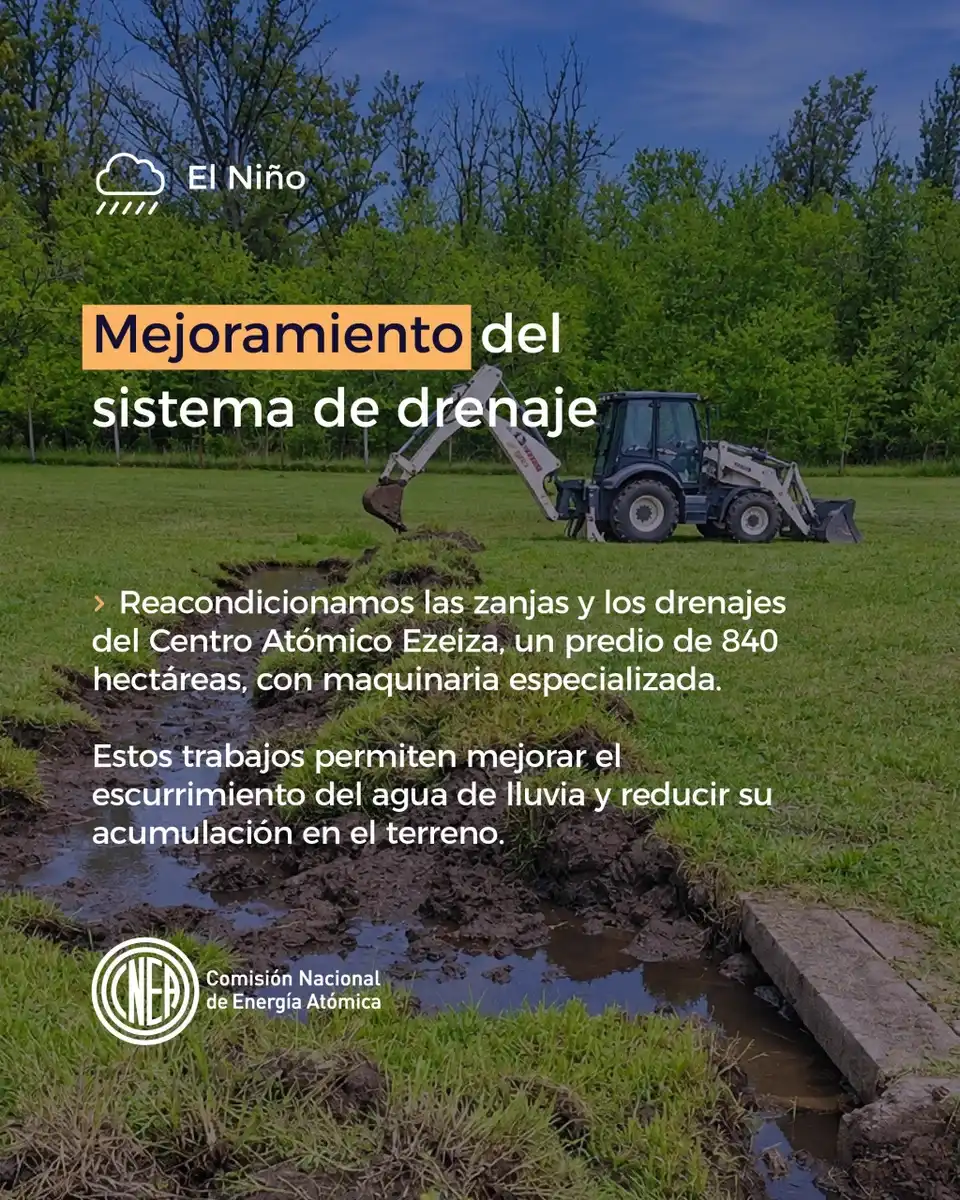
One of the main focuses of the intervention is the recovery of the drainage system throughout the atomic center. The work includes re-excavation, cleaning, and reshaping of ditches, as well as clearing existing drains, to facilitate the flow and evacuation of rainwater. Specialized machinery is used for these tasks.
The CNEA announced the measures on its social networks.
The CNEA highlighted the territorial scope of the intervention, which seeks to reduce areas susceptible to flooding through the maintenance of the ditch and drainage network of the establishment. “These works improve the runoff of rainwater and reduce its accumulation on the ground,” the agency detailed in one of the panels that accompanied the publication.
Another component of prevention is the monitoring of the Aguirre stream, with the incorporation of cameras to observe the water level and facilitate decision-making in the event of possible rises. This measure is complemented by clearing and brush-cutting tasks along the stream's banks, which reinforce the preventive maintenance of that area of the site.
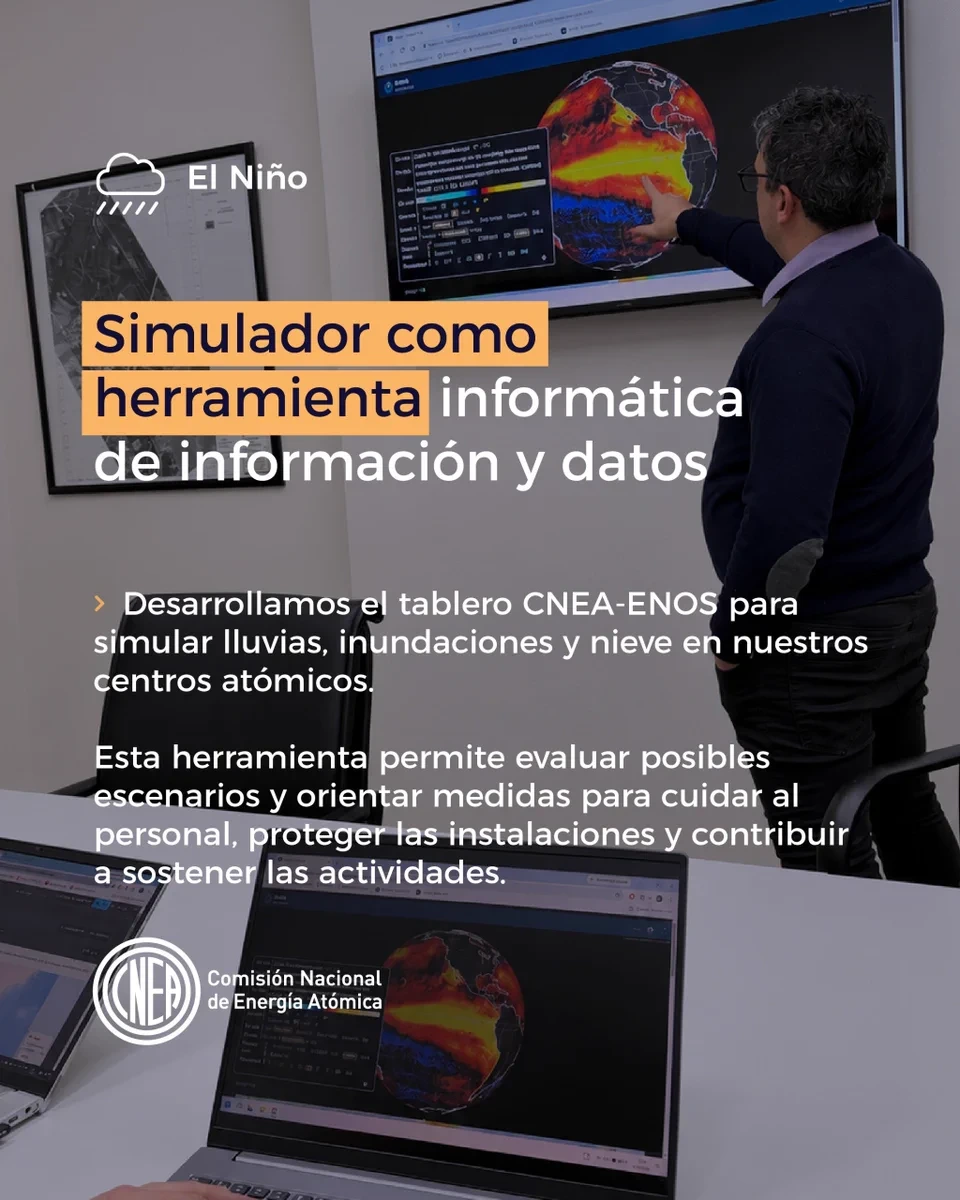
The CNEA developed the CNEA-ENOS dashboard.
In parallel, the agency developed the CNEA-ENOS board, a software tool that allows simulating rain, floods, and snow in its atomic centers. The system is intended to evaluate possible scenarios and guide measures to protect personnel, safeguard the facilities, and help maintain activities. Its incorporation supports preventive tasks both in Ezeiza and in the other CNEA locations.
In this way, the on-ground work is complemented by observation and simulation tools to prepare the facilities for possible meteorological contingencies. “Thus, we aim to reduce the risk of flooding, protect personnel, and safeguard the facilities to maintain the continuity of activities,” the CNEA stated when reporting on the progress of the actions.