The term “argentina malvinas” rose by 20%.
Specific queries such as “pancarta malvinas”, “argentina pancarta malvinas”, and “argentina falklands banner” recorded peaks that exceeded 500% increase.
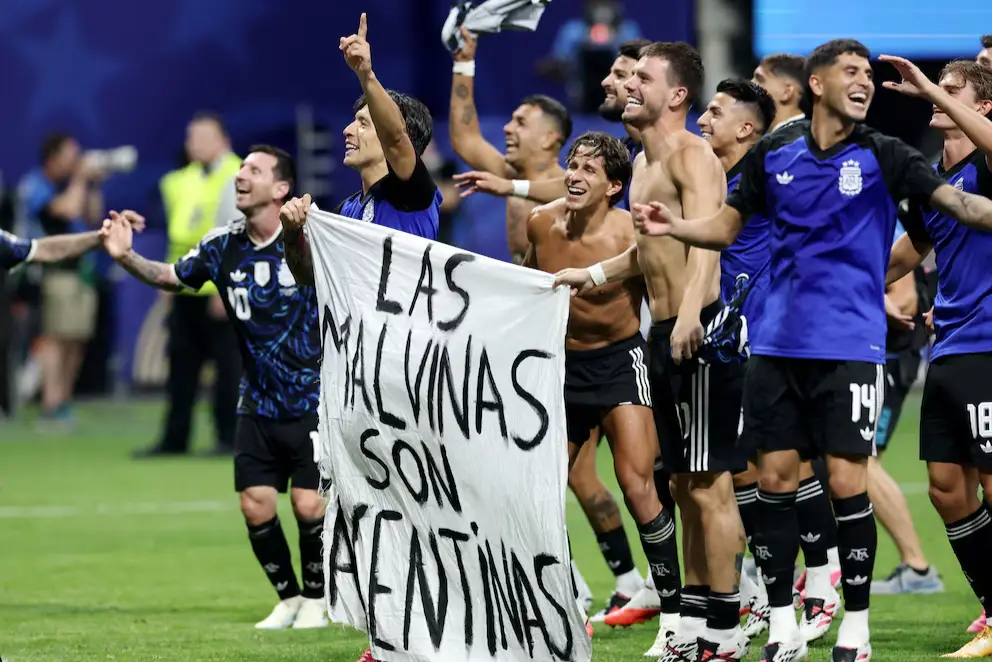

Argentina's victory in the semifinal of the 2026 World Cup multiplied international interest in the Malvinas cause, which reached its highest level of searches since Google records began
The term “argentina malvinas” rose by 20%.
Specific queries such as “pancarta malvinas”, “argentina pancarta malvinas”, and “argentina falklands banner” recorded peaks that exceeded 500% increase.






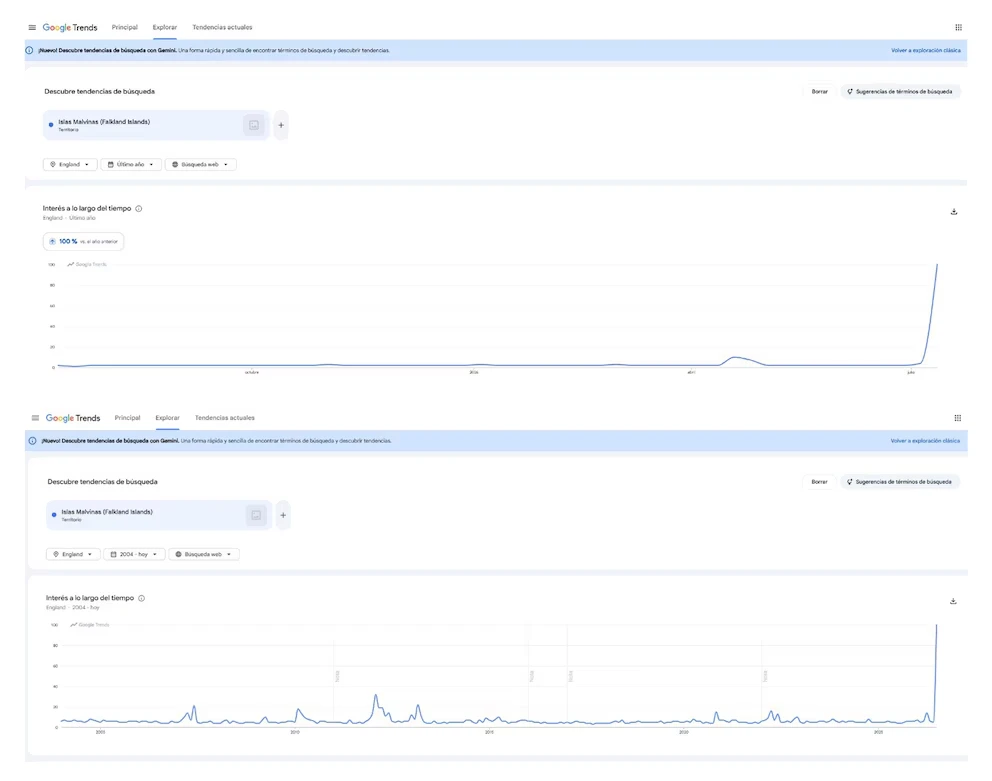
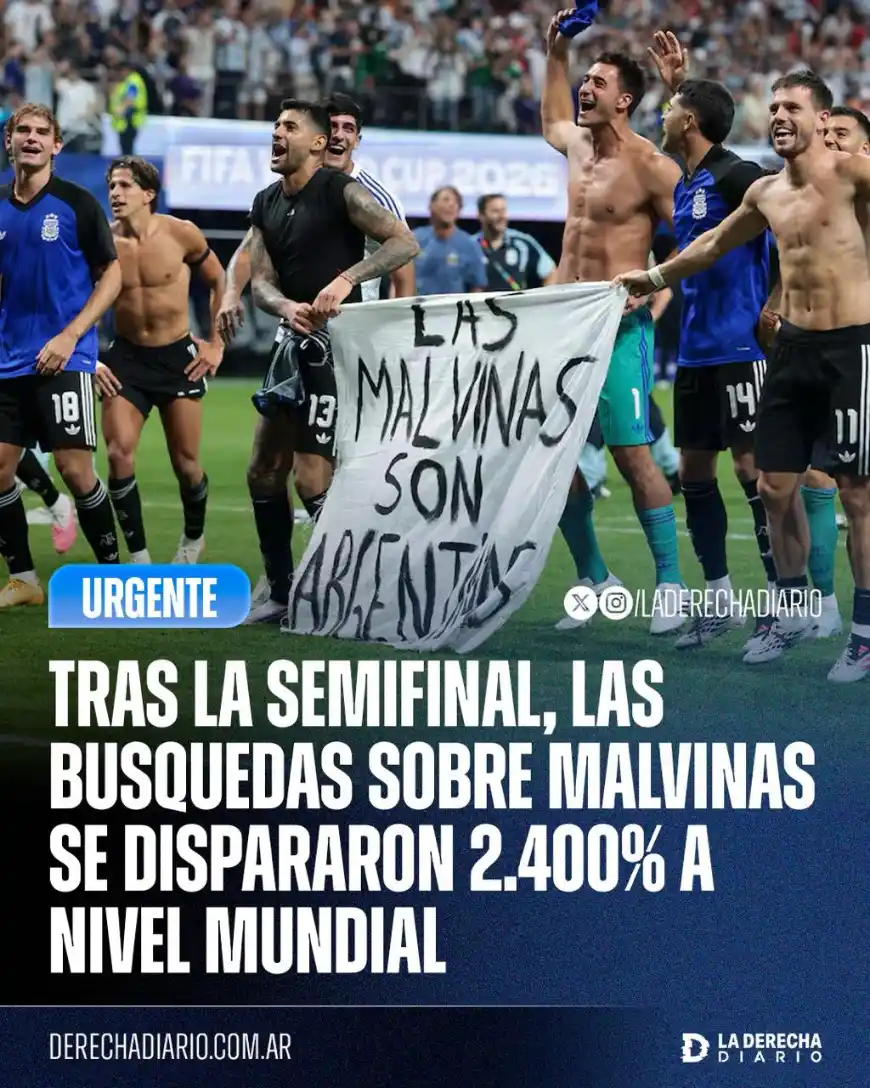
Under the climate of national pride and freedom, the claim historic sovereignty has returned to the global agenda in a disruptive manner, forcing the world, and especially the United Kingdom, to seek answers about the historical truth surrounding the islands. On a global scale, interest in the Falkland Islands has recorded a historic increase of 2,400% in the last week, according to official data from Google Trends.
This phenomenon is the direct result of the overwhelming victory of the Argentine National Team by 2-1 against England in the semifinal of the 2026 World Cup, a match that was not only a lesson in football but also a platform for the reaffirmation of identity. This surge in digital attention has no precedent in the historical series of the platform, surpassing any record available since 2004.
The epicenter of this global impact occurred during the celebrations on the field, when the players proudly displayed a flag —dropped from the stands and whose history reflects the fervor of the common citizen— with the inscription “Las Malvinas son argentinas”. The immediate viralization of these images sparked the curiosity of millions, who began to inquire about the most sensitive geopolitical conflict in our history.
Within this tsunami of searches, figures stand out that demonstrate the effectiveness of the "cultural battle" on the international stage:
The specific phrase “las malvinas son” experienced an increase of 250%.
The impact has been particularly devastating in England, where interest in the islands reached the highest value recorded by Google Trends in the early days of July.
On British soil, searches grew by 1,700% compared to the previous week, reaching peaks of “specific increase” exceeding 5,000% compared to last year.
British users, confronted with reality amid their sports defeat, sought to understand the meaning of the Argentine slogan through terms like “what does las malvinas son argentinas mean”, “why do argentina claim the falklands”, and “las malvinas son argentinas o inglesas translation”.
Even the White House was compelled to intervene, supporting the right of the Argentine players to express themselves on the Malvinas issue.
This global awakening occurs at a time when annual interest in the Falkland Islands was already trending positively by 70% compared to the previous year, consolidating a paradigm shift in the perception of our claim.



