
In the context of the reconstruction of the military instrument driven by the Government of Javier Milei, the Republic of Argentina initiated an unprecedented technological transformation process. This political commitment to recover operational capabilities translates into a broad equipment program that includes the incorporation of F-16 fighters, armored vehicles, P-3 Orion aircraft, Black Hawk helicopters, and the launch of a nanosatellite.
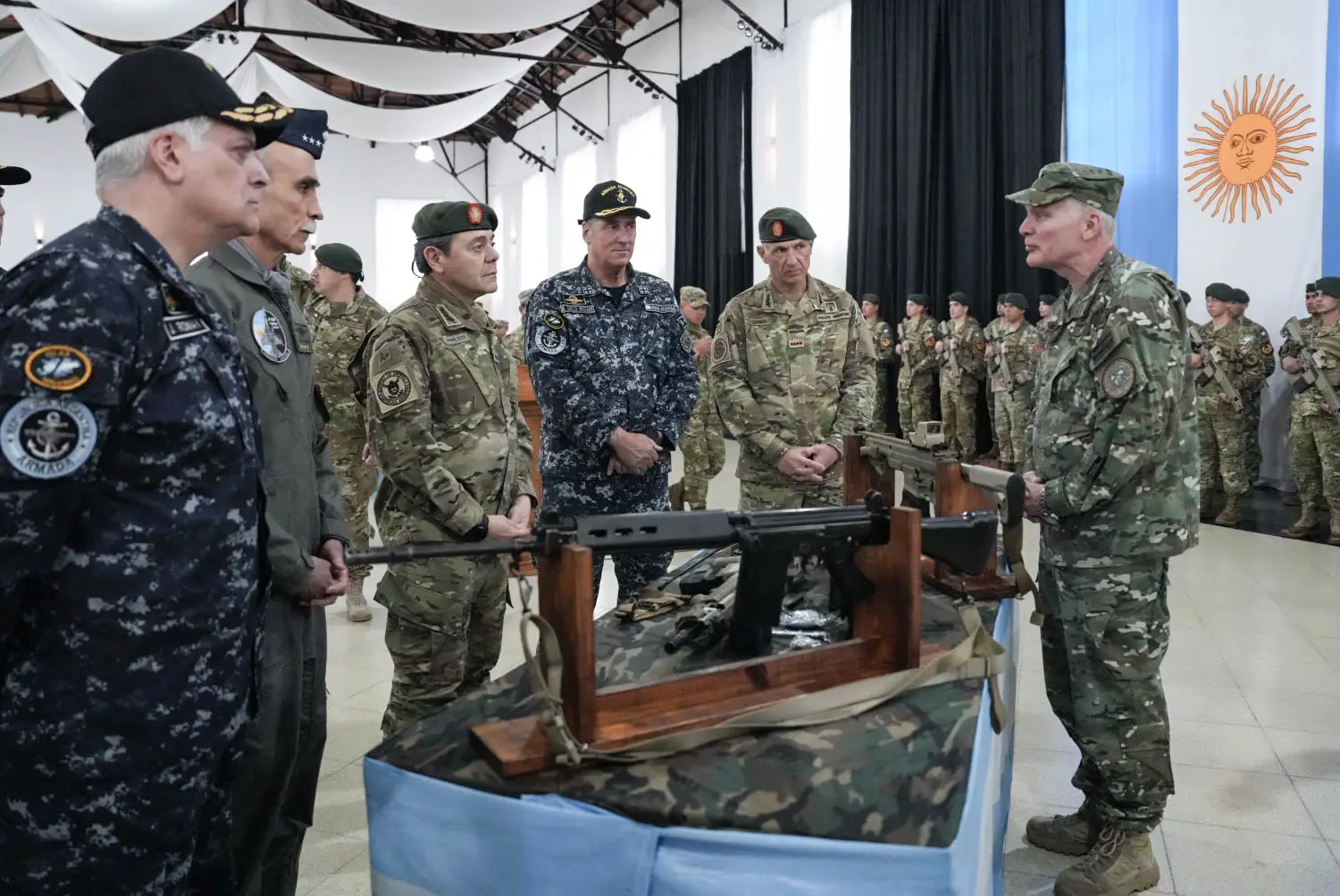
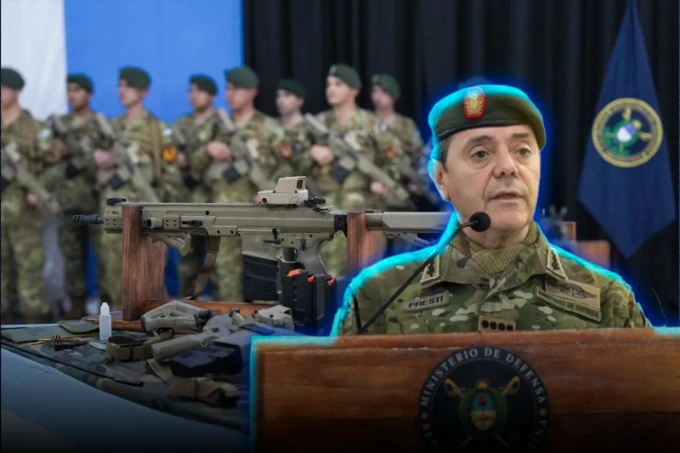
On September 29, in the Plaza de Armas of the 1st Infantry Regiment “Patricios” in the Autonomous City of Buenos Aires, the Ministry of Defense officially announced the arrival of the first batch of modular assault rifles. The acquisition, led by the Joint Chiefs of Staff of the Armed Forces (EMCO), was the result of more than two years of rigorous technical-operational evaluation. In 2024, the three military institutions defined their technical requirements; in 2025, joint teams evaluated alternatives in Israel, United States, and Europe; and in June 2026, the implementation agreement was signed between the Ministry of Defense of the Republic of Argentina and the Ministry of Defense of the State of Israel.
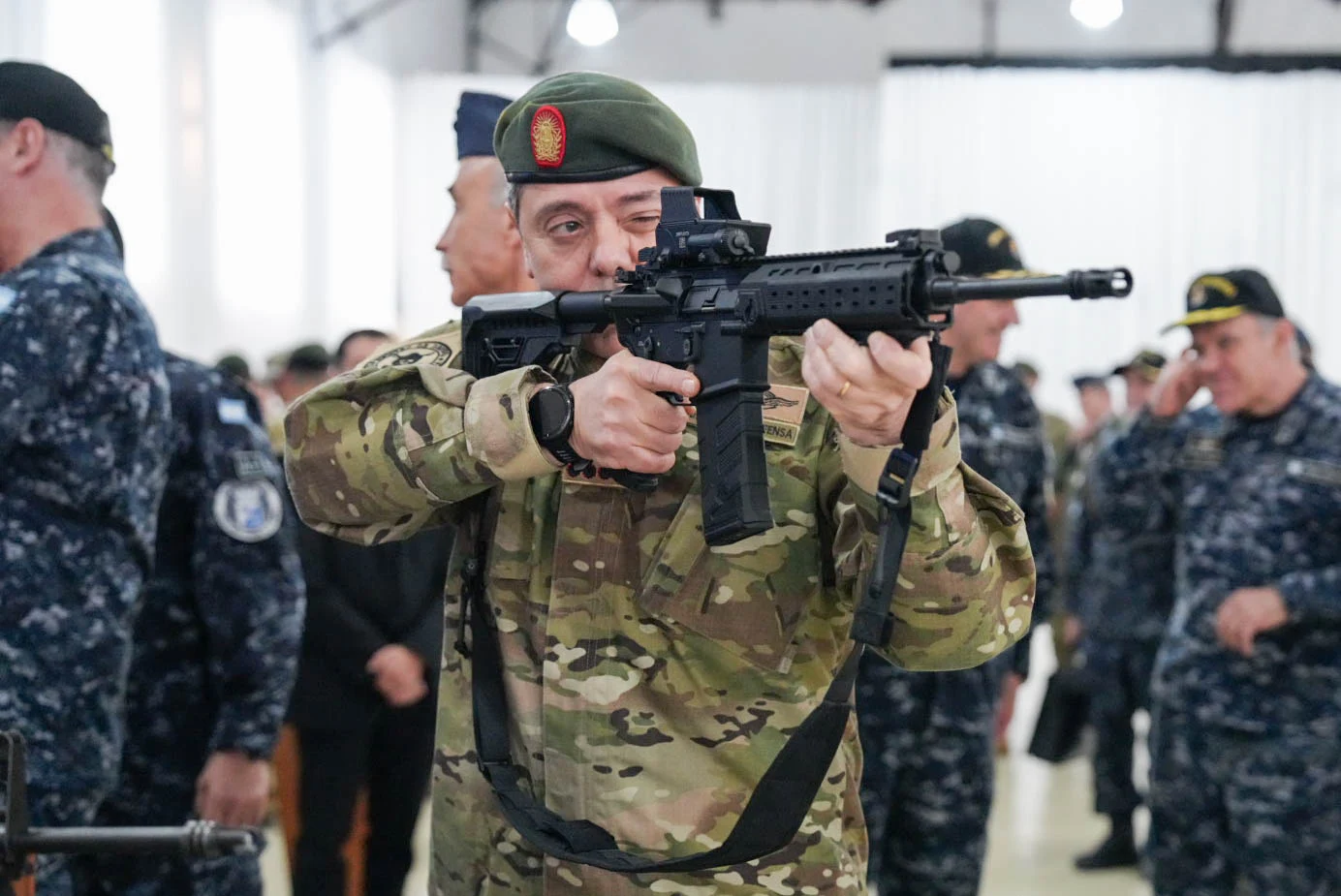
During the ceremony, the Minister of Defense, Lieutenant General Carlos Alberto Presti, highlighted the operational value of the new weaponry and emphasized the modernization leap: “The ARAD represents a qualitative leap in our individual armament”.
Emphasizing the significance of this milestone for military history, the head of the defense portfolio stated: “It is not common for a military generation to have the privilege of experiencing the change of its individual armament”, adding that “we are beginning to close one stage and open another. The ARAD-5 and ARAD-7 will accompany the Argentine combatant for many years”.
The minister Carlos Presti justified the choice by stating: “The decision started from an essential question: what individual weapon system do the Armed Forces of the Republic of Argentina really need?... That is why we had to find not the best rifle in the abstract. We had to find the best system for our reality”.

Moreover, he acknowledged the commitment of the personnel in light of the past: “For years our forces coexisted with disinvestment and obsolescence in the material... But there was something that remained: the military ethos, the vocation to prepare, the commitment to the profession, the discipline, the knowledge of the trade, and the willingness to be ready”, concluding that “military innovation is fundamentally cultural, in addition to being technological. The real leap occurs when an organization modifies its behavior in response to a new tool”.