
The government of Javier Milei confirmed that the chainsaw will continue to be one of the main management axes leading up to 2027 and defended the continuity of the economic program based on fiscal balance, reduction of public spending, and a more limited state.
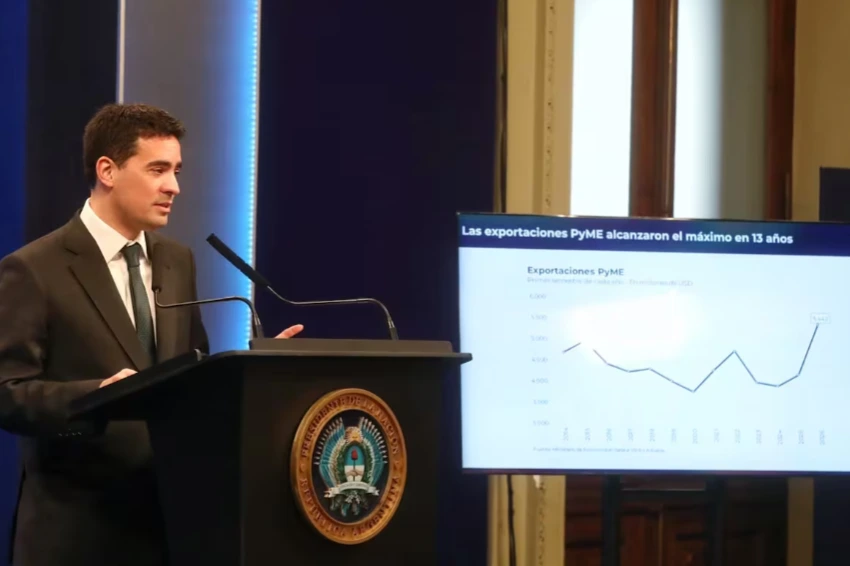
During a press conference, spokesperson Adrián Ravier was emphatic when asked whether the government will maintain the current spending reduction scheme for the remainder of the term. “The chainsaw is a symbol of this government”, he stated, while asserting that there are no reasons to change the economic course adopted since the beginning of the administration.
The defense of the program was accompanied by a listing of indicators that, as the spokesperson explained, show the results of the policies implemented by the libertarian administration. In this regard, he highlighted the balance of public accounts, the significant reduction in inflation, and the evolution of production, consumption, and exports.
Ravier stated that Argentina has moved from living with a inherited fiscal deficit to a situation of balance and assured that the country currently records “record production, record exports, and record consumption.” For the government, this data supports the strategy of spending reduction and the reforms promoted by Milei.
The chainsaw will continue during Milei's government
One of the central moments of the conference occurred when the spokesperson was asked about the future of the adjustment and the possibility that society will reach 2027 affected by economic measures.
The response was direct: “The chainsaw never turns off. As long as the president is Javier Milei, the chainsaw will continue”.
Ravier explained that the government's objective is to reduce the size of the state and allow the private sector to have a greater amount of resources, one of the central tenets of the libertarian economic program.
From the Casa Rosada, they maintain that the reduction of spending should not be interpreted as an exceptional or temporary measure, but as part of a structural transformation of the Argentine state. In this line, the government reaffirms its commitment to fiscal balance and rules out modifying the central axis of its program.
The government highlighted the decrease in inflation and poverty
In defense of the economic management, Ravier also focused on social and macroeconomic indicators. He pointed out that annual inflation has dropped from levels above 200% to around 30%, with a trend that, according to his forecasts, will continue to decline.









