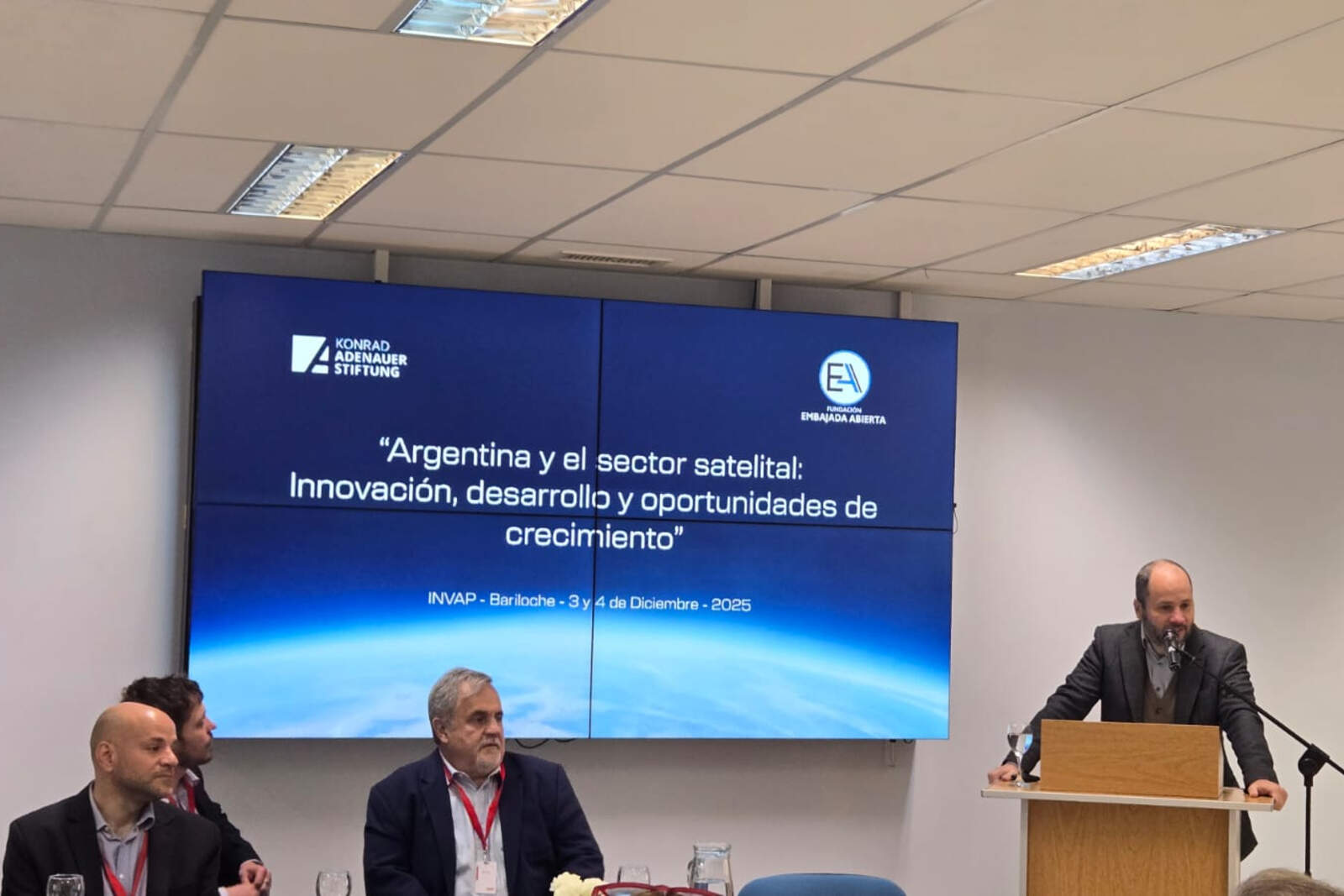
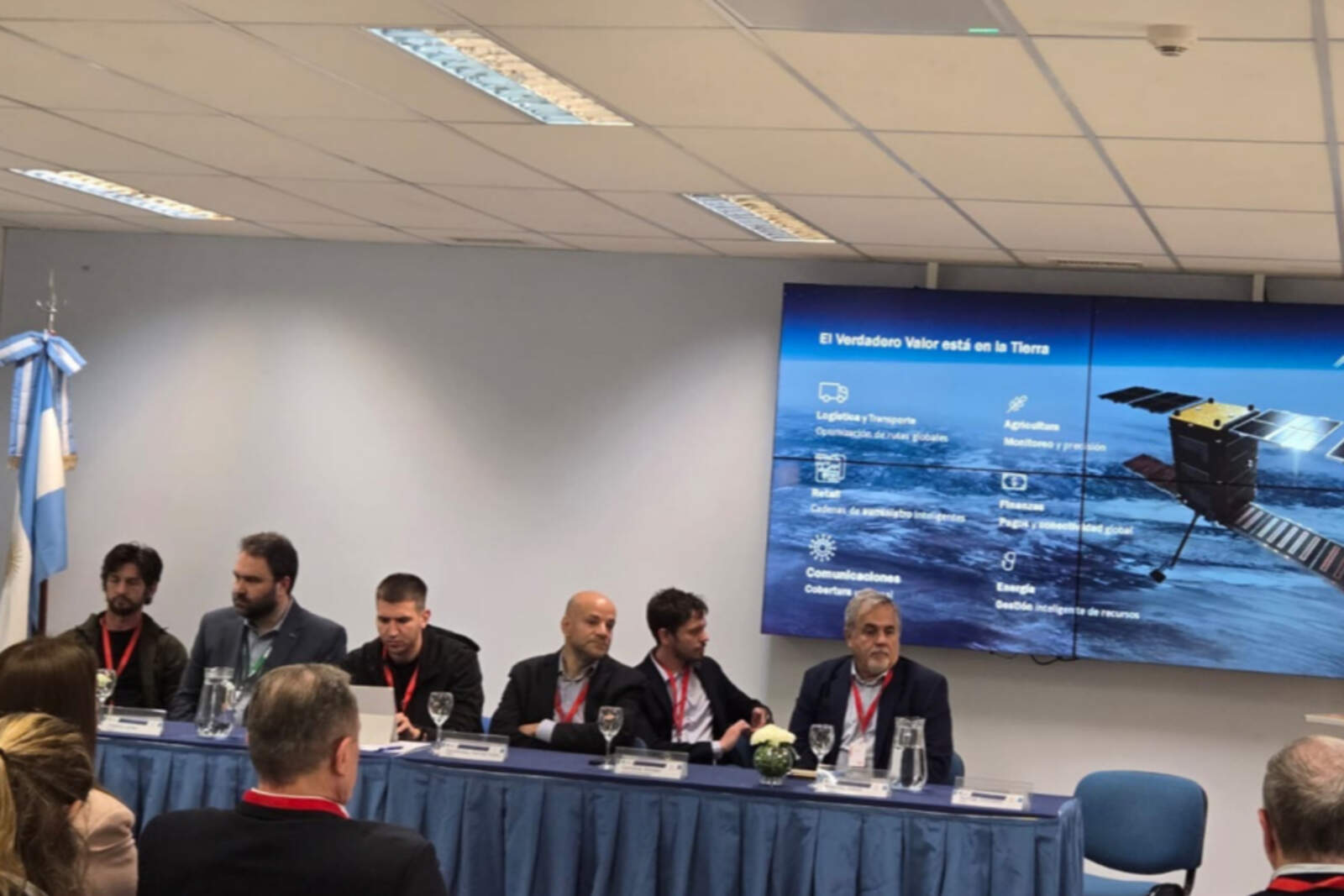
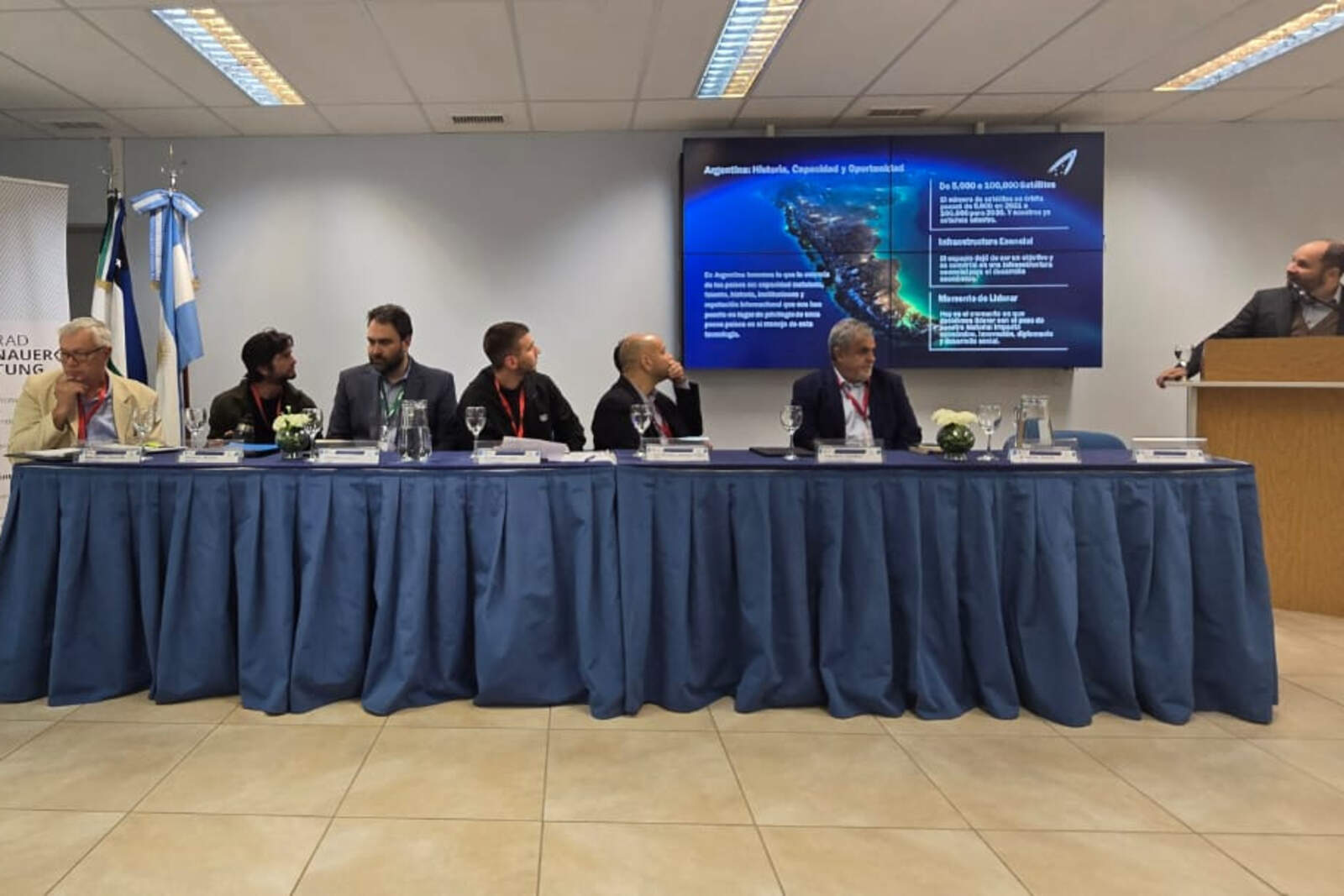
The event featured a discussion on the present and future of space activity in the country
Nuevo
Agregar La Derecha Diario en
Compartir:
On December 3 and 4, VENG took part in the meeting "Argentina and the Satellite Sector: Innovation, Development, and Growth Opportunities," organized by the Konrad Adenauer Foundation and the Embajada Abierta Foundation at the INVAP headquarters in San Carlos de Bariloche.
The event brought together the main institutions of the national space ecosystem, public sector agencies, technology companies, universities, and industry leaders to discuss the present and future of space activity in the country.
The opening was led by the Governor of Río Negro, Alberto Weretilneck; the General Manager and CEO of INVAP, Darío Giussi; the Konrad Adenauer Foundation's representative in Argentina, Susanne Käss; and the President of the Embajada Abierta Foundation, Jorge Argüello, organizations responsible for the event.
Throughout the two days, authorities and specialists from the Argentine space sector participated, including the Executive and Technical Director of CONAE, Raúl Kulichevsky; representatives from ARSAT, INIDEP, CNEA, EPIC Aerospace, Ascentio Technologies, Satellogic, MSF Tech, Mecánica 14, and university leaders from UNLP, UBA, UNSAM, and ITBA, among other key players in the scientific and technological field.
El evento "Argentina y el sector satelital".
In this context, VENG played an active role in the various panels of the program. In Panel 2: "Benefits of Satellite Information for Society," the Technical Manager, Pedro Riva, spoke about the applications and benefits of radar information in socioeconomic development.
In Panel 3: "The Development of the Space Industry in Argentina," VENG's General Manager, Laureano Quiroga, presented the lecture "The New Space Economy," where he highlighted that the satellite industry is experiencing exponential growth worldwide and that the true revolution lies in the ability to transform satellite data into concrete decisions for society.
In this regard, he emphasized the need for the entire Argentine technological ecosystem (government, companies, startups, and universities) to work together to seize the historic opportunity of the space economy, which is now considered essential infrastructure for economic development.
Additionally, Quiroga stressed that VENG has achieved "40% growth in the commercial development of satellite information over the last 9 months, with a similar projection for 2026." At the same time, the company's General Manager emphasized "the capacity and quality we have in Argentina to understand and meet the need for satellite services and the needs of our clients. At VENG, we offer specialized and personalized service, every day, 24 hours a day."
"If in 20 years it is estimated that there will be more than 100,000 satellites orbiting, it means that the space economy will truly be virtuous for the country and for the economy. If we act and interact among the players, bringing out the best from each sector, integrating and working collaboratively, we will make things happen. We are the protagonists of the new space ecosystem, and this present demands synergy from us that will position us where we have already been and where today we can be much better," said Quiroga.
El evento "Argentina y el sector satelital".
Finally, in Panel 4: "National Universities in Space Activity," VENG's President, Roberto Yasielski, participated on behalf of the National University of San Martín (UNSAM), where he leads the degree program in Space Systems Engineering, addressing the role of academia in training specialized talent for the sector.
The meeting also included a public dialogue between Conrado Varotto, founder of INVAP and former Executive and Technical Director of CONAE, and Jorge Argüello, president of the Embajada Abierta Foundation, to reflect on the path Argentina has taken in the space field. At the end, Varotto was recognized for his career and contribution to national technology.
VENG highlighted the importance of participating in a space that enhances exchange between institutions, promotes synergies between public and private organizations, and opens new opportunities for cooperation to strengthen the space value chain.
The company emphasized that the sector's growth depends on the national capacity to add value to data from satellites (especially in the downstream stage) and transform them into concrete services for society, from environmental management and agriculture to logistics, climate resilience, and emergency response.