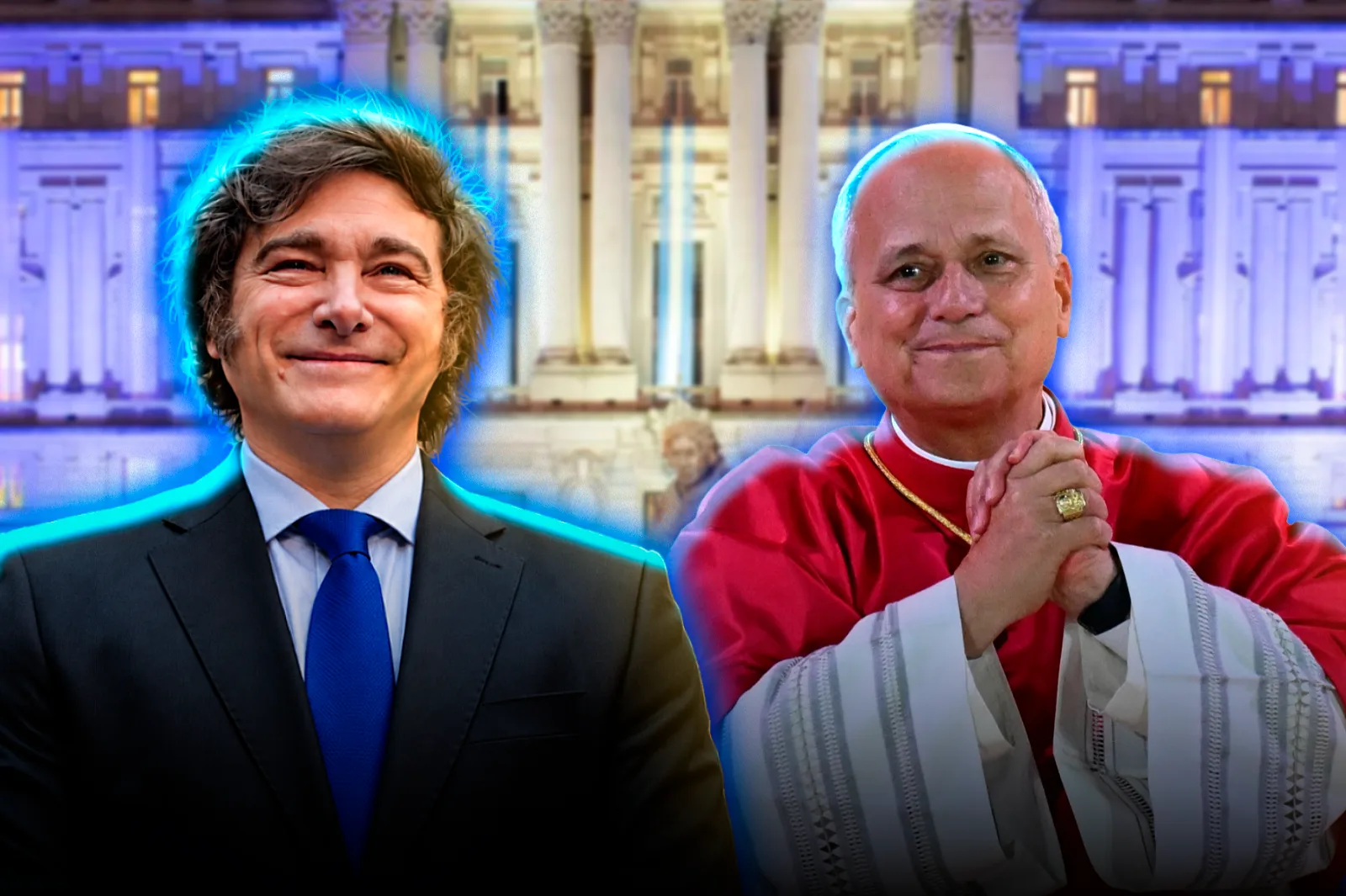


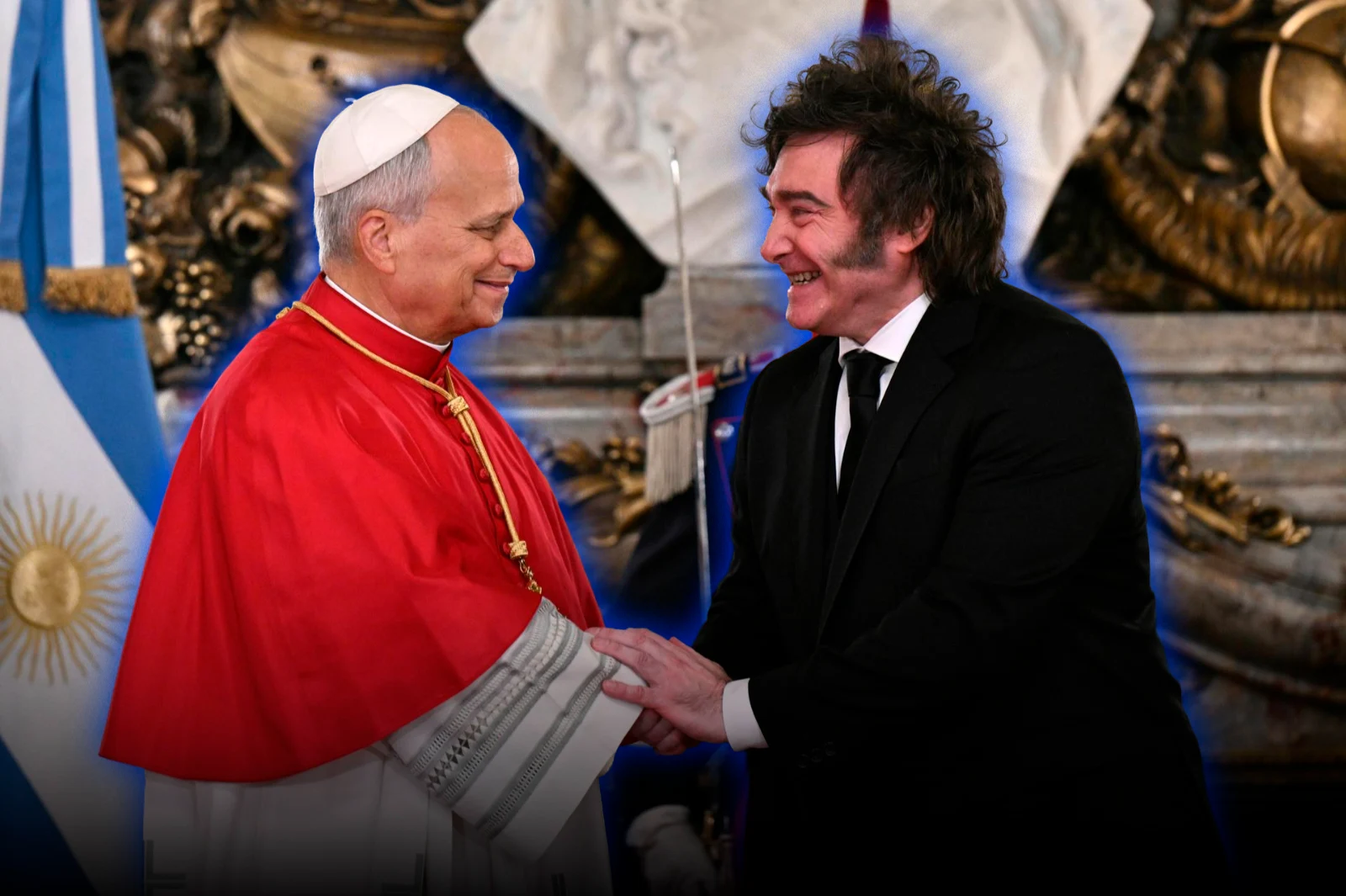
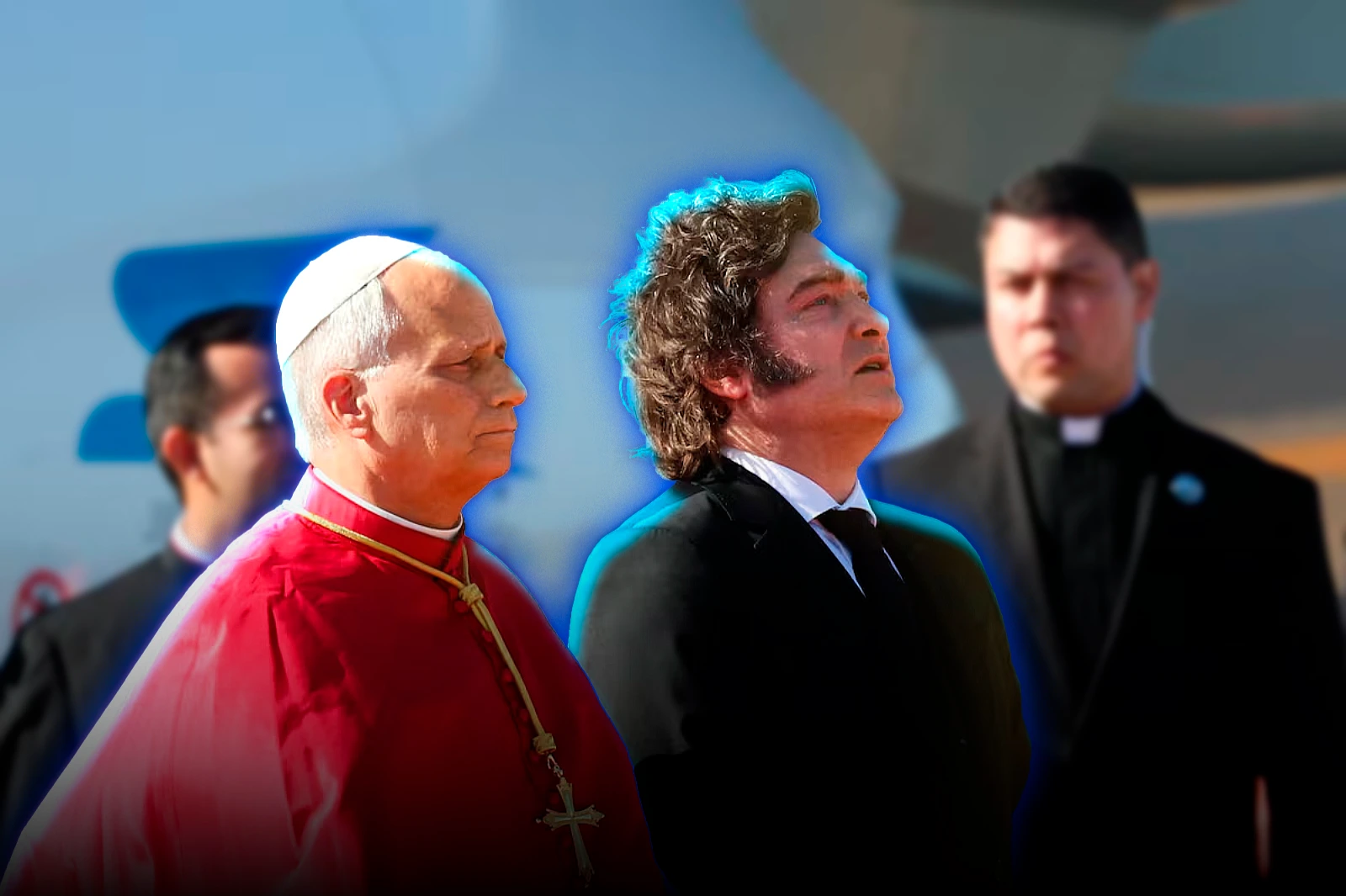

In the context of an event of absolute geopolitical and spiritual significance, the President of the Nation and His Holiness Pope Leo XIV led a historic act at the Palacio Libertad, where they delivered deeply doctrinal speeches before ministers of the Executive Power, legislators, members of the Judiciary, the diplomatic corps, and guests from sister nations. The focus of the day was centered on the masterful speeches delivered from the main stage of the Palacio Libertad. President Javier Milei began the ceremony by paying a heartfelt tribute to Jorge Bergoglio, Pope Francis, whom he described as "the most important Argentine in history". Javier Milei emphasized that the legacy of the Argentine Pontiff remains unchanged: "Francis is not only immortal in the heavens but also on earth. Because as someone once said, immortality is a life that continues to speak to us after death".
In his speech, the head of state reaffirmed the moral foundations that support civil society and his government program, emphasizing that "faith allows us to see beyond our immediate present, our joys, our tragedies, our fears, and our uncertainty, and enables us to recognize ourselves as human beings connected to something greater". In a clear defense of Alberdian and spiritual principles, Javier Milei stated: "Without faith, we are lost in the world, because the future appears uncertain and threatening. In faith rests the certainty that there is an invisible hand that traverses our lives and rewards goodness and punishes evil".
Furthermore, the President emphasized the historical concordance between the values of the Church and the genesis of the Argentine liberal republic. Remembering the enactment of the National Constitution of 1853 and the preaching of Blessed Mamerto Esquiú at the request of General Urquiza, Javier Milei asserted: "Thus, the liberal, republican, and constitutional Argentina was not born against the Church, but blessed by one of its clerics", while quoting the famous mandate of the friar: "without law, there is no homeland or true freedom".
In terms of state management, Javier Milei grounded the government's economic policy in morality and justice, explaining the principle of intertemporal general equilibrium: "For our part, as a government, we will continue to work to guide each of our decisions according to the moral compass that has led us and that the Church has safeguarded for so long... we apply an economic understanding of that common good which we call intertemporal general equilibrium. This means that when making decisions, we should not focus on what a single sector needs at a given moment, but on the benefit of all society in the present and in the future". He concluded by calling for an active defense of virtues: "Honoring faith, leading a dignified and virtuous life is precisely the way to defend it against a world often intent on overshadowing it".
For his part, Pope Leo XIV warmly thanked the reception provided by the president and the citizens: "I thank you, Mr. President, for the cordial words you have kindly directed to me and the welcome that your people offer me through you". The Pontiff highlighted the significance of his return to the land where Jorge Bergoglio began his pastoral mission: "My arrival in this land has a particular meaning for me. For 12 years, the universal Church listened to the voice of an Argentine pontiff who carried with him in memory and in heart... Today, succeeding him in the Petrine ministry, I am, in a way, retracing the reverse path and coming to the homeland where Pope Francis began a story that would later intertwine with the entire Church".
In a clear endorsement of the pillars of the market economy and the culture of effort, Pope Leo XIV reaffirmed the value of work and the irreplaceable role of wealth creators: "Work allows a person to support their own, develop their capacities, and feel part of the construction of the homeland. Therefore, it is appropriate to promote anything that opens opportunities, stimulates private initiative, and allows growth to reach those who face the greatest difficulties".



