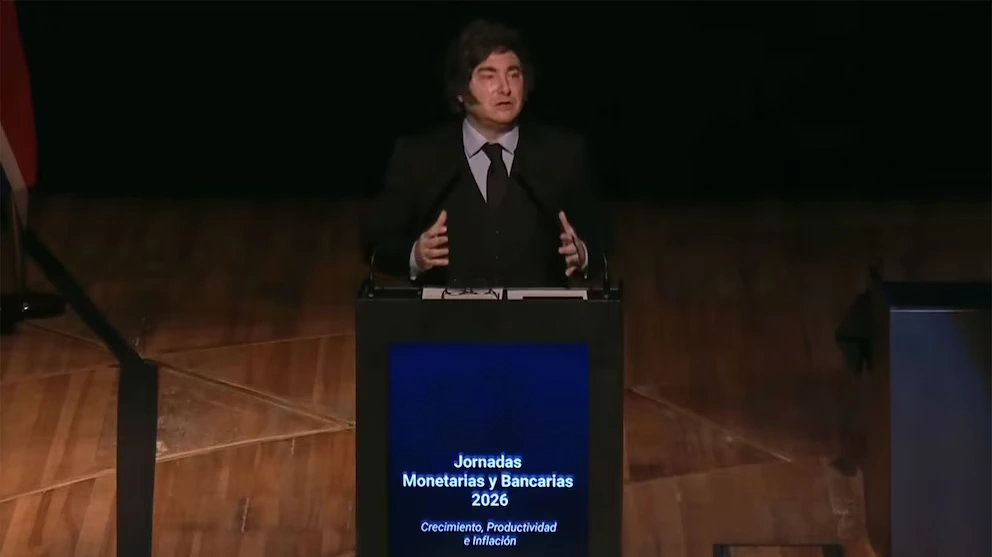



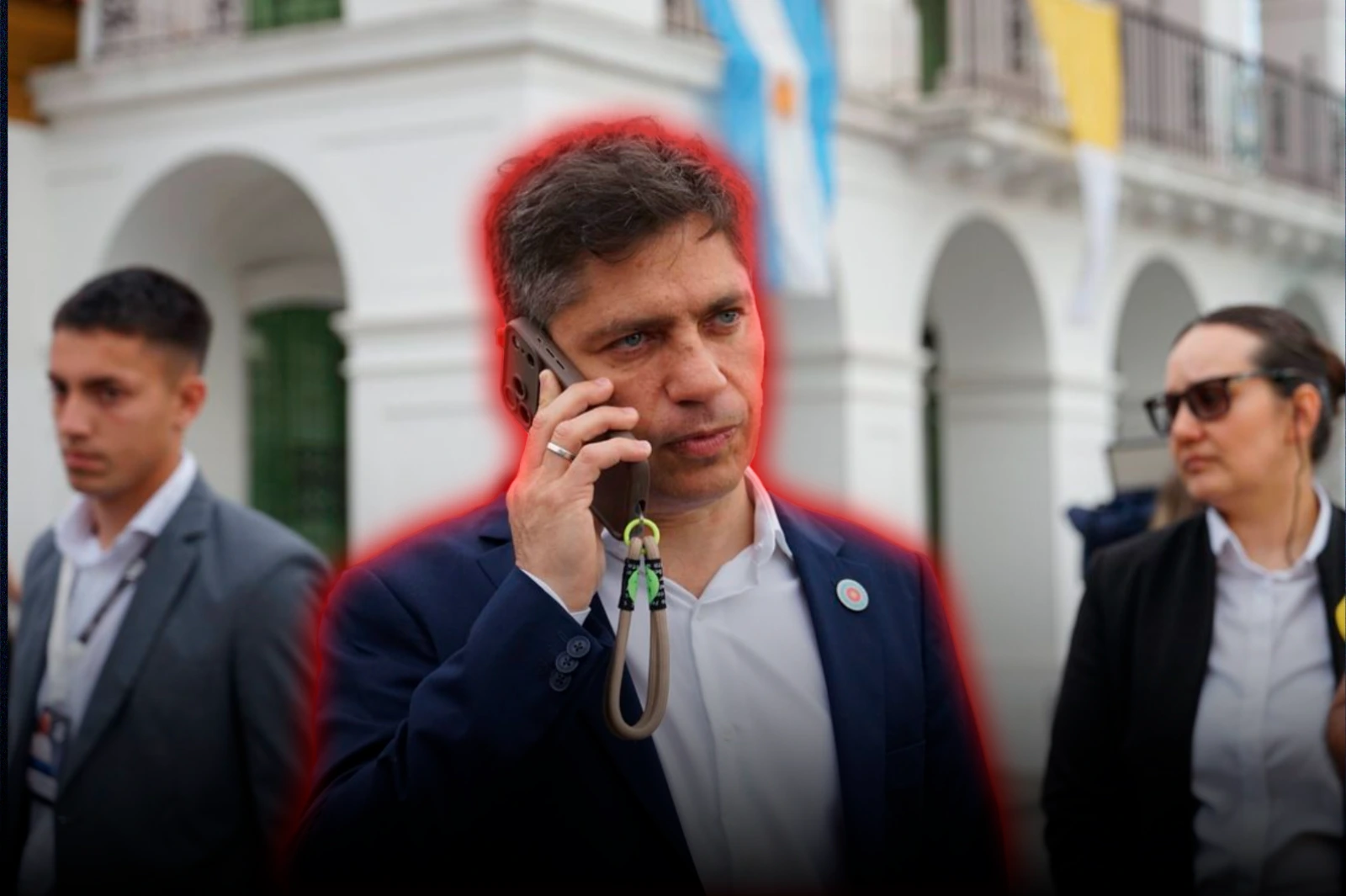


The Argentine Republic witnessed the consecration of the most ambitious economic transformation program in its contemporary history. From the stage of the Palacio Libertad, the President of the Nation, Javier Milei, led the star-studded closing of the 2026 edition of the Monetary and Banking Days convened by the Central Bank (BCRA), an international conclave of the highest academic and financial hierarchy. The Head of State was accompanied on the podium by the Minister of Economy, Luis Caputo, the President of the Central Bank, Santiago Bausili, and the Chancellor, Pablo Quirno, in the presence of figures such as the 2025 Nobel Prize in Economics, Philippe Aghion, the MIT professor, Iván Werning, and the lecturer from the University of Chicago, Fernando Alvarez. Starting at 5 PM, the mandatary outlined the axes of growth, productivity, and inflation, demonstrating how the categorical eradication of macroeconomic imbalances allowed burying collectivist recipes to give way to an unavoidable process of long-term economic development.
To appreciate the magnitude of the economic miracle achieved by the Government, Javier Milei emphasized the irreplaceable need to remember the dramatic starting point received in December 2023, warning that decontextualized analyses overlook that the administration inherited the simultaneous combination of the triggers of the three worst crises in Argentine history.
In monetary terms, the economy presented a money overhang that doubled what was recorded before the Rodrigazo of 1975 during the regime of María Estela Martínez de Perón (Isabel Perón), when the depletion of BCRA reserves multiplied inflation by 6 times, threatening in 2023 to multiply it by 12 times.
Furthermore, remunerated monetary liabilities reached an amount equivalent to 4 times the monetary base, exceeding the proportion of 3 to 1 observed before the hyperinflation of the government of Raúl Alfonsín in 1989, which recorded a peak of 5000% in wholesale inflation and forced an early exit from power 6 months before. This catastrophe was combined with social indicators worse than those of the explosion of December 2001 prior to the end of convertibility, after 10 years of productive stagnation and with a consolidated fiscal deficit of 15% of GDP —5% in the National Treasury and 10% in the BCRA— while inflation soared to 1.5% daily.
Faced with the inherited abyss, the President denounced the destitution maneuvers of the destructive opposition upon assuming office: “We had orcs banging on the doors. They were waiting for everything to explode to stage a coup at the end of the year. That’s because sometimes the sheet of paper does not take into account what is on the other side trying to break everything”.
In a segment of profound doctrinal solidity, Javier Milei dismantled the dogmas of Keynesian aberration, explaining that the interest rate responds to the existence of time and not to bureaucratic distortions of the monetary market, defining the purchasing power of money as the inverse of the general price level. The mandatary exposed the destructive fallacy of setting maximum prices, Precios Cuidados, and regulated prices that barely covered between 20% and 40% of real costs, which generated an excess supply of money, an excess demand for goods, and a tragic scarcity.
In this regard, he recalled the disastrous consequences of state interventionism: “It seems that some forget, but we were running out of gas, we were running out of electricity, we were running out of fuel, that is, people queuing at gas stations and cutting nails to get fuel. And that was the Argentina we inherited, who celebrated if they managed to get inflation down to 4%”.