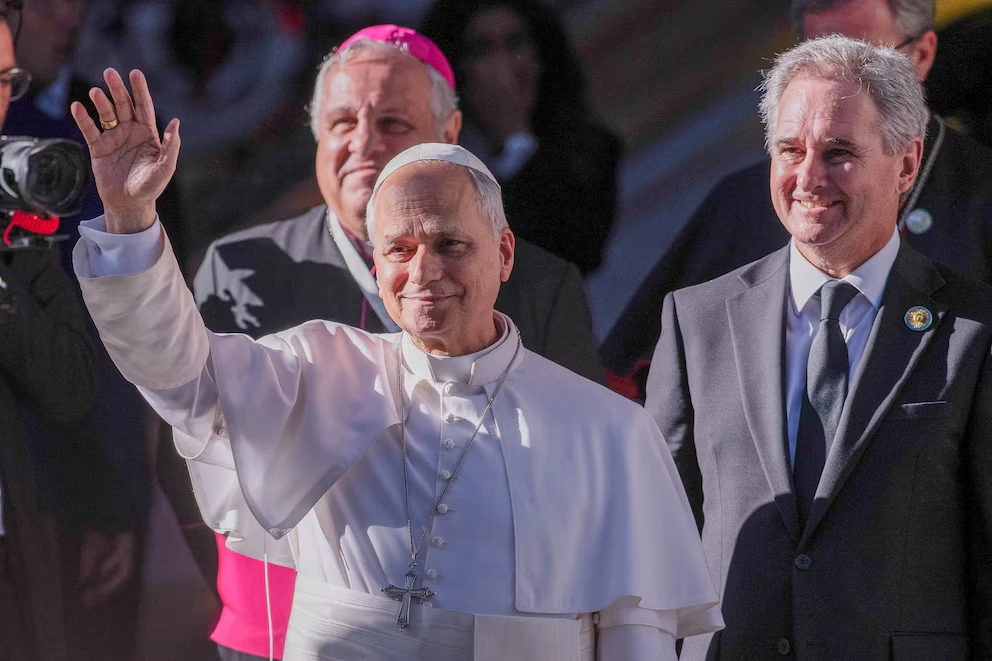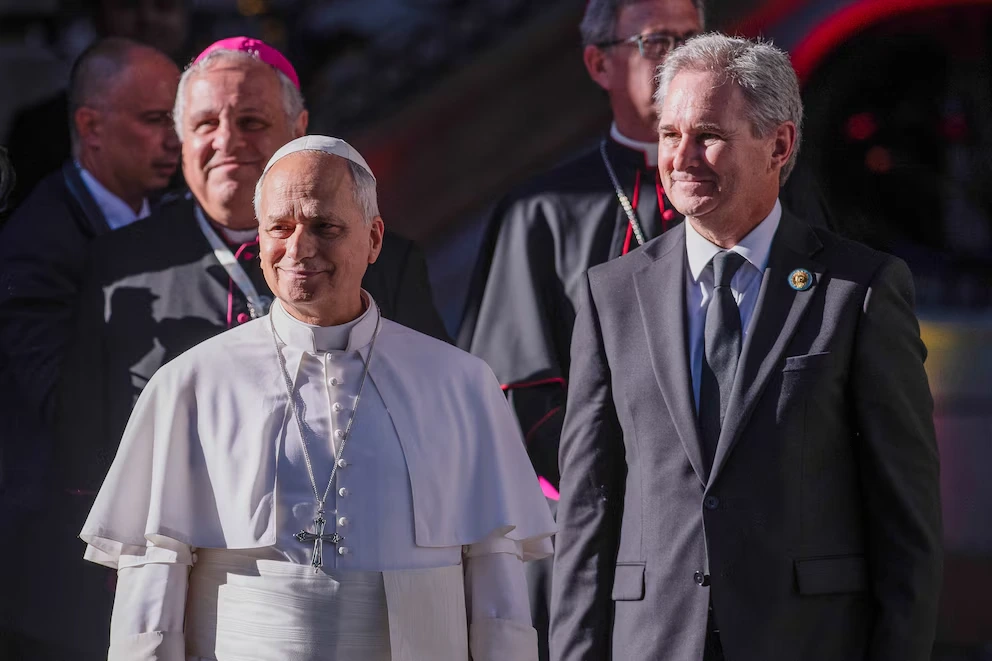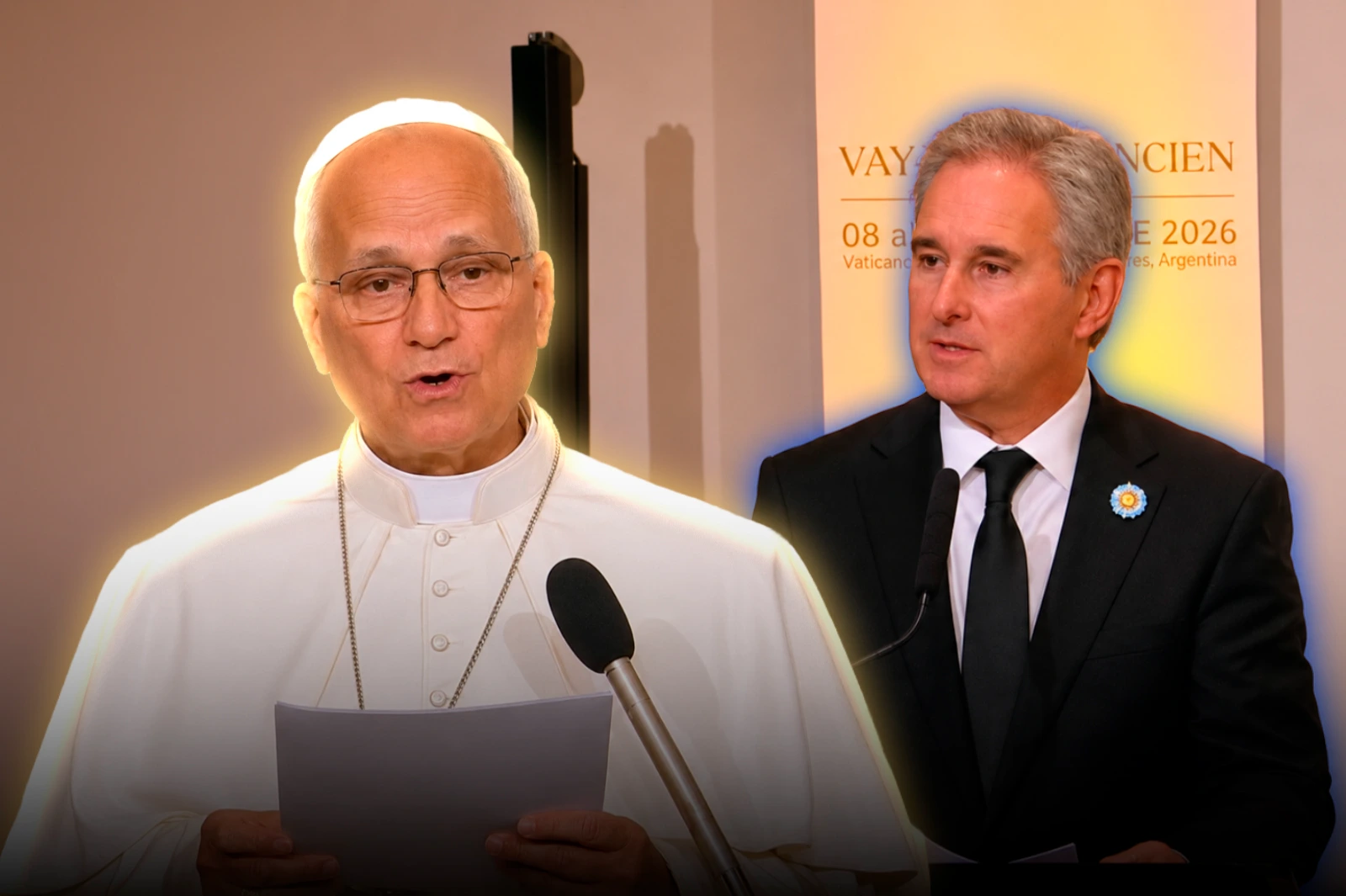

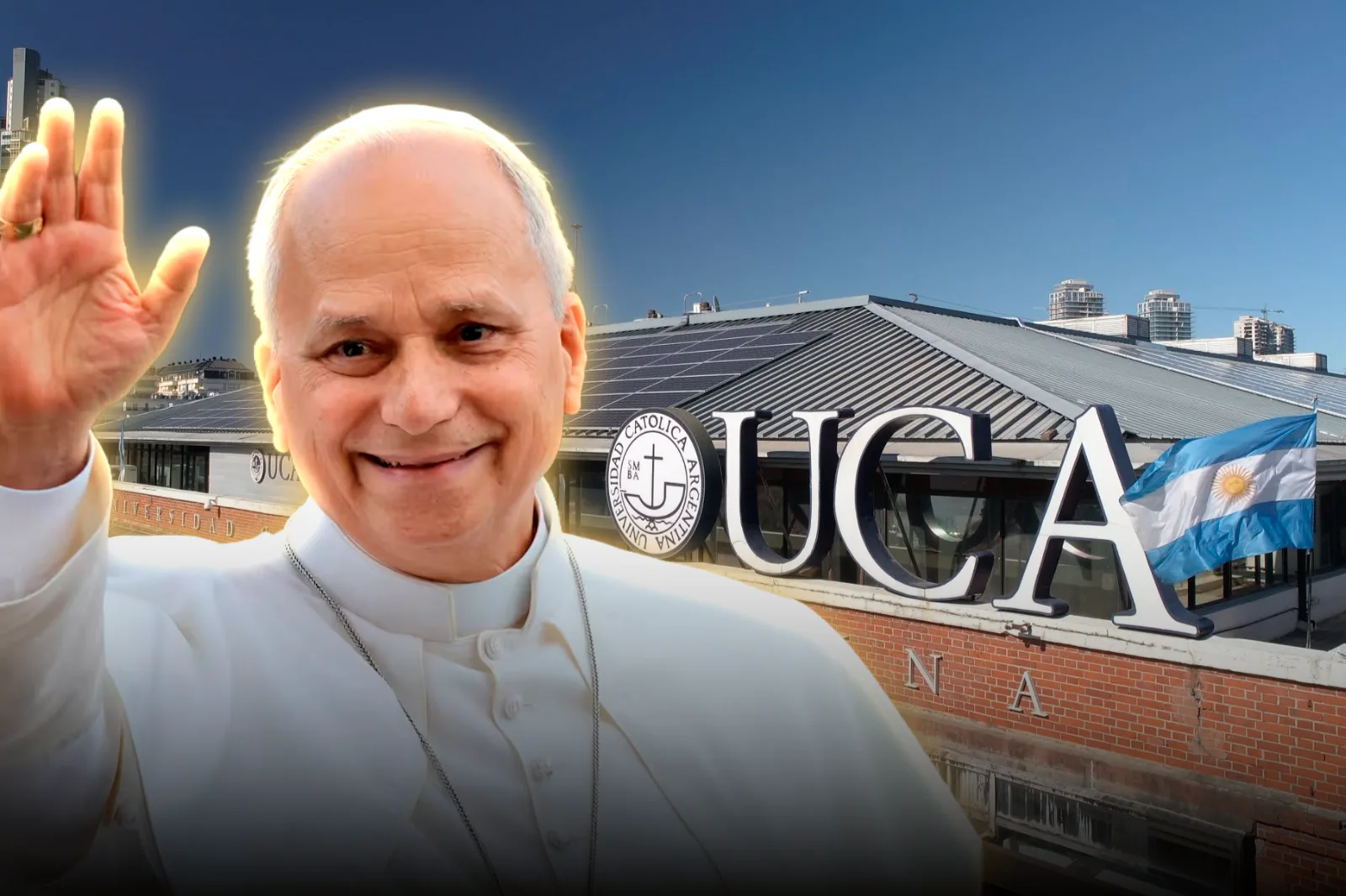


On the second day of the historic apostolic visit of the Supreme Pontiff to the Republic of Argentina, the Palacio San Martín —ceremonial seat of the Ministry of Foreign Affairs, International Trade and Worship— was the scene of a significant summit of interreligious dialogue and institutional fraternity. The meeting, which brought together nearly 100 representatives from various religious communities in the country, cardinals, representatives of indigenous peoples, and high authorities linked to the area of Worship, constituted a powerful testimony of the convergence between faith, the principles of freedom, and the moral strengthening of society under the ideological leadership of the government of President Javier Milei.
The ceremonial event began with welcoming words delivered by the Argentine chancellor, Pablo Quirno, who expressed the deep joy of the Executive Power and the Argentine people at the presence of León XIV and the distinguished members of the College of Cardinals at the Chancellery. In his speech prior to the papal message, the minister emphasized that biblical principles and theological virtues are essential to guide public management and assistance to those in need, stating categorically: “Faith, hope, and charity encourage service to those who need it most”.
Chancellor Pablo Quirno emphasized that the fundamental purpose of convening this day at the diplomatic headquarters was to consolidate peaceful coexistence, fraternity, and mutual respect, continuing the fruitful legacy of Pope Francis in promoting ecumenical dialogue as an indispensable tool for building lasting peace.
Next, His Holiness Pope León XIV addressed the audience affectionately: “dear brothers and sisters in Christ, dear friends who worship with us the one God, esteemed representatives of the various religious traditions, I am very pleased to greet you”. In his speech, the Pontiff reaffirmed the historical formation of Argentina as an admirable melting pot of races where communities of Catholics, Evangelicals, Jews, and members of indigenous peoples integrated their dreams, faith, and daily work to found the nation without religious differences ever being a cause for division.
At the doctrinal core of his message at the Palacio San Martín, León XIV outlined 3 essential aspects that emerge from sincere prayer for the protection of the social body: