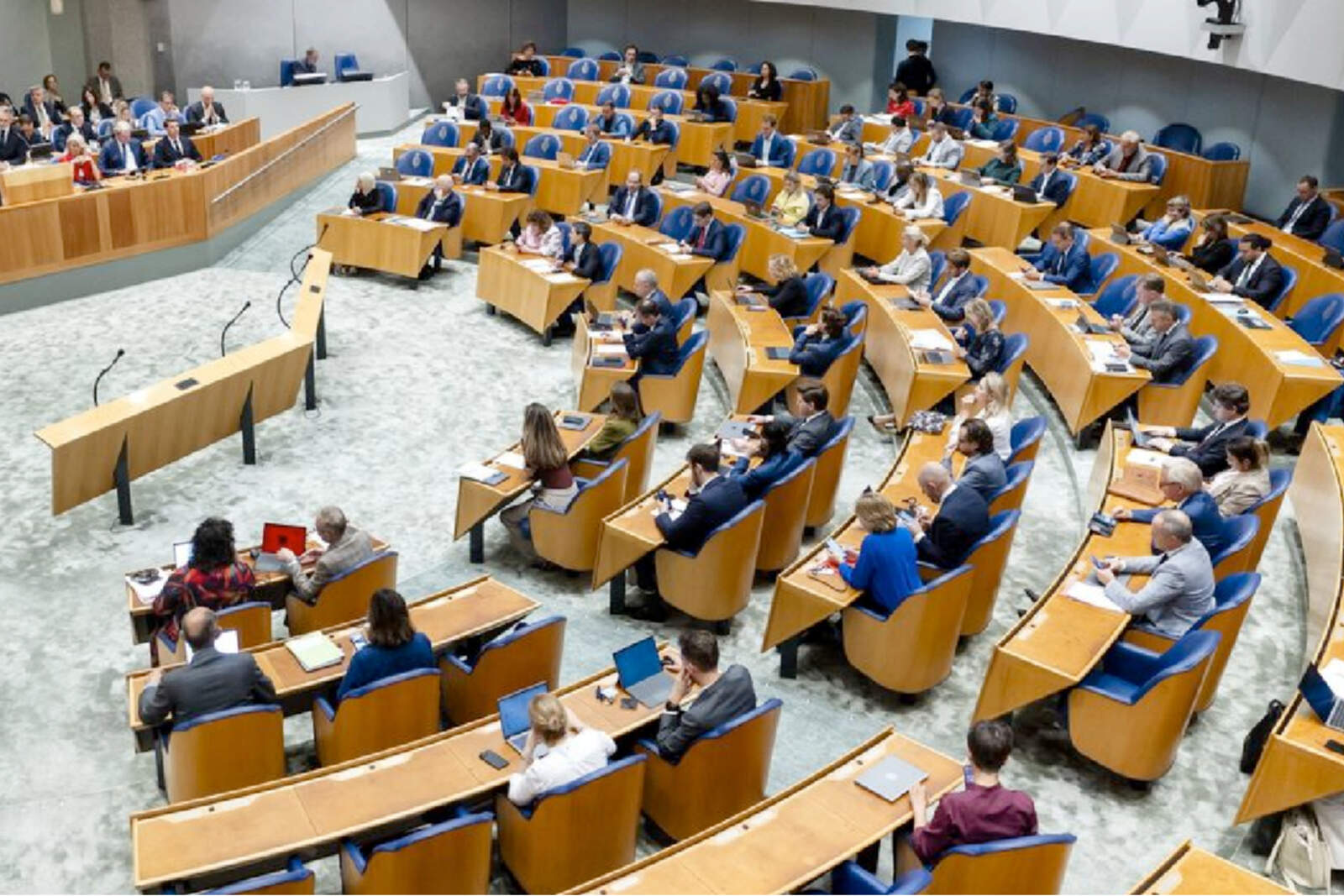
Parliament in the Netherlands approved the 36% levy on actual gains, including unrealised capital gains, starting in 2028
Nuevo
Agregar La Derecha Diario en
Compartir:
The Dutch Parliament took a deranged step in the reform of the tax system on savings and investment by approving in the House of Representatives the law "Wet werkelijk rendement box 3," which introduces a 36% tax on real returns obtained by residents. The regulation, which still has to be ratified by the Senate, will enter into force on January 1, 2028.
The reform responds to a series of rulings by the Hoge Raad (Supreme Court of the Netherlands), which since December 2021 has declared the old "Box 3" system unconstitutional.
That model taxed estimated or fictitious returns on wealth, regardless of the income actually obtained. The high court concluded that this practice violated the right to property and the principle of non-discrimination, especially in a context of interest rates close to zero.
El parlamento holandés aprobó la creación de un impuesto del 36% sobre los rendimientos de los residentes holandeses
The new scheme replaces that mechanism with a levy on real returns. However, it is not limited to income actually received, such as interest, dividends, or rents.
It also includes the annual increase in the value of assets such as shares, bonds, or cryptocurrencies, even if they haven't been sold. Thus, if a portfolio increases by 10,000 euros in one year, that unrealized gain will be considered taxable income.
The law introduces a tax-exempt threshold of 1,800 euros of annual return and allows future losses to be offset without a time limit, provided that they exceed 500 euros.
In addition, it provides for different treatment for real estate and stakes in qualified startups, which will be taxed under a traditional capital gains model: the tax on revaluation will be paid only when the asset is sold. Current income derived from these assets, such as rents or dividends, will continue to be taxed annually.
La reforma impositiva también afecta a los rendimientos de las criptomonedas
During the parliamentary debate, the Secretary of State for Taxation acknowledged that the Government would have preferred to apply a system based exclusively on realized gains, but maintained that it wasn't feasible to implement it in time without causing a strong budgetary impact.
The Executive estimates that the lack of a definitive framework has meant a loss of around 2.3 billion euros per year for the public coffers.
The approval took place despite the reservations expressed by several parties in the governing coalition, which admitted that taxing unrealized capital gains is not their ideal option. Nevertheless, they defended the measure as a necessary solution after the judicial annulment of the previous system.
The bill has caused criticism, especially among investors and communities linked to cryptoassets, who warn of the risk of having to pay taxes on "on-paper" gains without having obtained liquidity. They also warn of possible incentives for tax relocation to countries that only tax capital gains when they are realized.
El gobierno holandés declaró que hubiera preferido aplicar un sistema basado en ganancias efectivas
In the European context, the Dutch model is rather unusual, since most countries apply taxes on capital gains at the time of the sale of the asset. Even so, the Government keeps as a long-term objective the evolution toward a system fully based on the realization of gains.
If the Senate confirms the text, the Netherlands will adopt one of the most unique regimes in Europe in terms of taxation of financial wealth, in an attempt to balance legal certainty, revenue collection, and tax fairness after years of litigation and transitional reforms.