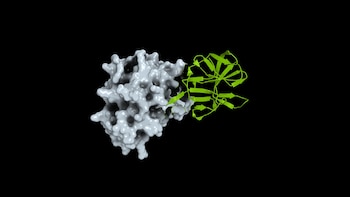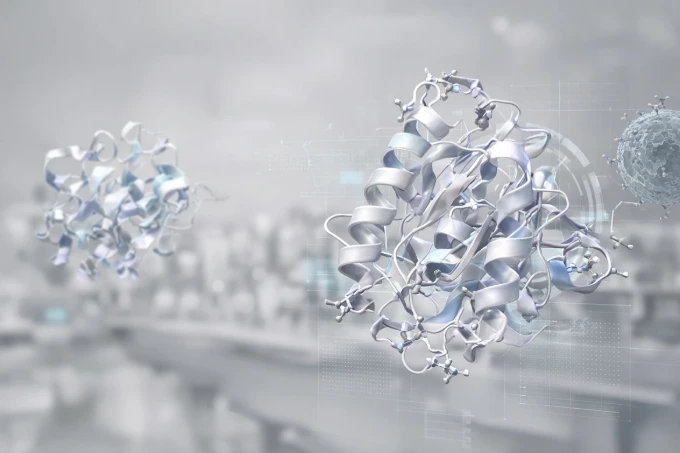

Nvidia, Google DeepMind, and the European Bioinformatics Institute of the European Molecular Biology Laboratory generated an open set of protein structures for over 2,800 viruses. The material, available in the AlphaFold database, includes three-dimensional models of 2,812 viral proteomes belonging to 23 families relevant to human health.
The central goal is for laboratories in any country to study potential health threats without waiting for an emergency to be declared. The World Health Organization warns that climate change, international mobility, human expansion into animal habitats, and gaps in surveillance increase the risk of new outbreaks or pandemics.
Proteins allow a virus to enter cells, multiply, and evade the body's defenses. Knowing their three-dimensional shape and how they interact with each other is key to understanding the functioning of a pathogen and designing faster responses.
The predictions were made using AlphaFold2, Google DeepMind's artificial intelligence system that calculates the spatial structure of a protein from its amino acid sequence. Nvidia contributed its BioNeMo platform to process thousands of viral proteins on a large scale.

Limitations and Available Data
The models do not replace laboratory experiments. The database indicates the confidence level of each prediction, and researchers must validate the results before moving forward with treatments. Nevertheless, the information allows for deciding which proteins to prioritize in the early days of an outbreak, when time is crucial.
The collection includes 5,279 high-confidence heterodimers—complexes formed by two distinct proteins—and 2,749 homodimers, which group two copies of the same protein. It also incorporates another 4,681 high-confidence viral homodimers developed by an external team.
During the Covid-19 pandemic, research on diagnostics, vaccines, and drugs advanced at an unprecedented speed.
The material is hosted on the AlphaFold Pandemic Preparedness Portal, where scientists can consult structures of viruses linked to families that infect humans and download the information for their own analyses. The license permits academic and commercial uses with proper attribution.