According to the judge, there was no risk of recidivism 'since the victim, who is in a coma, is inevitably going to die'
Nuevo
Agregar La Derecha Diario en
Compartir:
An extreme case of violence that took place in Paris triggered a major judicial scandal. It became known that a judge decided to release a man accused of brutally beating his partneruntil he left her in an irreversible coma. The argument was based on the claim that "there was no risk of reoffending" since the victim's death would be inevitable.
The striker, Mourad S., a 41-year-old Tunisian citizen, was charged with attempted homicide on December 22. This occurred after his partner, Tiphaine M., was found unconscious on the staircase of a building located in the 20th district of the French capital. The woman had multiple bruises and a severe brain injury.
París (distrito XX), jueves 8 de enero.
The judge's argument that sparked the controversy
The initial decision made by the investigating judge caused astonishment even within the judicial system. In order to justify the defendant's supervised release, the magistrate stated verbatim that "there is no risk of repetition because the death of the victim, who is in a coma, is inevitable".
Tribunal de París
The ruling was harshly criticized by the prosecutor's office, and the advocate general declared himself "abasourdi" in the face of the judge's reasoning. In turn, he emphasized that the defendant is a violent, unstable individual, without employment and without documentation. He also has problematic alcohol and drug use, and he doesn't offer real guarantees of appearing before the courts.
This Tuesday, the Court of Investigation overturned the decision and ordered his immediate arrest. Mourad S. was finally imprisoned.
A night of violence recorded by cameras
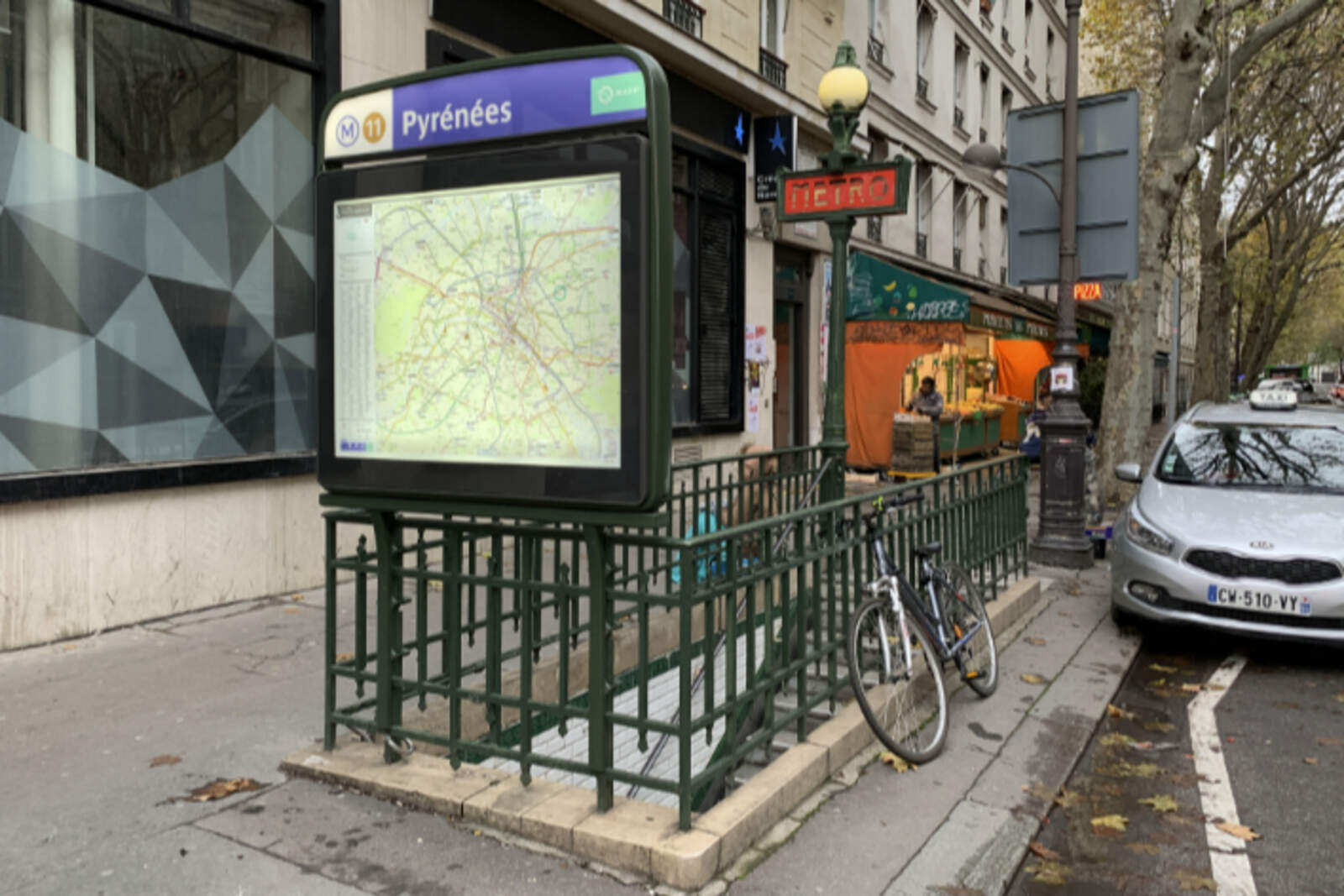
The reconstruction of the events is based on video surveillance footage. The cameras show the couple moving during the night through different lines of the Paris metro, first on line 7 and then on line 2. In the vicinity of Pyrénées station, they are seen arguing and, on at least two occasions, the man slaps the woman and drags her by the hair.
La estación de metro Pyrénées
At 1:19 a.m. they enter the building where the victim was staying, at 1:51 a.m. the striker leaves alone. He returns at 2:43 a.m., and the firefighters only arrive at 3:30 a.m., after a call made by the defendant himself.
Background and a ruling that exposes the system
Mourad S stated that both of them were in an advanced state of intoxication and claimed that the woman had suffered several falls on the staircase. He admitted having used violence, but he denied homicidal intent.
His criminal record shows four prior convictions for acts of violence and rebellion.The appellate judges rejected the defense lawyer's position and ordered pretrial detention.
Tiphaine M remains in an irreversible coma and her death is considered imminent by the medical team. Meanwhile, the case exposed a judicial logic that provoked public outrage: the release of a violent striker based on the presumption that his victim would not survive.
An argument that, far from closing the case, opened a deep debate about the limits, priorities, and responsibilities of the judicial system in the face of extreme violence.