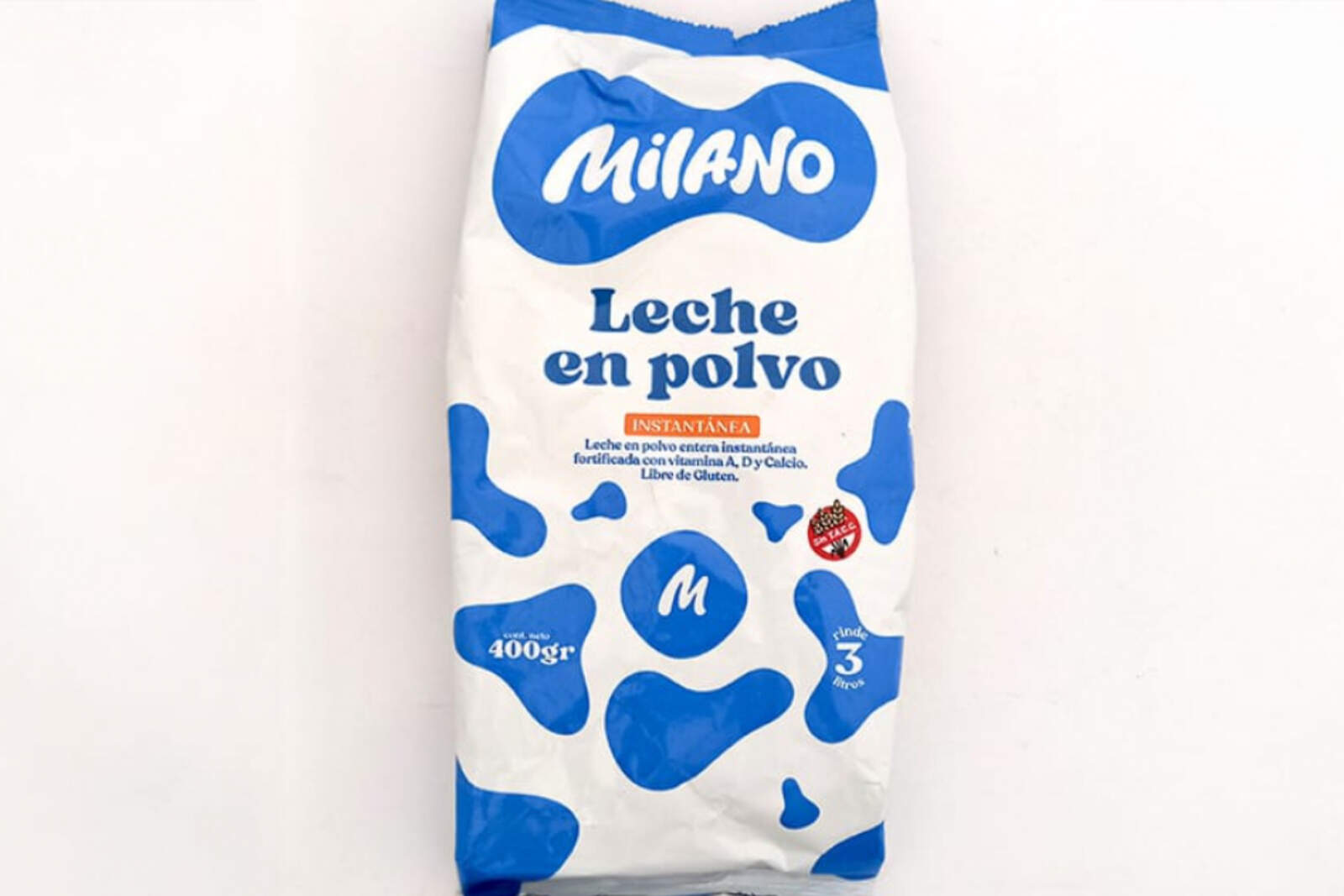
Health authorities ordered an immediate recall and recommend not consuming the batch identified by the laboratory
Nuevo
Agregar La Derecha Diario en
Compartir:
The provincial government of Santa Fe announced the ban on the sale of a specific batch of powdered milk following the results of official analyses. The affected milk is Milano fortified whole instant powdered milk, produced in Villa Nueva by Grupo Boss SRL, and its withdrawal has been ordered. The resolution from the Santafesina Food Safety Agency (Assal) applies to batch number 146 with an expiration date in June 2026.
Laboratory tests determined that the fat content of the batch was below the minimum required by the Argentine Food Code, which is the main technical reason for the restriction. In light of this finding, Assal advised those who have purchased units from this batch not to consume the product and to await official instructions for its return or safe withdrawal. The measure applies throughout the provincial territory and aims to prevent health risks from consuming foods that do not meet standards.
The resolution details the authorizations on the packaging RNE No. 04-005696 and RNPA No. 04-082539, information used for the administrative process. Authorities announced inspections of other batches and will review the traceability of production and distribution to limit the scope of non-compliance. In addition, it was indicated that accurately identifying the batch and its expiration date facilitates targeted withdrawals that reduce the impact on the rest of the production.
El producto afectado es la leche en polvo instantánea entera fortificada marca Milano
What consumers and businesses should do in response to the ban
Consumers can obtain information through Assal's official channels to learn about the steps planned for the return or withdrawal of units purchased from the affected batch. Retail chains and stores have been instructed to immediately withdraw batch 146 and suspend any operations related to that batch until further administrative notice. Health inspectors will visit points of sale and warehouses to verify the absence of the banned product and prevent its clandestine circulation.
The measure is part of protocols that regulate the response to foods that do not meet standards and seeks to preserve safety while investigations continue. Sources from health control stated that the procedure aims to limit risks and prevent consumers from being exposed to non-compliant products. Assal reiterated that these actions protect the population and that the technical and administrative evaluation will continue until any additional steps are determined.
Authorities requested that irregularities be reported and that labels and authorizations be checked, and reminded that traceability allows for quick responses. The outcome of the investigations will determine whether administrative sanctions or additional measures are adopted against those responsible for production or distribution. Meanwhile, the immediate objective of the ban is to prevent the sale of the specified batch and protect consumer health.