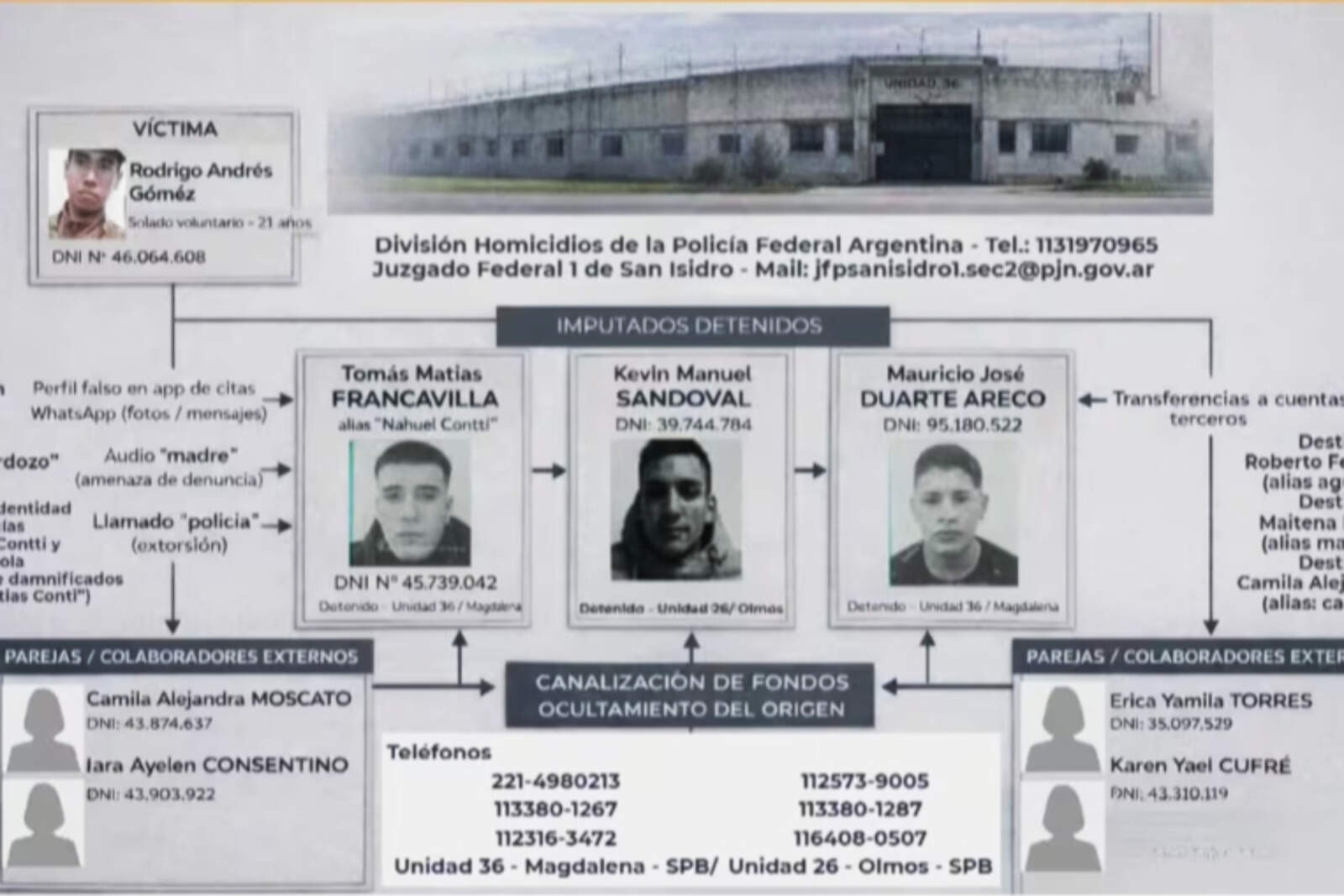

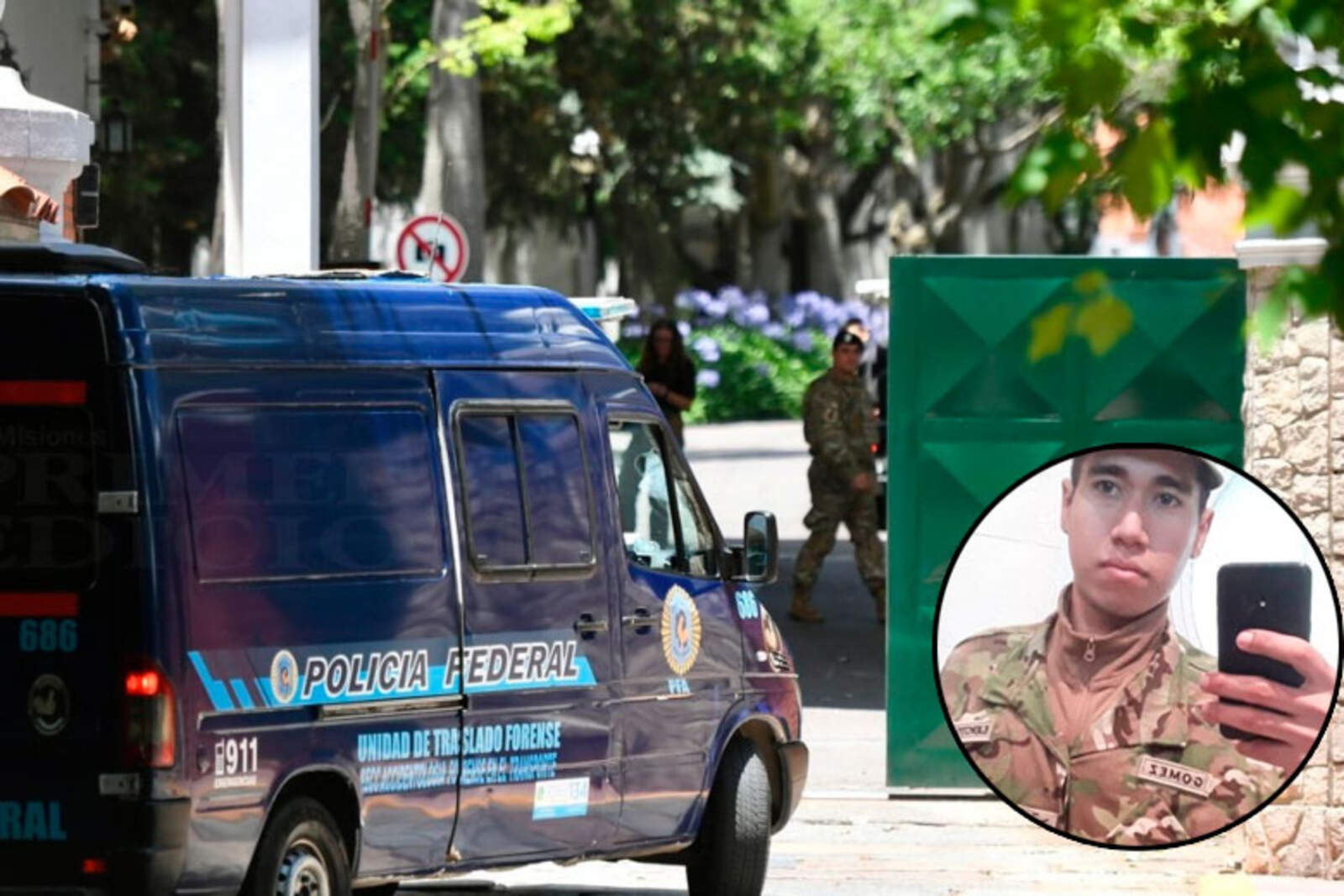
Javier Milei's government announced at midday the results of an investigation that made it possible to dismantle a criminal organization dedicated to extortion and digital scams that operated from Buenos Aires prisons and that had among its victims the soldier Rodrigo Andrés Gómez, a 21-year-old grenadier who committed suicide while he was performing security duties at the Presidential Residence of Olivos, the president's residence.
Gómez died on December 16, in the early hours of the morning, while he was standing guard at one of the surveillance posts on the grounds. At that time, the official information indicated that the young man had taken his own life. As the judicial investigation progressed, that hypothesis was confirmed, but the case incorporated a central element: the soldier was the victim of an organized extortion scheme that subjected him to intense psychological and economic pressure.
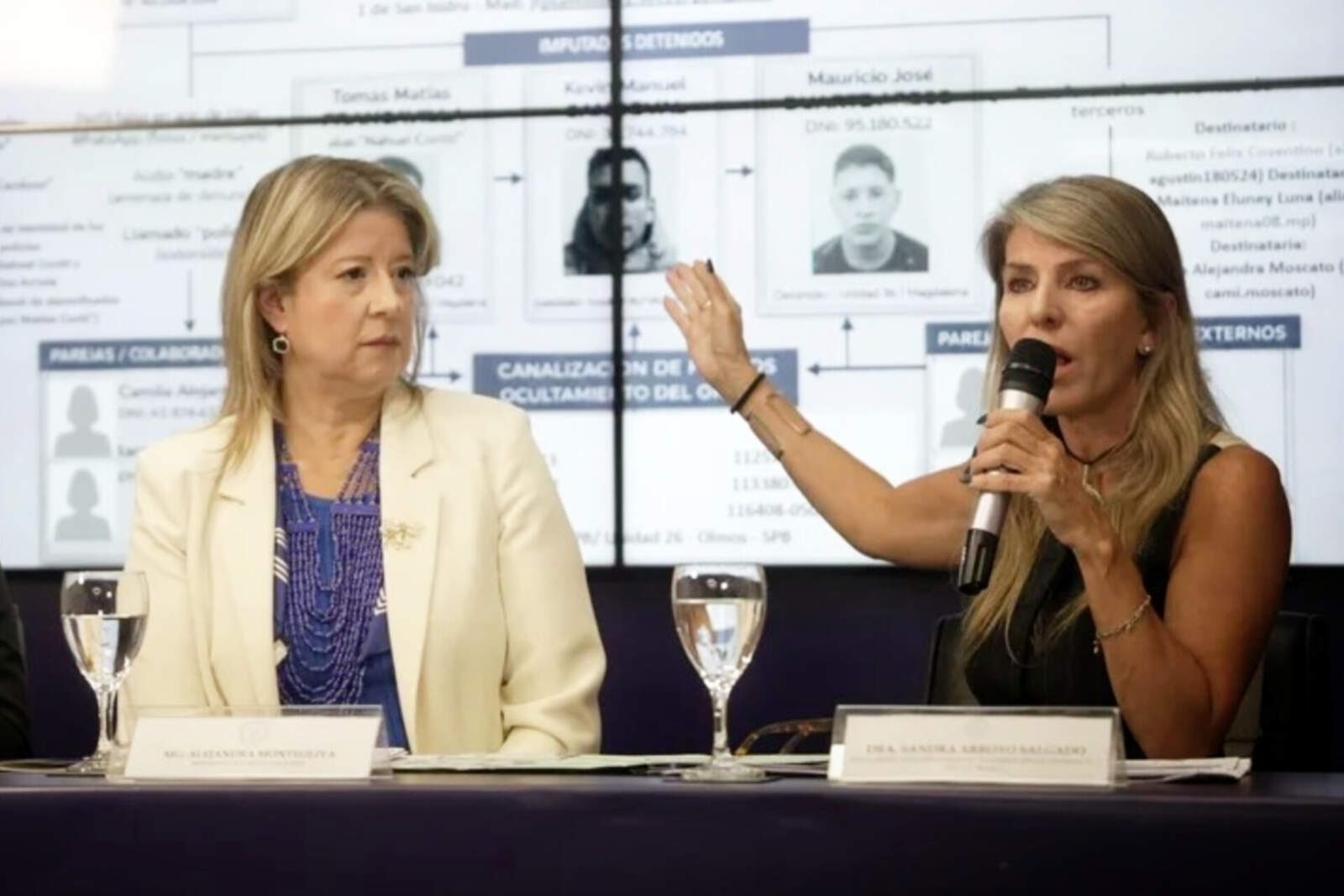
According to the authorities, the gang operated as an organized structure, with defined roles and operational continuity. The Minister of National Security, Alejandra Monteoliva, indicated that Gómez was one of those affected by this scheme, which had as its victims an undetermined number of Argentine citizens.
Government officials described the network as a "crime SME" that operated through cell phones from at least two penitentiary units in the province of Buenos Aires. In that context, the Chief of Cabinet, Manuel Adorni, stated: "A cell phone in a prison is a weapon".
The extortion of Gómez
The scheme that ended in the fatal outcome began through a dating app. The criminal group started with the creation of a false profile in the app "evermatch", under the name Julieta Ayelén Cardozo. Then the figure of a supposed upset mother appeared and the so-called "terror audio", in which the victim was accused of being a "degenerate" for having maintained a virtual relationship with a 17-year-old minor.
From that moment, the next link was activated: a phone call from a fake Buenos Aires City police officer who claimed to have learned of a complaint and warned about an ongoing judicial case.
To avoid legal consequences, he demanded immediate money transfers. In several cases, according to Judge Arroyo Salgado, the real identity of Matías Nahuel Conti, a member of the Buenos Aires City Police whose documentation had been stolen, was used, although the officer never had any connection with the events and never made calls to Gómez.
The transfers were made to bank accounts in the names of women linked to the organization, who acted as intermediaries. The money was then split, redistributed, and concealed to make it difficult to trace. The demands did not stop with the first payments, but were renewed under constant threats.