In a major development for the Argentine economy, foreign-owned energy companies have resumed the remittance of profits to their parent companies abroad, a process that until recently seemed impossible.
This is a structural change that has not been seen since before the re-establishment of currency controls in September 2019, a measure that blocked the repatriation of profits for almost seven years.
The new scenario is a direct result of a measure by the Government of Javier Milei, through the Central Bank, which via Communication “A” 8226, issued on April 11, 2025, and effective from the 14th of that month, enabled access to the Single and Free Exchange Market (MULC) for the remittance of dividends.
Dollars
The regulation introduced a central condition: only profits corresponding to fiscal years starting from January 1, 2025, can be transferred abroad.
Official data confirms that the mechanism is already in motion. In March 2026, outflows for profits and dividends reached USD 869 million. Of that total, USD 603 million were channeled through operations in the exchange market, while USD 265 million were made through swaps primarily financed with Bopreal collections.
The energy sector led this process significantly, concentrating USD 460 million, which is more than half of the total recorded.
The trend continued in April, although with lower volume: total outflows were USD 365 million, of which USD 107 million corresponded again to the energy sector.
Among the companies involved are international firms such as TotalEnergies, Chevron, and Shell, along with Argentine companies with structures based abroad.
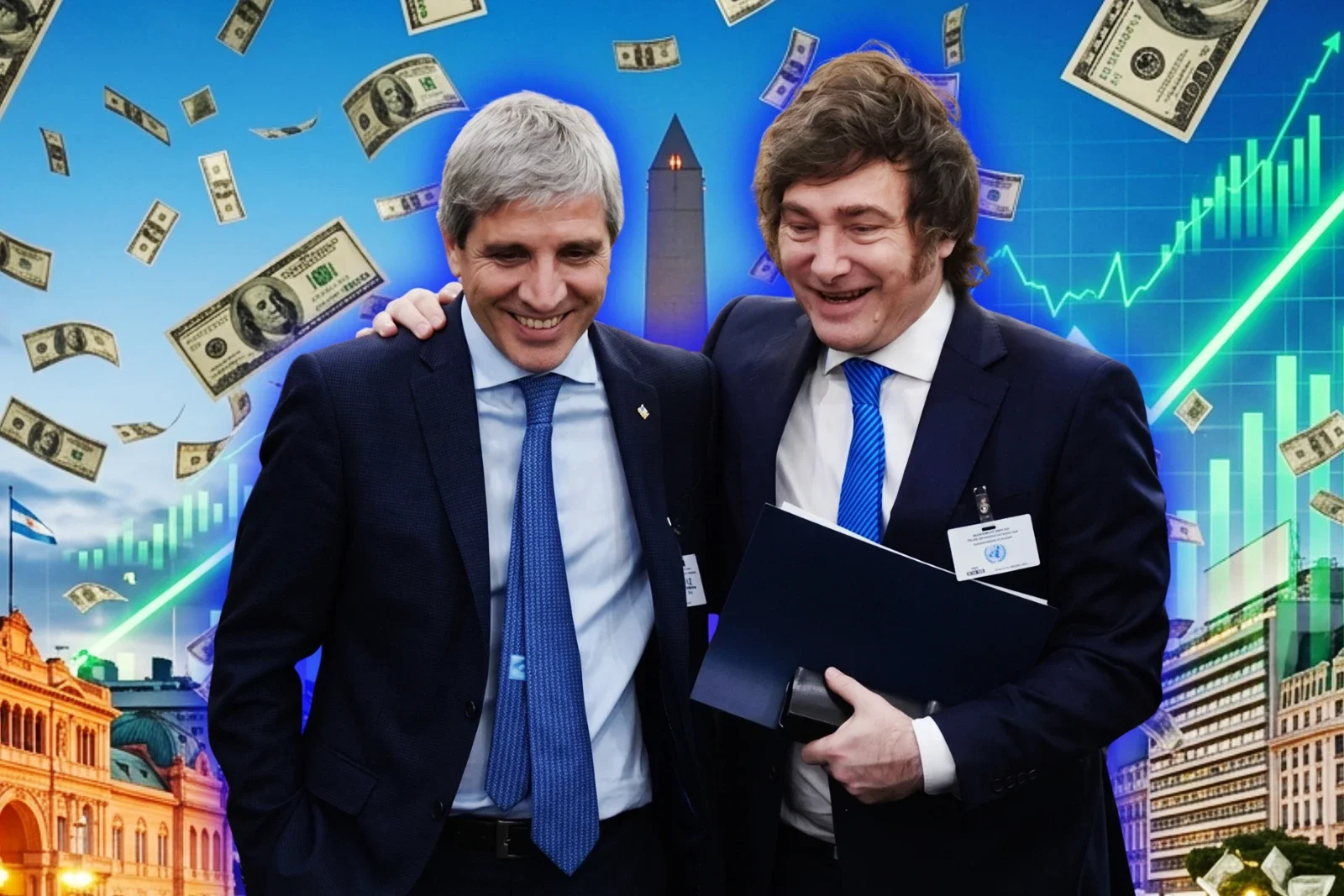
Javier Milei and Luis Caputo
The Currency Controls
The return of these flows marks a turning point compared to the previous scenario. The controls had been reinstated on September 1, 2019, following the electoral defeat of the Government of Mauricio Macri in the primary elections.
Following Decree 609/2019 and Communication “A” 6770 from the Central Bank, strict controls were re-implemented on the exchange market that, in practice, blocked the regular remittance of profits abroad for years.
This restriction had concrete effects on investment dynamics. The inability to repatriate profits led several multinationals to reassess their strategies in the country, slowing down projects or directly rejecting investments.
At the same time, many companies were forced to reinvest profits locally or to keep capital immobilized within Argentina.
The Arrival of Javier Milei
With the assumption of Javier Milei in December 2023, a gradual process of dismantling those regulations began. The first stage focused on individuals.
In April 2025, the Central Bank removed the cap of USD 200 monthly for the purchase of foreign currency, lifted restrictions related to subsidies and public employment, and repealed the so-called “cross restrictions” that prevented those who had accessed financial dollars in the previous 90 days from operating in the MULC.
In this context, the reactivation of profit remittances is a concrete signal of normalization of the exchange system. For the energy sector, one of the main engines of investment in the country, the possibility of repatriating profits once again positions Argentina as a more predictable and competitive destination, in line with Milei's goal of rebuilding trust and attracting international capital.