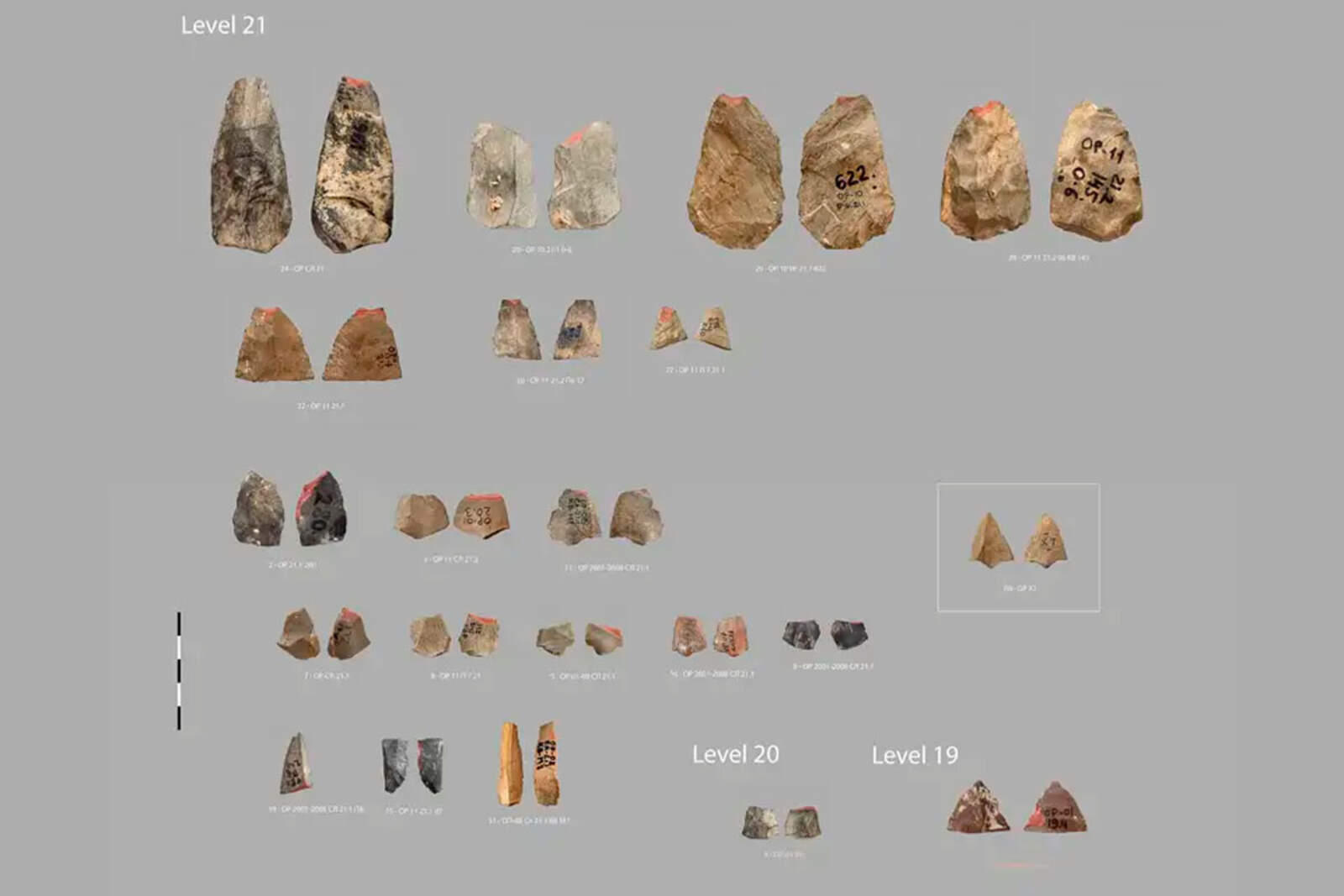
A team of archaeologists found tiny stone points in the Obi-Rakhmat cave in Uzbekistan that could be the oldest evidence of arrows. According to the study, these pieces are about 80,000 years old.
The discovery, published in the journal PLOS One, challenges the idea that only Homo sapiens had developed such advanced hunting technologies.
Podrían ser las evidencias más antiguas de flechas
What did they find in the Obi-Rakhmat cave?
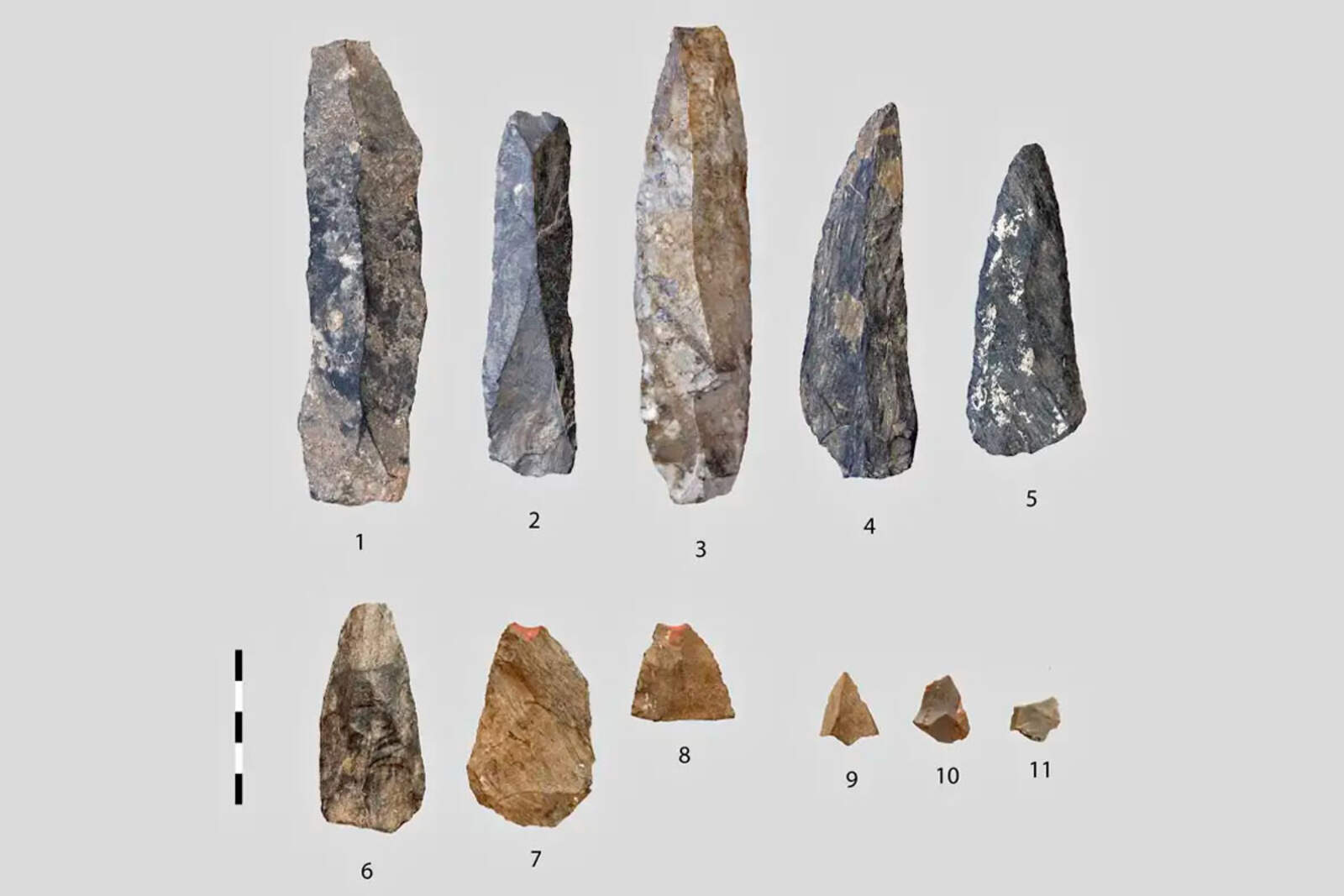
The researchers found micropoints made of stone, some just 2.2 cm (0.87 inches) long and weighing less than 2 grams (0.07 ounces). These pieces showed typical projectile fractures, which suggests that they were used as arrowheads.
Until now, it was thought that Neanderthals hunted only with heavy spears at close range. This discovery indicates that they could have had projectile weapons much earlier than previously believed.
A surprisingly advanced technology
Traceological analysis made it possible to identify the impact marks on the points. "They're like the fingerprint of a projectile," explained archaeologist Hugues Plisson from the University of Bordeaux in an interview with international media.
Una tecnología sorprendentemente avanzada
The experts classified three types of pieces: large spear-like points, elongated blades and the micropoints, considered the most unexpected finding.
Who lived in Uzbekistan 80,000 years ago?
The cave had already revealed the remains of a young Neanderthal two decades ago. However, some cranial features raise the possibility that it was a hybrid with Denisovans or even with Homo sapiens.
La cueva ya había revelado restos de un joven neandertal hace dos décadas
This suggests that the region was the scene of interactions between different human species much earlier than previously thought.