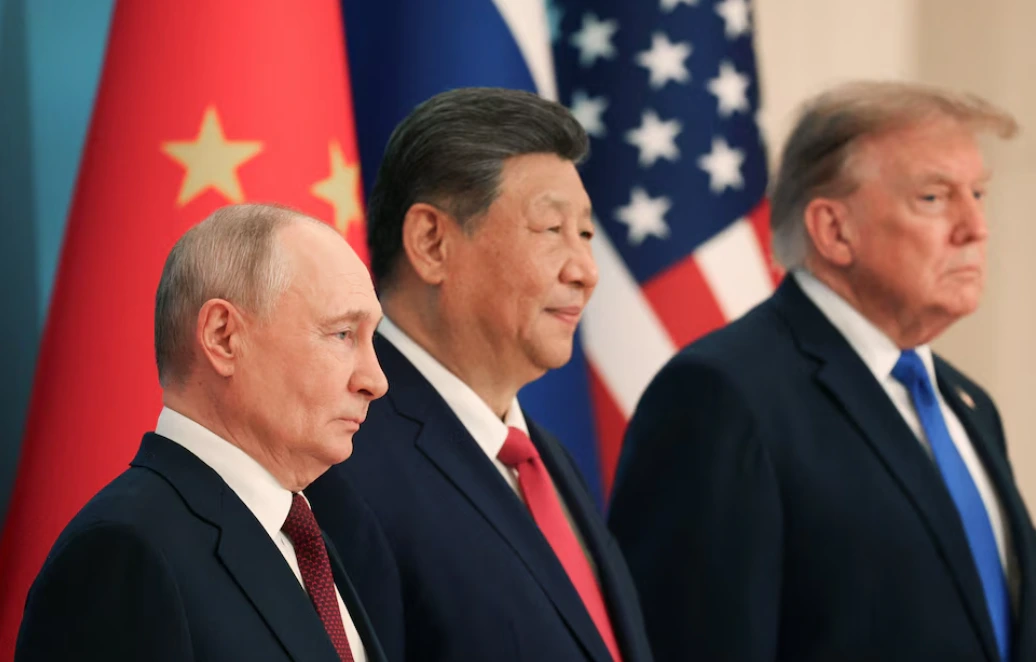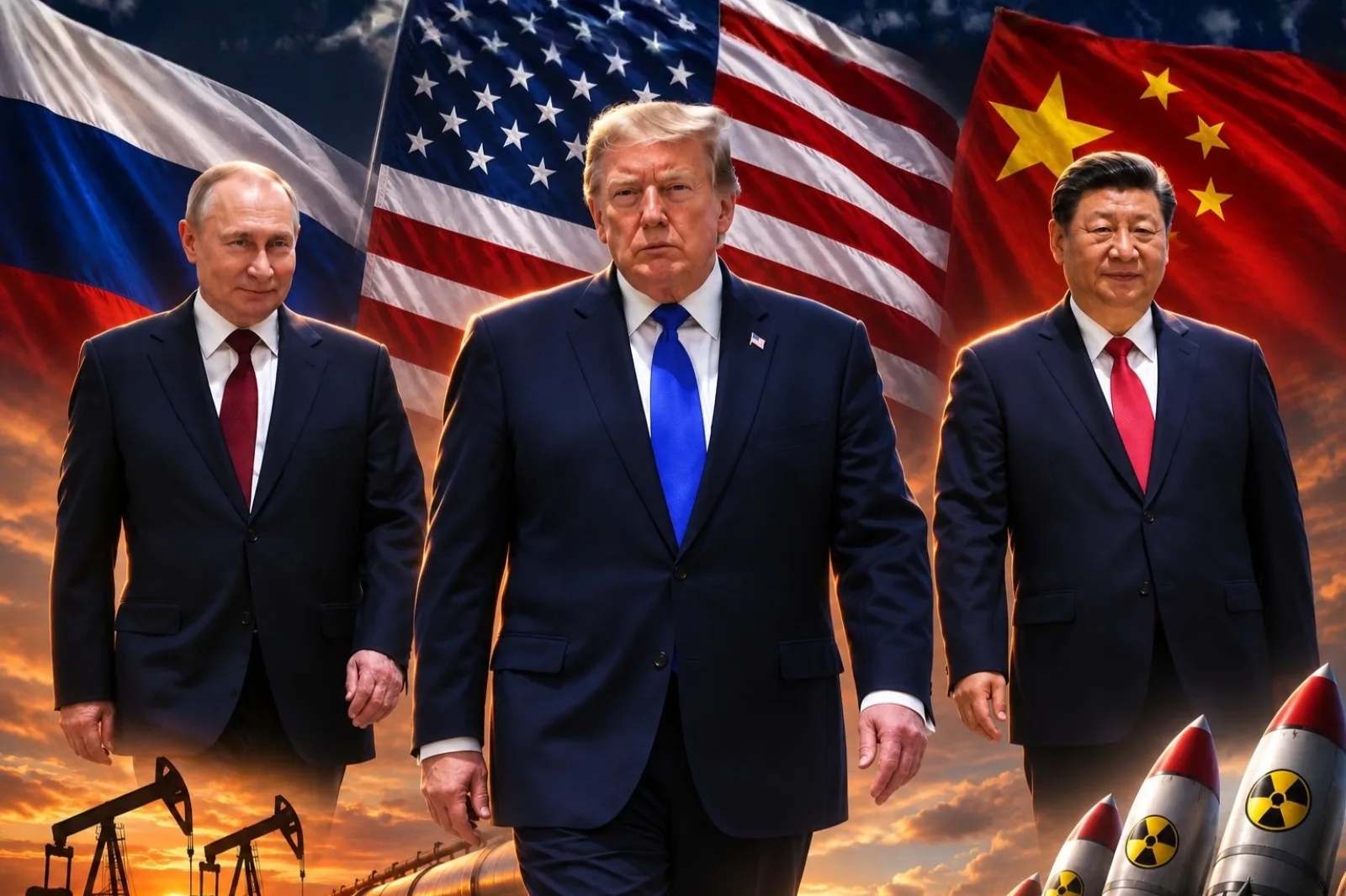

The President of the United States, Donald Trump, starred in a historic diplomatic meeting on Thursday by bringing together for the first time at the same table Chinese President Xi Jinping and Russian President Vladimir Putin. The trilateral summit took place in Shenzhen, China, and concluded with the signing of a Declaration on Peace, a four-point document that establishes commitments for cooperation in energy, international security, and nuclear conflict prevention.
The meeting, held at the Kylin Villa, lasted approximately one hour and twenty minutes and allowed the three leaders to exchange views on major geopolitical challenges. The encounter represents a significant diplomatic event due to the joint participation of the three largest nuclear powers in the world.
Trump had anticipated that the meeting would address fundamental issues for international stability, including the reduction of atomic arsenals, the war in Ukraine, and nuclear proliferation. During his initial remarks, he emphasized the shared responsibility of Washington, Moscow, and Beijing in preserving global security.
The declaration was disseminated by the Chinese government and by official Russian media. Although it does not establish concrete mechanisms or implementation timelines, it contains commitments in four strategic areas.
Trump pushed for a commitment to reduce the risks of nuclear war
One of the central points of the document is the commitment of the three powers to avoid a nuclear confrontation. The leaders reaffirmed that "a nuclear war cannot be won and should never be fought" and agreed to maintain a dialogue to reduce the risks associated with these weapons and prevent their proliferation.
At the opening of the meeting, Trump stated that the United States, Russia, and China are in a unique position to discuss the reduction of the planet's nuclear arsenals.
The U.S. president emphasized that the three nations concentrate extraordinary atomic capabilities and that, for that reason, they have a special responsibility in preventing a nuclear catastrophe.
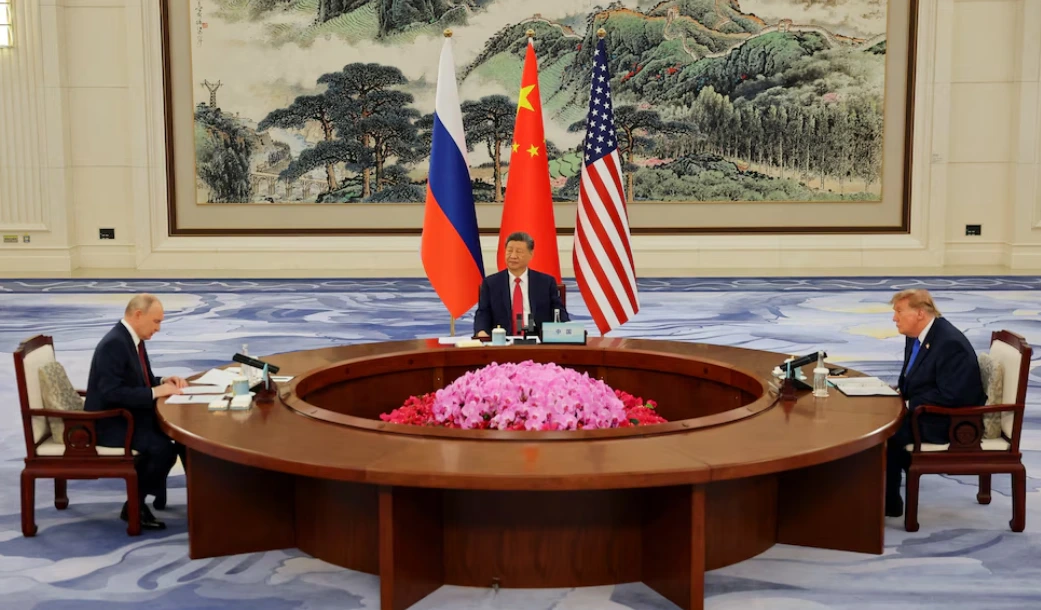
The understanding gains relevance after the New START treaty expired in February 2026, the last existing agreement that established quantitative limits on the deployed strategic arsenals of the United States and Russia.
The possibility of incorporating China into future negotiations also represents one of the main challenges. Beijing argues that Washington and Moscow must first reduce their historically larger arsenals, while the United States believes that any new disarmament agreement must include China.
The United States, Russia, and China will seek to increase oil production
Another central commitment of the declaration is related to global energy supply. The three countries agreed to advance in increasing the production and supply of refined petroleum products, with the declared aim of benefiting all nations.
The document also reaffirms the importance of ensuring stable and predictable energy flows.
The understanding comes in a context of international tensions that have affected energy markets, especially due to the war between the United States and Iran and the difficulties in ensuring crude supply through strategic routes such as the Strait of Hormuz.
Cooperation between Washington, Moscow, and Beijing could have significant consequences for international markets, given the weight of the three powers in the production, processing, and consumption of hydrocarbons.