
José Batlle y Ordóñez: The father of the Uruguayan Leviathan

José Batlle y Ordóñez: The father of the Uruguayan Leviathan
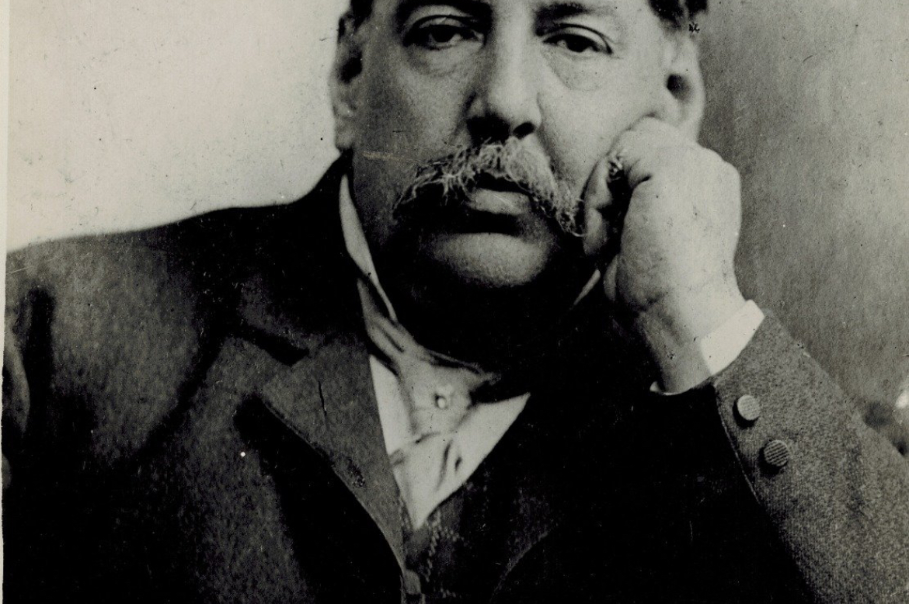
José Batlle y Ordóñez.
Imagen de Editorial Team
porEditorial Team
Uruguay

José Batlle y Ordóñez was not a modernizer. He was the main responsible for implementing an interventionist model in Uruguay.

Nuevo
Agregar La Derecha Diario en
Compartir:

José Batlle y Ordóñez was not a modernizer. He was the main responsible for implanting in Uruguay an interventionist model that sowed the foundations of its structural stagnation and relative decline.


During his presidencies (1903–1907 and 1911–1915), he consolidated the cult of the State as entrepreneur, omnipotent regulator, and compulsive redistributor. His work represents a systematic attack on private property, free initiative, and individual responsibility, replacing them with a state apparatus that generates chronic inefficiency, clientelism, and dependency.

The Entrepreneurial State: A Fatal Economic Error

Batlle promoted the creation and nationalization of public monopolies: the State Insurance Bank (created on December 27, 1911, by Law No. 3,935), the nationalization of the Bank of the Republic and the Mortgage Bank (1912), the State Electric Plants (UTE, 1912), and the state absorption of railway lines that began in 1914 and was formalized in 1919 with the State Railways and Trams. These measures did not respond to a pragmatic need but to the conviction that the State should be the main economic actor.

The result was predictable. Without personal risk, without competition, and without profit discipline, these companies generated permanent deficits that were covered by taxes, debt, or monetary issuance. Bureaucratic castes linked to the Colorado Party emerged, using public entities as a mechanism for distributing favors. Services became more expensive, lost efficiency, and stagnated in innovation. Complementary customs protection inflated an artificial, uncompetitive industry dependent on subsidies, which increased the cost of living for Uruguayans and distorted resource allocation in an economy that remained fundamentally agro-exporting.

The case of AFE is the most eloquent. An academic study from the University of the Republic establishes that it was the only public company that incurred losses throughout its history, becoming a permanent burden on state finances. The situation did not improve over time: by 2026, AFE's passenger program generated only $3 million in revenue against a deficit of $160 million covered by General Revenues. It is worth noting that this pattern was structural from the beginning: the first railway lines absorbed by the State starting in 1914 were built, in the words of AFE itself, “with a criterion of national development, but totally deficit from an economic point of view.” The deficit was not an accident; it was the design.

The Welfare State: A Machine of Dependency and Stagnation

Batlle decisively expanded social spending, labor regulations (eight-hour workday in 1915, pensions), and state paternalism. These measures, presented as achievements, created rigidities that disincentivized work, savings, and productive investment. They transformed the citizen into a demander of rights to the efforts of others and the State into a distributor of wealth that it does not generate.

The model generated a culture of dependency. Public employees increased from 15,000 in 1900 to 60,000 in 1930, with positions systematically created to reward political loyalties rather than functional necessity. Salaries in the sector, protected by absolute job stability, grew automatically while fiscal revenues depended on volatile exports. This generated structural fiscal imbalances that would worsen in the following decades. The hypertrophied public spending required more taxes and more debt, while labor rigidities raised the cost of employment and fostered informality.

The macroeconomic consequences were devastating and are precisely documented. Real GDP per capita growth fell from 5.4% annually between 1944 and 1951 to 3.0% between 1951 and 1956, and then to a virtual stagnation of 0.1% between 1956 and 1967. In the 1960s and until the democratic breakdown of 1973, GDP per capita grew by only 0.5% annually, while inflation averaged 51.7% annually —compared to 6.4% in the 1940s and 13.0% in the 1950s. An economy with an average inflation of 49.8% annually between 1965 and 1970, and which reached 97% in 1973, is not a system that fails circumstantially: it is a system that fails by design.

In relative terms, the decline is even clearer. According to estimates from the Maddison Project, Uruguay's GDP per capita compared to that of the United States fell from approximately one-third in 1910 to less than one-fifth by 1970. Uruguay, which at the beginning of the 20th century was one of the most prosperous countries in the Western Hemisphere, converged towards Latin American mediocrity in just two generations.

The economic collapse had direct political consequences. Stagnation and inflation fueled social instability, culminating in the emergence of the guerrilla movement MLN-Tupamaros in the 1960s and the breakdown of long-standing Uruguayan democratic stability in 1973. The Batllista model not only impoverished the country; it sowed the conditions for its own institutional crisis.

Clientelism as a System

The bureaucratic expansion was not a side effect of the Batllista model: it was one of its pillars. The Colorado Party used the state apparatus as a machinery of loyalties, incorporating employees in exchange for votes and colonizing the direction of public companies with party cadres. The result was structural: in 1995, public employees represented 11.46% of the Uruguayan electoral roll, a block with institutional veto power capable of obstructing any reform that threatened its position.

The inward-looking growth that followed Batllismo was largely driven by these same rent-seeking industries that sought state protectionism. The obvious limits of this model for a country of just two million inhabitants became unsustainable when the terms of trade deteriorated in the late 1950s. The model was not a victim of adverse external circumstances; it was a trap that the very Batllista institutional design made inevitable.

The Collegiate: Fragmentation and Institutionalized Clientelism

The constitutional reform of 1918, with its collegiate Executive, did not strengthen democracy: it diluted executive responsibility, facilitated the clientelist distribution of power, and hindered agile decision-making. It consolidated the duopoly of the traditional parties and mechanisms like the law of lemas, which favored political opportunism and mediocrity. The “Arbitral State” transformed into a Leviathan that devours private initiative and distributes favors.

Final Balance

Batlle y Ordóñez was one of the worst presidents in Uruguayan history. He institutionalized the central error of the 20th century: the faith in an omnipresent State that regulates, produces, and redistributes. His model did not protect the weak; it condemned the entire society to truncated prosperity. It did not democratize; it bureaucratized and clientelized. It did not modernize; it distorted an economy with enormous potential.

The numbers certify it without possible ambiguity: an entire decade —1956 to 1967— with economic growth of only 0.1% accumulated; inflation that in a single year exceeded 97%; a relative decline against developed economies that has no precedent in the region; and public companies that accumulated deficits from the very first day of operation and still do.

The subsequent Uruguay, with its recurrent crises and its difficulty in shedding Batllismo, confirms the diagnosis. The legacy is a burden: inefficient bureaucracy, market distortions, fiscal dependency, and a political culture that prioritizes distribution over wealth creation. There is no redeemable inheritance. Everything in his work was detrimental.

The true path to progress lies in dismantling this model: drastically reducing the size of the State, restoring the primacy of private property, opening markets, and returning responsibility to the individual.

Any defense of Batlle y Ordóñez is a defense of the interventionism that has impoverished entire nations. His figure represents, without mitigation, the origin of a wrong path whose consequences Uruguay still drags.


La Derecha Diario logo
ESX logoInstagram logoYouTube logoTikTok logoFacebook
ARGENTINABOLIVIAECUADORISRAELMEXICOURUGUAYDERECHA DIARIO TV
  • ES
    XInstagramYouTubeTikTokFacebook
  • DERECHA DIARIO TV
  • Secciones
  • ARGENTINA
  • BOLIVIA
  • ECUADOR
  • ISRAEL
  • MEXICO
  • URUGUAY
  • Países
  • La Derecha Diario logoLA DERECHA DIARIO
  • La Derecha Diario México logoLA DERECHA DIARIO MÉXICO
  • La Derecha Diario Uruguay logoLA DERECHA DIARIO URUGUAY
  • La Derecha Diario Ecuador logoLA DERECHA DIARIO ECUADOR
  • La Derecha Diario Bolívia logoLA DERECHA DIARIO BOLÍVIA
  • La Derechadiario República Dominicana logoLA DERECHADIARIO REPÚBLICA DOMINICANA
  • La Derecha Diario Israel logoLA DERECHA DIARIO ISRAEL
  • La Derecha Diario Estados Unidos logoLA DERECHA DIARIO ESTADOS UNIDOS
  • Temas
  • GUERRA EN IRÁN
  • El Diario
  • QUIENES SOMOS
  • AUTORES
  • PUBLICIDAD
  • DONAR
La Derecha Diario logo
TwitterInstagramYouTubeTikTokFacebook
Derecha Diario TV

Nosotros

  • Quienes Somos
  • Autores
  • Donar

Privacidad

  • Protección de datos
  • Canales
  • Sitemap
  • RSS

Contacto

  • info@derechadiario.com.ar
PUBLICIDAD

Noticias relacionadas

The left seeks to dismiss a legal advisor from the Army for thinking differently.

The left seeks to dismiss a legal advisor from the Army for thinking differently.

Orsi obtained a controversial discount of $25,000 on a Hyundai truck.

Orsi obtained a controversial discount of $25,000 on a Hyundai truck.

Sincericide: Silvia Nane confessed that without money to distribute, it is impossible for the FA to create a popular government.

Sincericide: Silvia Nane confessed that without money to distribute, it is impossible for the FA to create a popular government.

Paris Saint-Germain won against Arsenal on penalties and became the two-time champion of the Champions League.

Paris Saint-Germain won against Arsenal on penalties and became the two-time champion of the Champions League.

More than half of the country supports Milei's model for Argentina.

More than half of the country supports Milei's model for Argentina.

Milei dominates ahead of the 2027 elections and pulls almost 20 points ahead of Kicillof.

Milei dominates ahead of the 2027 elections and pulls almost 20 points ahead of Kicillof.