The “open regime” will have capacity for 800 inmates, will lack bars and will use electronic cards and facial recognition, in a 13,000 m² complex with a gym, reading rooms and common spaces.
In the midst of a progressive shift towards ultra-left prison policies in Spain, regional administrations are moving forward with initiatives that seek to redefine the traditional concept of prison.
Under the argument of “social reintegration”, these projects propose less restrictive models that, for their critics, show a worrying relaxation of the criminal system within the framework of the disastrous administration of the communist government of Pedro Sánchez and Salvador Illa in Catalonia.
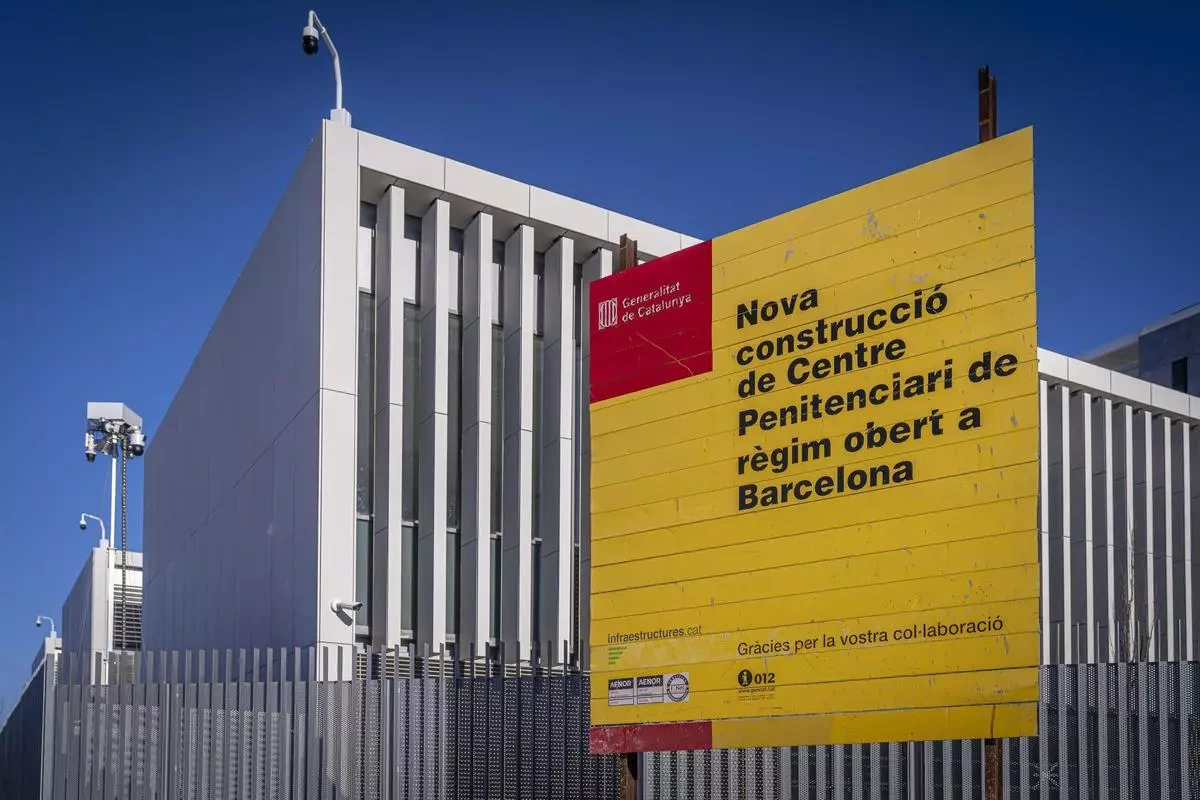
In this context, the Government of Catalonia will open a new open-system prison without bars in Barcelona, with the capacity to house up to 800 inmates in a situation of semi-freedom. The center, located in the Free Trade Zone, will begin operating later this year and will be aimed at people who are serving the final stretch of their sentence in the third degree, who only come to sleep or to carry out follow-up checks
. The prison without bars in Barcelona
The complex is built on a plot of 6,500 square meters and has about 13,000 square meters built.
With its launch, the places currently distributed between the old Trinitat prison and the men's section of Wad-Ras will be unified into a single space, in addition to adding about 200 additional beds.
One of the most striking aspects of the project is its design, which deliberately breaks with the traditional image of prisons. From the outside, the building could be mistaken for a health or administrative center. It is composed of three blocks in gray and white tones, while bright colors such as blue, yellow and orange predominate in the interior, with the aim of creating a more “friendly” environment
.
In line with this concept, rooms - avoiding even the term “cells” - lack conventional locks and are accessed by electronic cards. This system also regulates the passage through the different areas of the enclosure, including the control lathes, where facial recognition technology is incorporated. There are no traditional bars or keys, reinforcing the idea of a “more open and less restrictive” space
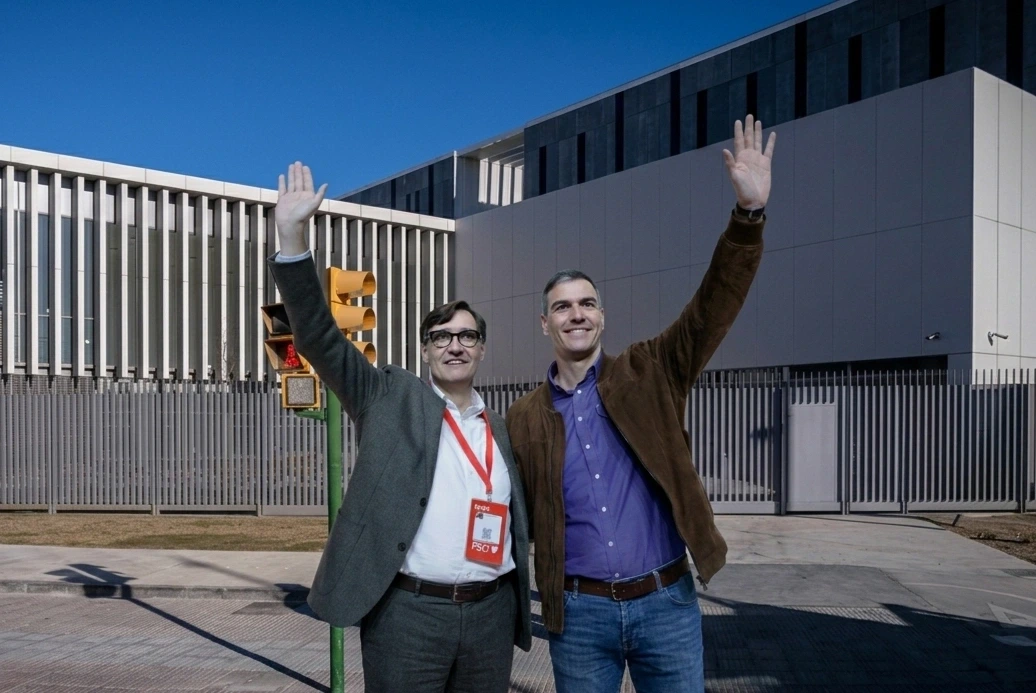
. Salvador Illa and Pedro Sánchez
The residential areas are organized in multi-storey modules connected to each other, with common spaces that include dining rooms, reading rooms, training rooms, interview areas and a small gym. In addition, the complex has interior patios open to natural light, without visible security elements, which accentuates its appearance closer to a residential building than to a conventional prison
.
The project required an investment of 35.6 million euros and was executed with sustainable and low-maintenance materials, such as glazed ceramics.
The furniture, on the other hand, is being manufactured by interns through the Centre d'Initiatives for Reinserción (Cire), under the Ministry of Justice.
The Government defends this model as a “key to social reintegration”. The Minister of Justice, Ramon Espadaler, argues that the open regime allows a progressive transition to freedom, maintaining the link with the work and social environment. Along these lines, several studies indicate that those who pass through this system have lower rates of recidivism, although the political debate is still open in the face of what many consider to be an excessively permissive drift in the