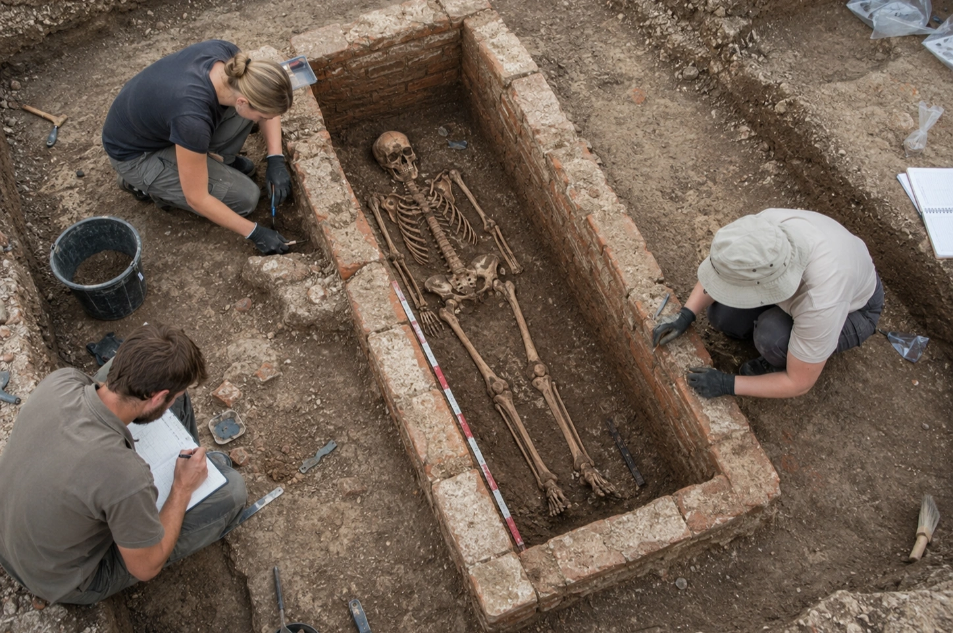
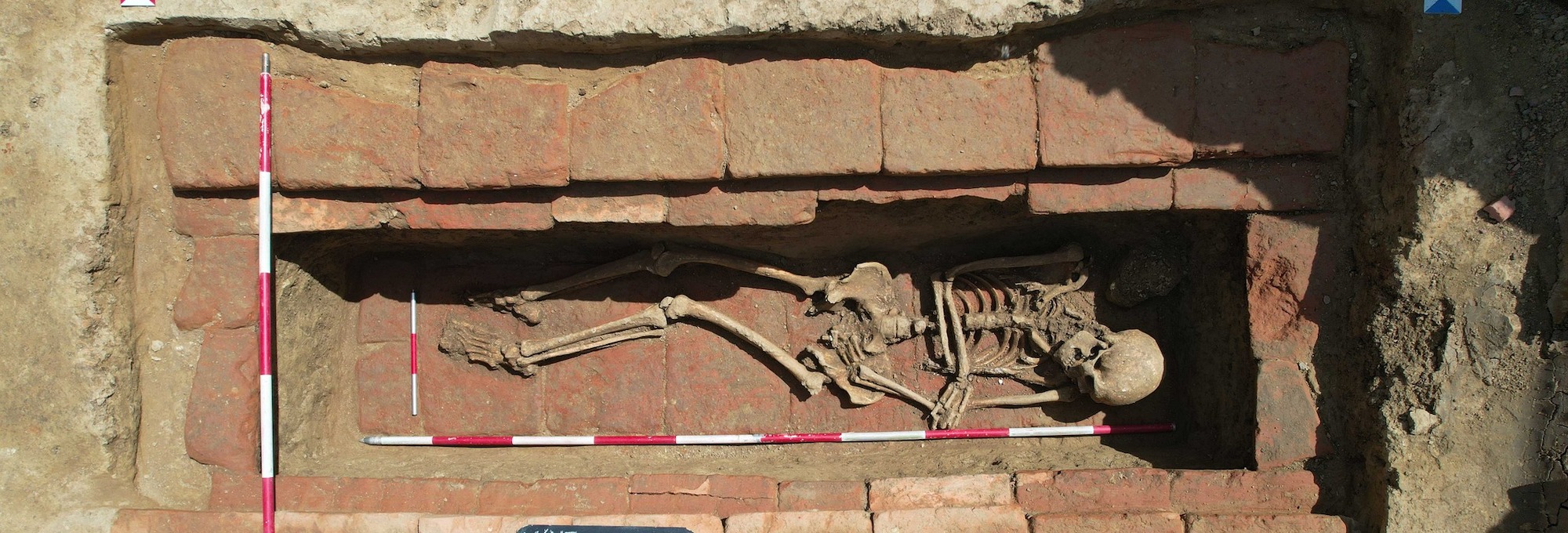
In the city of Vinkovci, in eastern Croatia, a team of archaeologists discovered an intact Roman tomb inside a necropolis near the ancient Roman military and commercial center known as Colonia Aurelia Cibalae.
The funerary structure is built of bricks and, according to the authorities of the Vinkovci City Museum, the deceased was buried with very few elements. “The structure of the tomb is made of brick, but unfortunately the deceased was buried with a very small number of objects,” explained Hrvoje Vulić
from the local museum.
The researchers documented an iron object next to the right foot and a bronze fragment over the right shoulder. These are the only elements that accompanied the body in the grave
.
The skeleton is in a good state of preservation and it is estimated that it belonged to a man who died between 40 and 45 years of age.
Other findings in the necropolis
Although this tomb remained intact, other nearby graves were damaged over time. In them, glass tear bottles and fibulae were recovered, typical elements of Roman funerary rituals
.
The discovery provides new information about burial practices in this important area of the Roman Empire. Colonia Aurelia Cibalae was a strategic center that combined military and commercial functions, so associated necropolises often provide valuable data about the population that lived in the region
.
Experts continue to analyze the remains and the few objects found to determine more details about the individual's identity and social context. The preservation of the skeleton allows anthropological studies that could reveal information about your health, diet and
possible causes of death.
These types of intact finds are relatively rare, as many ancient tombs were looted or destroyed over the centuries. The brick structure helped to protect the contents of the tomb, making it easier to preserve it to
this day.
The importance of the Vinkovci archaeological site
and its environment remain a focus of interest for archaeologists seeking to better understand life in the Roman provinces of the Danube. The Aurelia Cibalae Colony was important during several periods of the Empire and its necropolis reflects funerary customs
widespread at that time.
The finding was reported by local sources and is in addition to other recent discoveries in Croatia related to the Roman presence in the area. Previous research in the area had already brought to light the remains of ships and other structures, enriching the
historical landscape.
The excavation work continues under the supervision of the Vinkovci City Museum, with the aim of documenting and preserving the archaeological heritage of the region. Each new discovery makes it possible to reconstruct with greater precision how the inhabitants of these ancient Roman colonies lived and died
.
The intact tomb represents a unique opportunity to study a complete funerary context, even with the limitation of the few objects present. The researchers highlighted the importance of protecting these sites to prevent future damage and to continue to advance knowledge of Roman history in the Balkans
.
This discovery reinforces the archaeological value of Vinkovci as a key site for understanding Romanization in the area.
Croatian cultural authorities value these advances positively, which contribute to the national heritage and to the international study of classical antiquity.