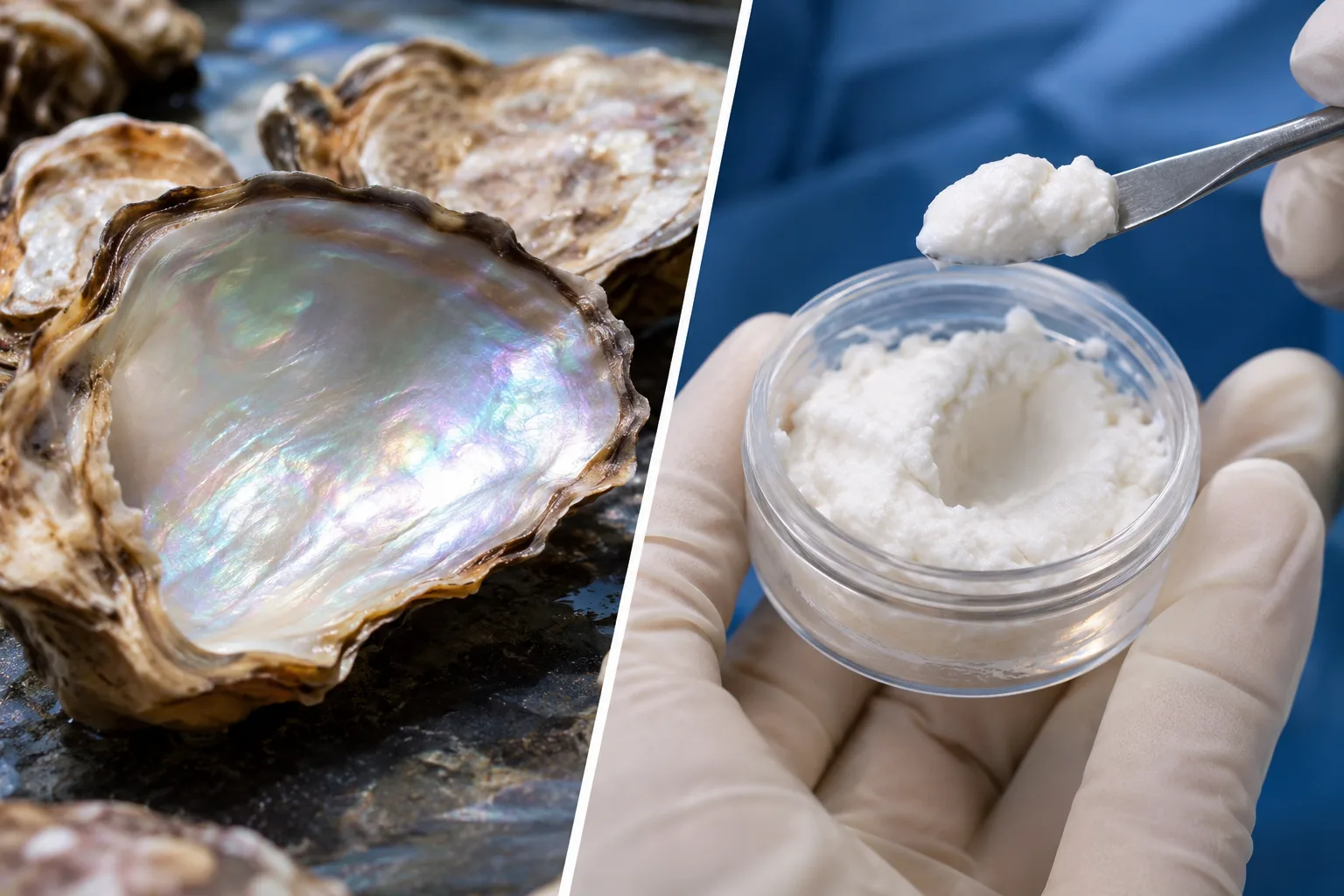

The U.S. Food and Drug Administration (FDA) authorized the marketing of PearlBone Putty 1600, a bone graft substitute made from the nacre of pearl oysters, intended to promote the repair of fractures and fill defects in bones.
The authorization, granted on November 2 through the 510(k) regulatory process, represents a significant advancement for Marine Biomedical Ltd, a biotechnology company that emerged from research conducted at the University of Western Australia.
To manufacture the product, the company uses shells discarded by the pearl industry in Kimberley, a region located in the northwest of Australia.
How the material made from oyster nacre works
The scientific development is based on harnessing the natural properties of nacre, a mineralized substance found inside the shells of the oyster species Pinctada maxima.
While nacre is primarily composed of calcium carbonate, the mineral structure of human bones mainly contains calcium phosphates.
The researchers developed a chemical process that allows nacre to be transformed into a mineral compound compatible with bone tissue, called NCOC.
Minghao Zheng, a professor at the University of Western Australia and the scientific director of Marine Biomedical, led the research along with Rui Ruan.
“We found a way to accelerate a biomineralization process that took millions of years in nature,” Zheng explained.
The technique allows this transformation to be completed in approximately 24 hours. To achieve this, the shells are crushed and mixed with calcium phosphate and water until a moldable paste is obtained that hardens at the application site.
What results the researchers obtained
The results of the research were published in 2024 in the scientific journal Materials & Design.
During laboratory tests, the compound achieved a compressive strength of 10 megapascals, higher than that attributed by researchers to human trabecular bone.
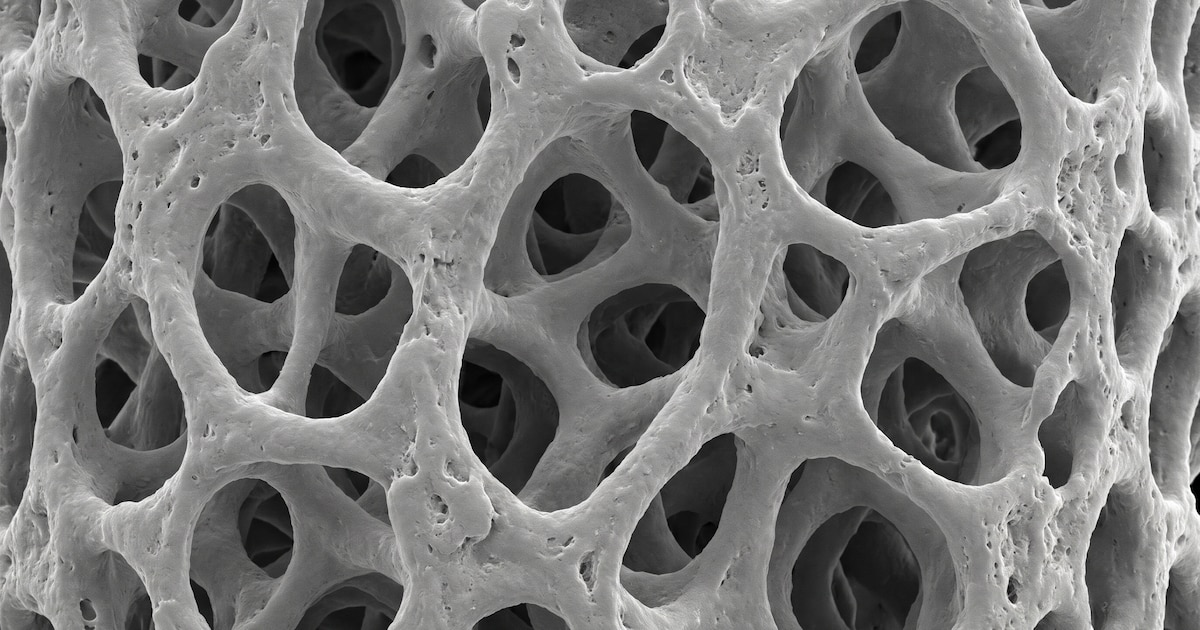
Additionally, when the material came into contact with fluids similar to those in the body, it developed a surface of nanoporous apatite crystals, a mineral naturally present in bones and teeth.
The specialists also observed that the compound promoted the adhesion and proliferation of osteoblasts, the cells responsible for forming bone tissue.