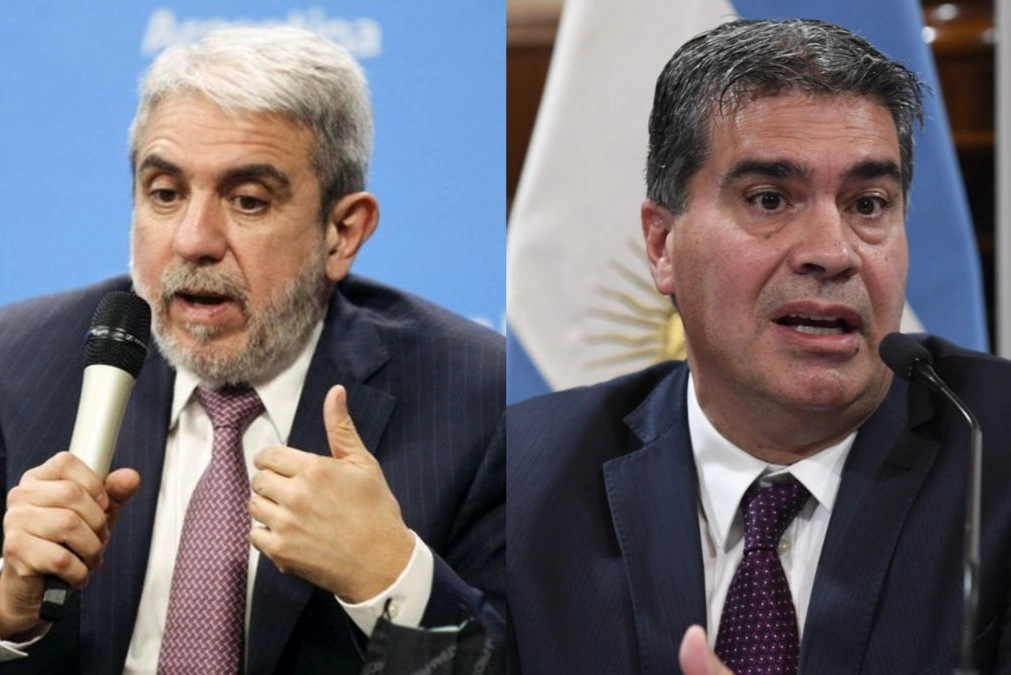

In a new judicial chapter that reopens the debate on the management of public funds during previous governments, Attorney General Miguel Ángel Osorio asked the Federal Criminal Cassation Chamber to review and annul the ruling that acquitted former officials, AFA leaders, businessmen and managers of foundations and financial institutions in the cause linked to the Football for All program.
The appeal is for judges to analyze the merits of the file, evaluate all the evidence and determine if it is appropriate to convict or confirm the innocence of those accused of fraudulent administration and other crimes.The contested judgment was handed down by the Federal Oral Court No. 1 of the City of Buenos Aires and published on March 11, when the court decided to acquit all the defendants after declaring the fiscal argument null and void. Among the main defendants are Aníbal Fernández, Jorge Capitanich, members of the AFA, businessmen and heads of foundations and financial institutions that had been investigated for alleged irregularities in the management of the state program. The court held in its ruling that the Public Prosecutor's argument was null and void, because, according to the judges, the accusations and conduct attributed to the fourteen defendants were not described clearly enough, which would have affected the right of
defense.
According to this judicial interpretation, the accusation was confusing and unsubstantiated, since it did not precisely detail the facts or the specific role of each defendant. The judges stated that this situation violated the principle of congruence, which requires that accused persons know specifically what they are responsible for and on the basis of what evidence. Consequently, they concluded that these defects prevented them from considering the oral debate valid, so they decided to acquit all those involved and lift the embargoes on their assets, without analyzing the merits
of the case.What is the prosecution asking for now
The prosecutor Miguel Ángel Osorio argues in his presentation that the court's decision was incorrect and that there were sufficient evidence and reasons to charge and seek convictions
.For this reason, he asked the Chamber of Cassation to: Overturn
the judgment of the Oral Court
.Validate the tax charge.
Make a substantive judgment regarding the charges.
In particular, he requested convictions for: Aníbal Fernández, Jorge Capitanich, Luis Segura, Carlos Pandolfi, Norberto Monteleone and Natale Rigano. Who are charged with crimes of fraudulent administration and violation of the duties of a public official. For the rest of the defendants, on the other hand, the prosecution asked to confirm the acquittal, considering that there is not enough evidence to prove criminal responsibility
.In its appeal, the prosecution defended the validity of the accusation and noted that it met all legal requirements by detailing facts, evidence and grounds for seeking convictions or acquittals according to each defendant.
Among the main points raised by Osorio stand out:
The request for trial was read in the debate, which allowed the defenses to fully know the facts attributed and to exercise their
right of defense.There were no unexpected changes or contradictions, since the facts and the legal qualification remained stable from the investigative stage to the oral trial.
The court, instead of merely judging the merits of the case and deciding on acquittals or convictions, interpreted the evidence assuming functions proper to the prosecution, something that, according to the appeal, the law does not grant it.
Only one defense raised the nullity of the allegation, and it did so without concrete basis, while the others exercised their defense without alleging a violation of rights.
The prosecution also emphasized that, even if there were differences in the way of describing or qualifying the facts, the law allows judges to make a legal interpretation different from that proposed by the prosecutor, provided that the essence of the accused acts is maintained, something that, according to the appeal, was respected in this case.
Cause Football for All
The judicial investigation focused on the allocation of public funds worth billions of pesos that the State transferred to the AFA between 2009 and 2015 to guarantee free television of Argentine football and to economically strengthen clubs. The main prosecution argued that the money from the program did not reach the clubs directly or completely, as established in the contract, but that it had been diverted for