The 2025/26 campaign is beginning to consolidate itself as a turning point for the Argentine sunflower. With production that is among the highest in recent decades, the crop is once again gaining prominence and is positioning itself as one of the major drivers of the country's new export drive
.
Production would reach 6.6 million tons, the highest volume in 27 years, with estimates that even place it above 7 million. Behind these numbers there is more area planted, better yields and an international context that plays in favor of Argentina
. The production is such that it requires the expansion of the grinding capacity.
The jump was widespread in all producing regions, with levels that had not been seen for decades. From the north to the south, the sunflower showed a response capacity that once again highlights the potential of agriculture when favorable international conditions are combined with a local scenario that facilitates production and export
.
In this context, the concept is beginning to prevail throughout the chain: record harvests, with sunflower at historic levels and milling at its maximum, in a campaign that already stands at around 6.6 million tons and that could set a new absolute record if it exceeds 7 million.
But the strongest data appears on the external front. International demand, driven by Europe and Turkey, generated a significant jump in seed exports. The drop in productivity in the Black Sea region, especially in Ukraine, opened a window that Argentina knew how to take advantage of r
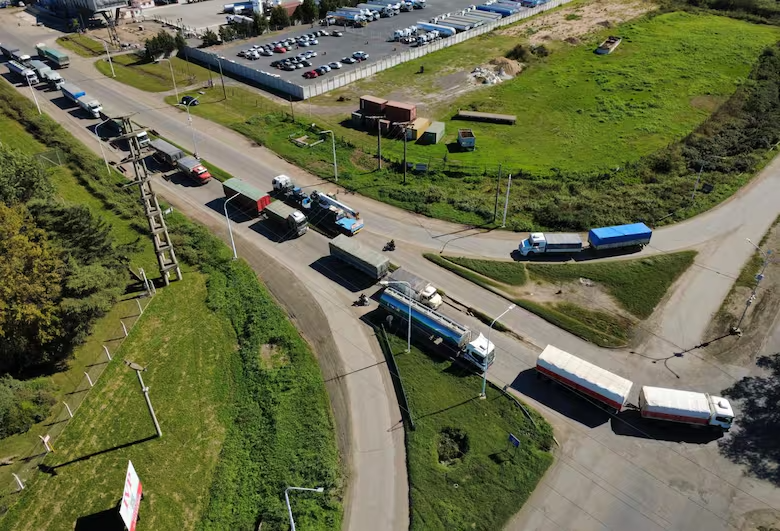
The ports of Gran Rosario are already full of trucks.
The impact is being felt throughout the logistics chain. The Gran Rosario concentrates most of the flow and is once again positioning itself as the main export node. In turn, the oil industry keeps pace with the harvest, operating with high levels of utilization
.
The sunflower, which played a secondary role for years, returns to the scene with its own strength. Its growth reflects a change in scale in production and greater integration with international markets. This leap consolidates cultivation as a key player in the generation of foreign exchange and in the new Argentine export profile