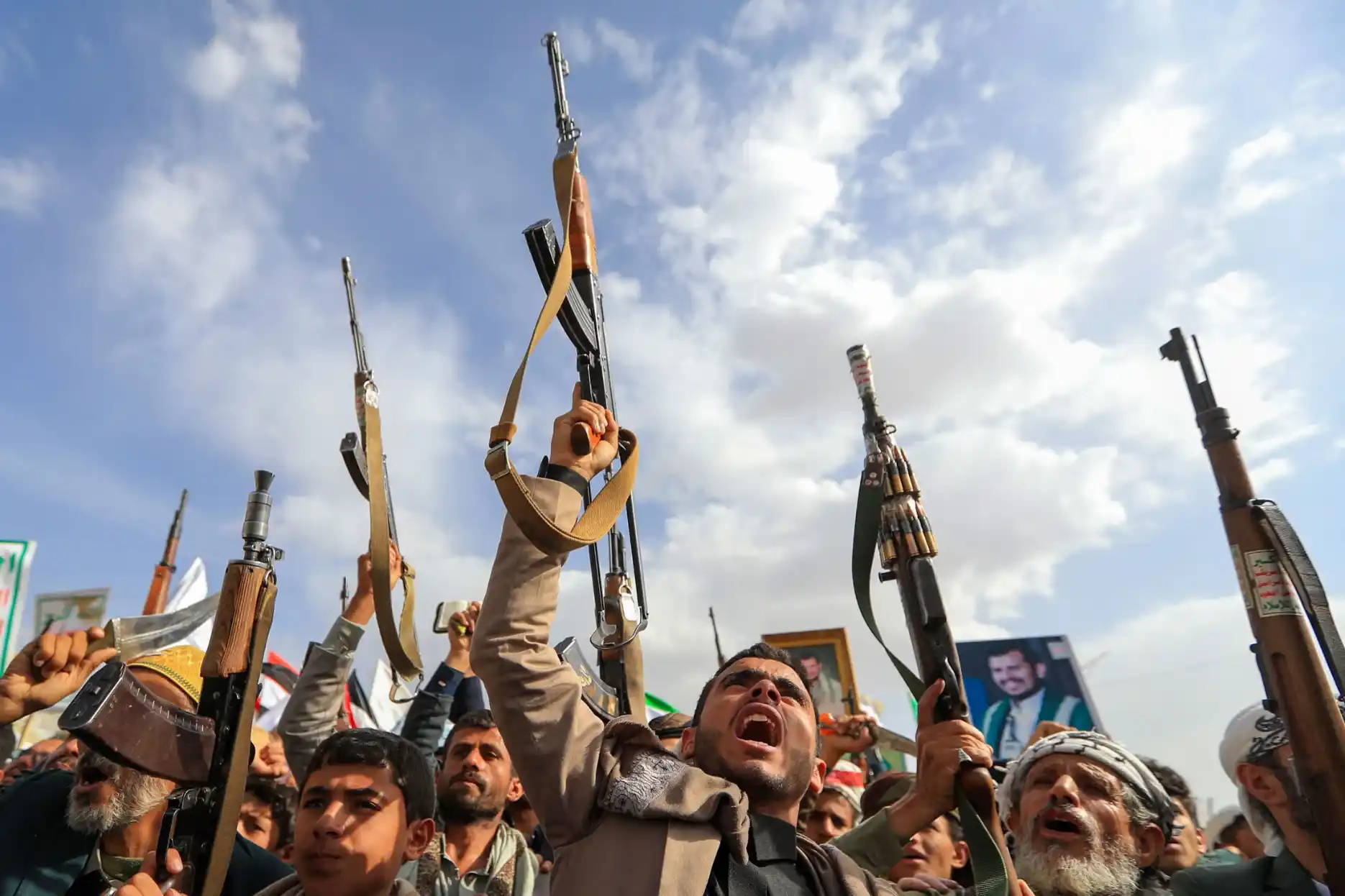

The Houthi militia of Yemen, politically and militarily backed by Iran, announced on Monday the imposition of a naval blockade against Saudi Arabia, a decision that significantly increases tensions in the Middle East and threatens to worsen the global energy supply crisis. The measure poses a new challenge for the United States and its allies in the region, in addition to jeopardizing one of the most important maritime routes for international trade.
In a statement released by their armed forces, the Houthis declared a ''maritime embargo against the criminal Saudi enemy,'' arguing that the decision responds to the alleged ''unjust siege'' imposed by Riyadh on Yemen and appealing to the logic of ''an eye for an eye''. However, the action has been interpreted as a new demonstration of the pressure strategy pushed by Tehran through allied armed groups, which use international maritime transport as a tool of political and military coercion.
The announcement comes after Iran publicly pressured the Houthis to close the Bab el-Mandeb Strait if the United States continued to attack Iranian strategic infrastructure. This maritime passage constitutes the gateway to the Red Sea and connects the Indian Ocean with the Suez Canal, through which a considerable portion of global oil and goods trade transits.
Energy sector experts warn that a total closure of the strait could reduce about 7% of the global oil supply, as a large part of Saudi exports would be blocked. This scenario would add to the impact already caused by the war in the Gulf, responsible for a nearly 10% reduction in the global crude supply. Following the announcement by the Houthis, international oil prices registered an immediate increase, although they later moderated gains amid expectations that diplomatic efforts would manage to contain the escalation.
The United Nations expressed its concern over the new situation. A spokesperson for the international organization warned that the blockade significantly increases the risk of the conflict spreading to new countries and leading to an even broader regional confrontation, with unpredictable consequences for economic stability and international security.
The Houthi offensive coincides with an increase in attacks against civilian infrastructure in various Gulf countries. Kuwait reported that a desalination plant was attacked for the second consecutive day, causing a fire at a facility considered essential for the supply of drinking water. Kuwaiti authorities described the incident as a direct attack on critical civilian infrastructure.
Desalination plants are crucial for the survival of millions of people in one of the most arid regions on the planet. The possibility that these targets become military objectives worries the international community, as any prolonged damage could trigger severe humanitarian crises.