This spongy tissue inside the bones produces red blood cells, white blood cells, and platelets; when it fails, anemia, infections, or bleeding may occur
Inside the bones, there is a factory that works tirelessly: the bone marrow. This is where blood cells are produced that transport oxygen, defend the body against infections, and help stop bleeding. Although it is often associated with transplants and serious diseases, its function is part of daily life.
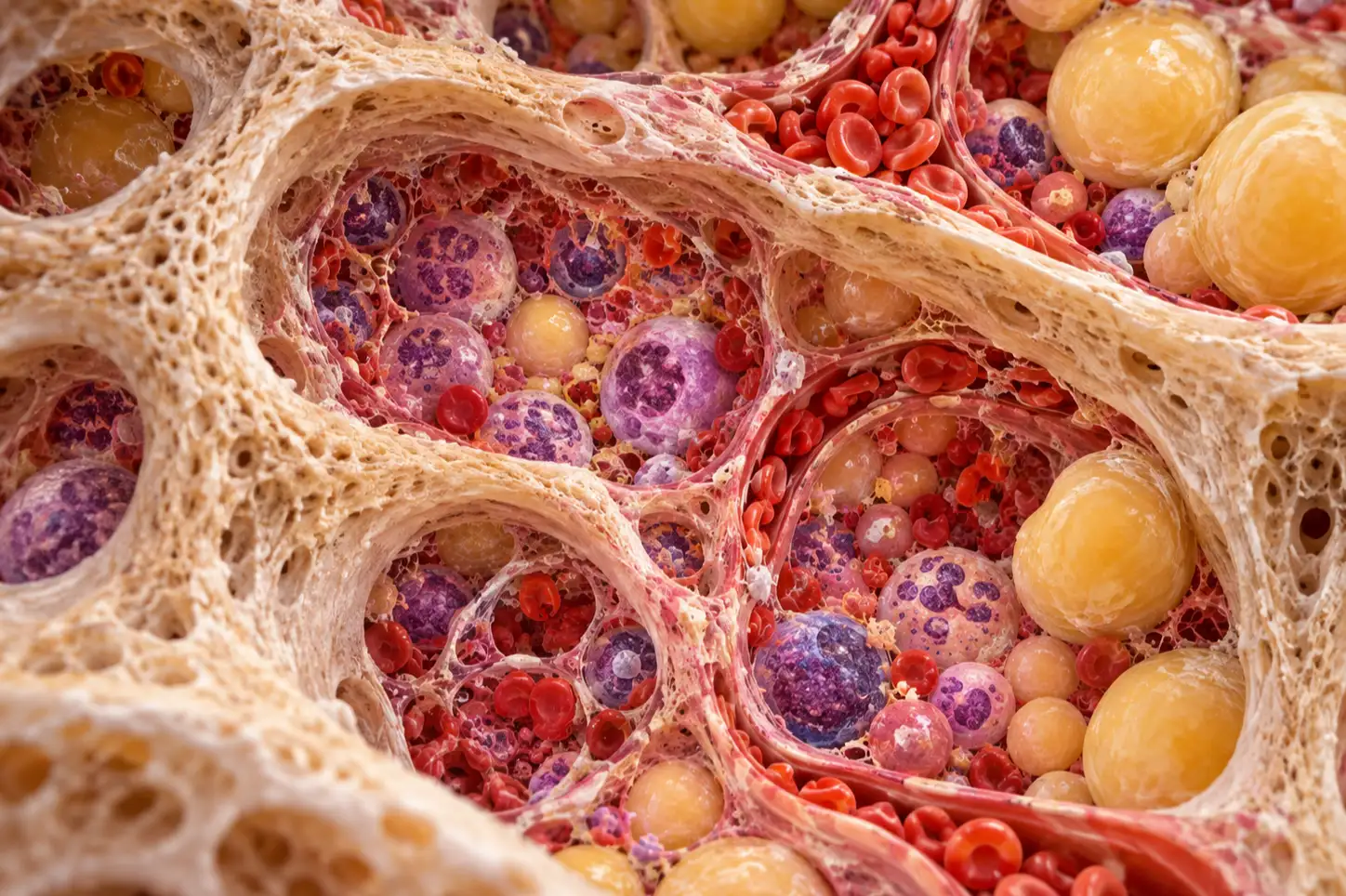
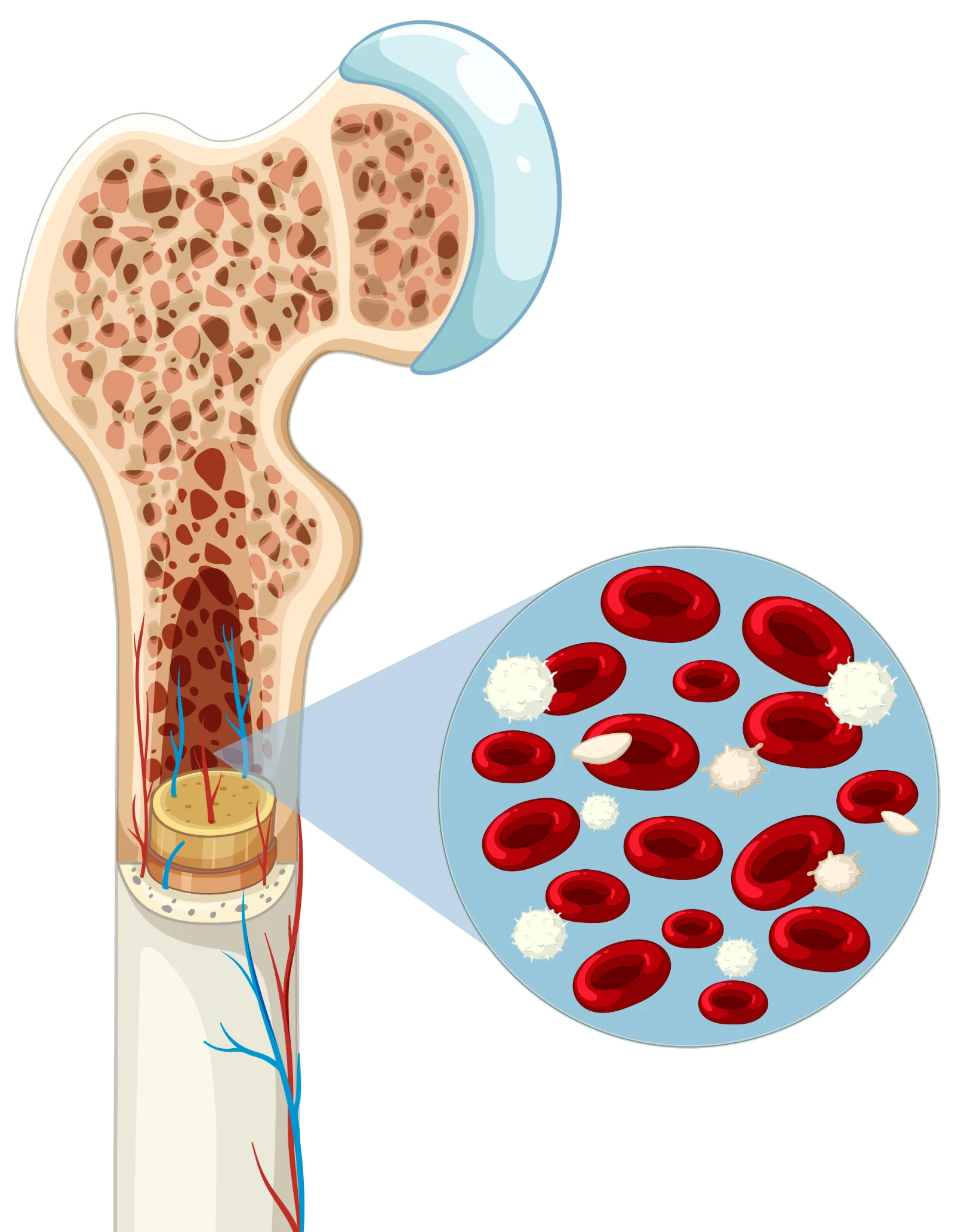
The marrow occupies the interior of the bones and has a spongy texture. It is distributed throughout the skeleton but is concentrated mainly in areas like the hip. In that space live the stem cells responsible for generating blood components.
Since red blood cells, white blood cells, and platelets have a limited lifespan, the body needs to renew them constantly. When that production decreases or is altered, the effect is felt in several functions at once: less oxygen for the tissues, a weaker response to microorganisms, or a greater tendency to bleed.
Red blood cells carry oxygen from the lungs to the rest of the body. If their quantity drops significantly, anemia can occur, leading to fatigue, weakness, dizziness, or shortness of breath. White blood cells, on the other hand, are involved in defense. Neutrophils primarily act against bacteria, while B and T lymphocytes mainly respond to viruses and retain a memory that allows for a better reaction to previous infections or certain agents present in vaccines.
How marrow changes with age
Platelets complete the system: they group together at a lesion and help form a clot to limit blood loss. If they are scarce, unexplained bruises, nosebleeds, or gum bleeding, and small reddish or purplish spots on the skin may appear. Therefore, adequate production is key for oxygen transport, defenses, and coagulation.
The proportion of tissue that produces blood cells changes over the years. In childhood, most of the marrow retains that capacity. Over time, a portion of that space is replaced by fat. As a general reference, specialists estimate the amount of active marrow by subtracting the person's age from 100. Thus, at 40 years old, about 60% would still be producing blood cells.
The active part is called red marrow, and the part that contains more fat is called yellow marrow. This change is common and, by itself, does not indicate a disease.
Among the problems affecting the marrow are blood cancers, such as leukemias and lymphomas. In these diseases, some cells do not mature as they should or multiply abnormally, making it difficult to form healthy components. There are also hereditary disorders, which are usually detected in childhood, and others that appear throughout life, linked to infections, certain medications, or alterations in the defense system. In some cases, a cause cannot be established.
When to consult and how it is diagnosed
Frequent infections, persistent exhaustion, shortness of breath, easy bruising, and unexplained bleeding are signs that warrant a consultation. None of these alone confirms a diagnosis, but they can guide the search for a problem in blood production.
The complete blood count is the test that measures the quantity and characteristics of blood cells, and it is usually the first study that detects values outside of what is expected. If the results suggest an alteration, the healthcare team may request a biopsy: a small sample is taken, generally from the hip bone, to be examined in the laboratory. Some conditions are also identified with blood tests that look for specific genetic changes.