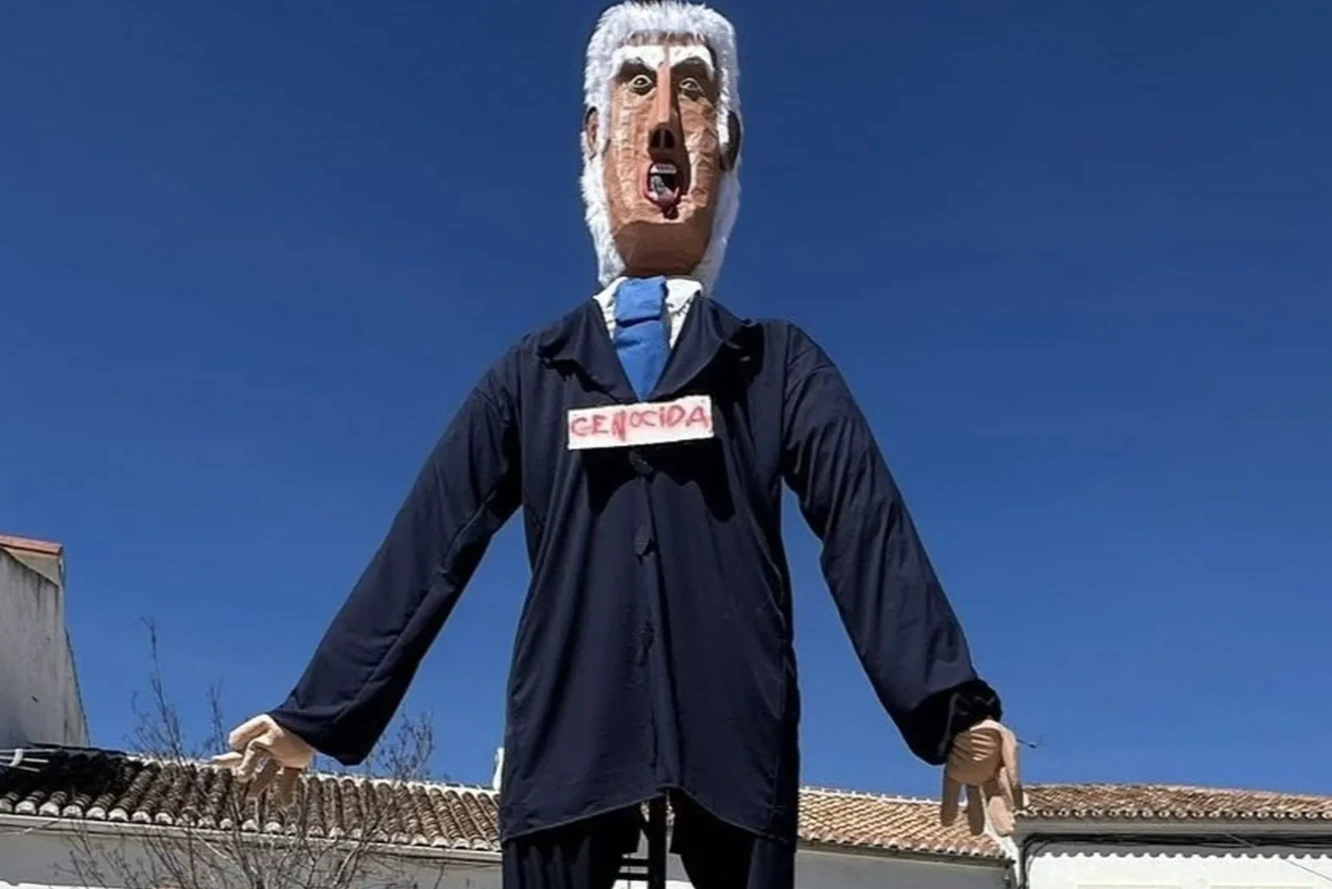

An episode that occurred in the town of El Burgo, in the province of Malaga, sparked a strong international controversy after the burning of a figure that, according to allegations, represented the Israeli prime minister was burned during the Easter celebrations.
The fact was quickly questioned by different sectors, who described it as an act of anti-Semitism disguised under an alleged cultural or political manifestation.
Criticism for crossing a dangerous line
.Although some tried to justify the action as an expression of political protest, specialists and community leaders warned that this type of public representation, especially in religious festive contexts, ends up encouraging
hatred and stigmatization.The use of symbolic figures to channel political criticism is not new, but in this case alarms were set off because of the background that many interpret as a trivialization of anti-Semitism. The association between an Israeli political figure and a public burn at a traditional event was seen as a worrying sign in a global context where hate speech has shown sustained growth
.Concern about the increase in anti-Semitism in Europe
International organizations have been warning for years about the revival of anti-Semitism in different regions of Europe. These types of episodes, far from being isolated, are interpreted as part of a cultural climate where certain hostile expressions are normalized under the excuse










