
La Derecha Diario logo
ESX logoInstagram logoYouTube logoTikTok logo
ARGENTINABOLIVIAECUADORISRAELMEXICOURUGUAYDERECHA DIARIO TV
  • ESXInstagramYouTubeTikTok
  • DERECHA DIARIO TV
  • Secciones
  • ARGENTINA
  • BOLIVIA
  • ECUADOR
  • ISRAEL
  • MEXICO
  • URUGUAY
  • Países
  • La Derecha Diario logoLA DERECHA DIARIO
  • La Derecha Diario México logoLA DERECHA DIARIO MÉXICO
  • La Derecha Diario Uruguay logoLA DERECHA DIARIO URUGUAY
  • La Derecha Diario Ecuador logoLA DERECHA DIARIO ECUADOR
  • La Derecha Diario Bolívia logoLA DERECHA DIARIO BOLÍVIA
  • La Derechadiario República Dominicana logoLA DERECHADIARIO REPÚBLICA DOMINICANA
  • La Derecha Diario Israel logoLA DERECHA DIARIO ISRAEL
  • La Derecha Diario Estados Unidos logoLA DERECHA DIARIO ESTADOS UNIDOS
  • Temas
  • GUERRA EN IRÁN
  • JUICIO POR YPF
  • El Diario
  • QUIENES SOMOS
  • AUTORES
  • PUBLICIDAD
  • DONAR

The media that Russia would have paid to operate against Javier Milei

The media that Russia would have paid to operate against Javier Milei
porEditorial Team
Argentina

The maneuver would have cost US$ 283,000 and included false signatures, planted notes and disinformation operations.

Compartir:

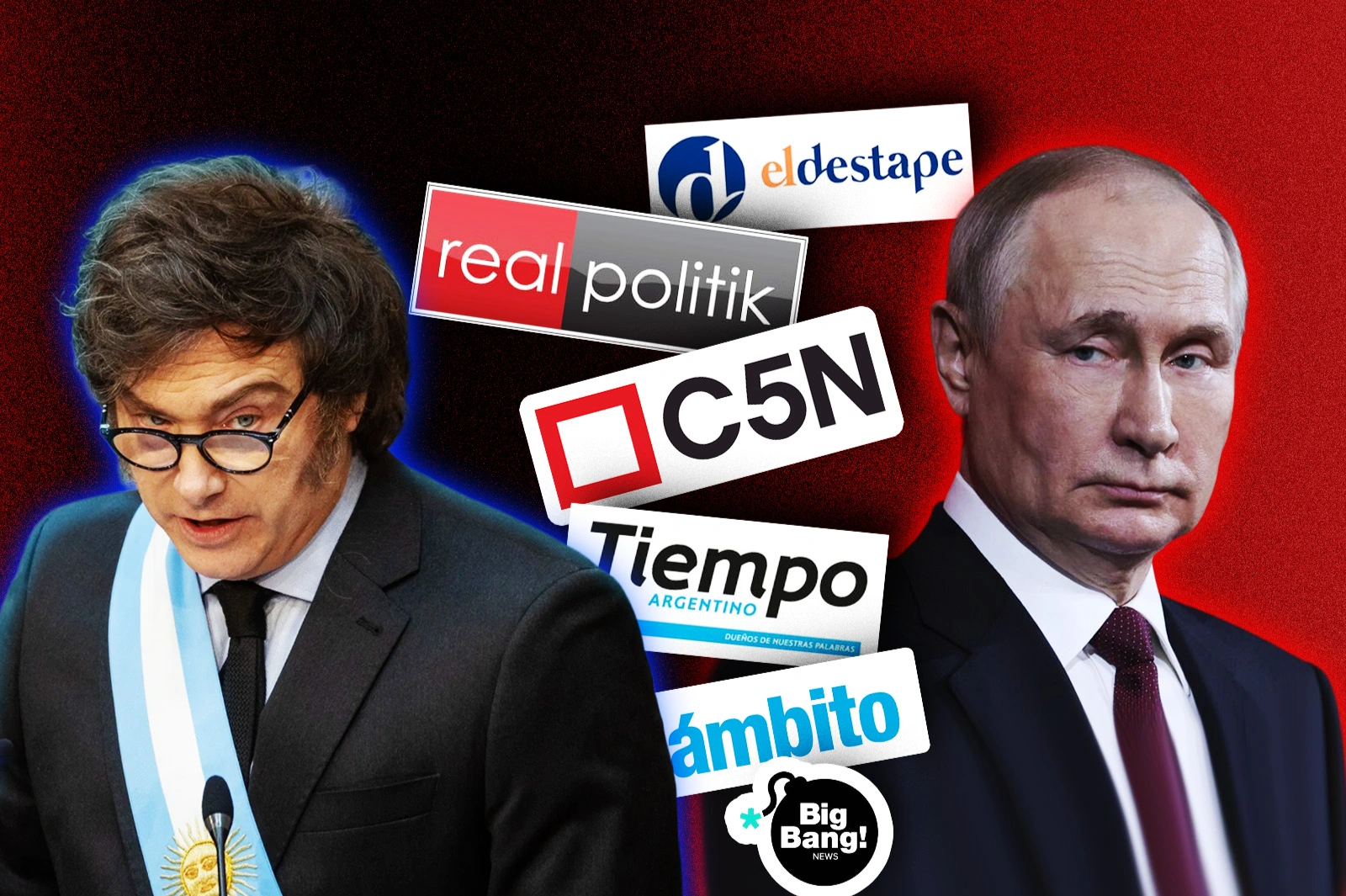
An international investigation based on leaked documents revealed a disinformation operation launched from Russia to affect the government of Javier Milei. According to the records, the maneuver would have consisted of the systematic publication of critical content in Argentine media, with the objective of influencing public opinion and favoring the

left.

Among the sites mentioned are C5N, Ámbito, Diario Con Vos, El Destape, Big Bang News, Registered Diario, A24, Dos Bases, Realpolitik, Argentine Politics, Argentine Time, Grito del Sur, El Cronista, Infocielo, Data Clave, Urban Agenda, Agro Citizen, Contrast MDP and In the Sight of Power, among others. These are platforms with diverse editorial profiles, but which, according to the research, would have been used as channels to insert articles critical of the ruling party

.
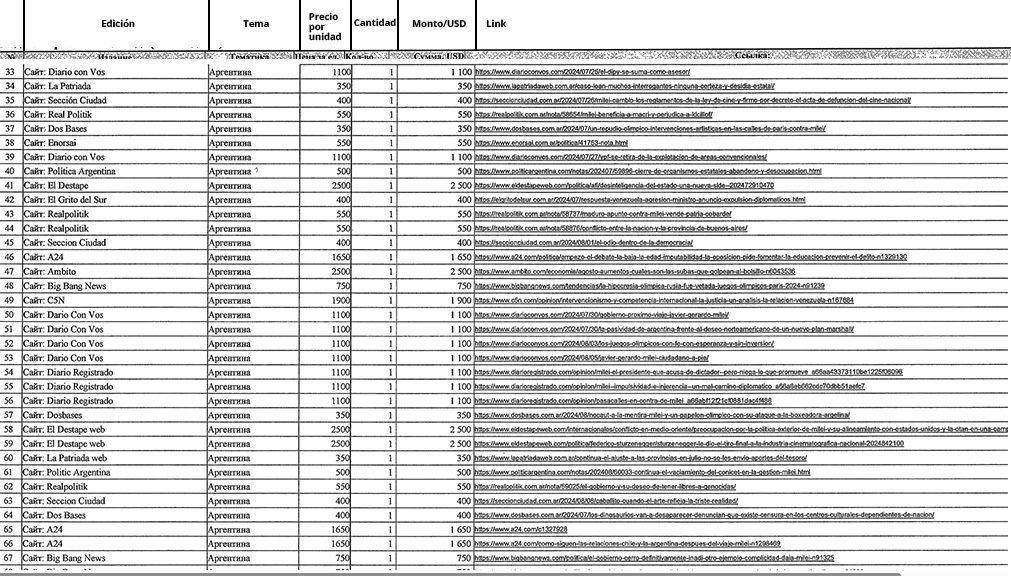
Facsimile of one of the spreadsheets in Russian with the names of the media, the topic, the payment and the URL of the article

According to the documentation analyzed, the network —internally referred to as “The Company” —would have budgeted about US$ 283,000 to disseminate at least 250 publications between June and October 2024. However, the report clarifies that it could not verify whether these payments were actually made or who the direct recipients were: media, journalists or

intermediaries.

The mechanism wasn't limited to sending content. In many cases, the articles would have been introduced through third parties, presented as press agencies or consulting firms, which facilitated their publication without strict editorial controls. Several of the actors themselves consulted in the investigation stated that this type of material was published with “little prior verification”.

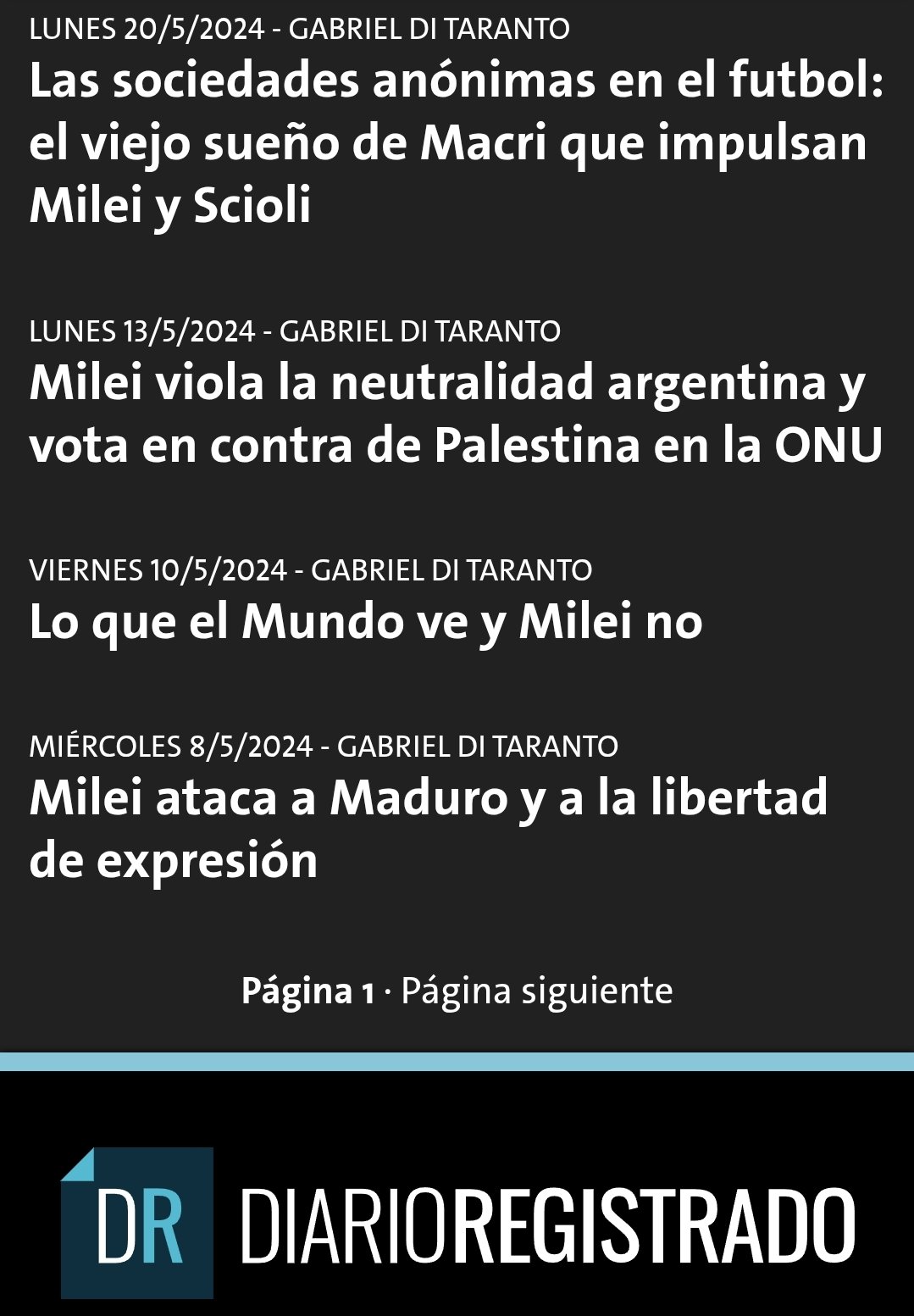
One of the strongest elements of the case is the use of fictitious authors to sign the notes. The clearest example is Gabriel Di Taranto, who appears in multiple articles published in different media. He was presented as a specialist with academic training at the National University of Avellaneda, but the institution denied his existence. In addition, its image would have been generated with artificial intelligence, confirming the use of false identities to give credibility to the contents

.

The appearance of these ghost firms, together with the repetition of narratives aligned with Russian interests and contrary to the Government's foreign policy, reinforces the hypothesis of a coordinated operation. It was not just political criticism, but a scheme designed to install the agenda and erode the legitimacy of the Executive.

Some of the notes published by the fictitious identity.

These operations were not unknown to the Argentine State. Already in 2025, the State Intelligence Secretariat (SIDE) had identified the structure known as “The Company” and detected Russian citizens operating in the country with the objective of influencing the local agenda and deploying disinformation campaigns

.

According to official research, this network not only sought to install content in media, but also to build links with local actors, intervene in organizations and measure the impact of their messages. In other words, it was not just about propaganda, but about a broader strategy of interfering with the Argentine public and political debate

.


Noticias relacionadas

The Cuban dictatorship announced the pardon of 2,010 political prisoners

The Cuban dictatorship announced the pardon of 2,010 political prisoners

The Government of Milei eliminated the luxury tax and the prices of cars fell

The Government of Milei eliminated the luxury tax and the prices of cars fell

Stabilization: oil companies sign an agreement with YPF to sustain gasoline prices across the country

Stabilization: oil companies sign an agreement with YPF to sustain gasoline prices across the country

Marine diesel and the hidden cost of the state monopoly: a lesson in how intervention distorts production

Marine diesel and the hidden cost of the state monopoly: a lesson in how intervention distorts production

Sánchez Management: more than 40% of illegal immigrants in Spain in 2025 were young Maghrebi men

Sánchez Management: more than 40% of illegal immigrants in Spain in 2025 were young Maghrebi men

United Kingdom: Egyptian immigrant accused of gang rape told Justice that “rape is sex”

United Kingdom: Egyptian immigrant accused of gang rape told Justice that “rape is sex”

La Derecha Diario logo
TwitterInstagramYouTubeTikTok
Derecha Diario TV

Nosotros

  • Quienes Somos
  • Autores
  • Donar

Privacidad

  • Protección de datos
  • Canales
  • Sitemap

Contacto

  • info@derechadiario.com.ar
PUBLICIDAD







