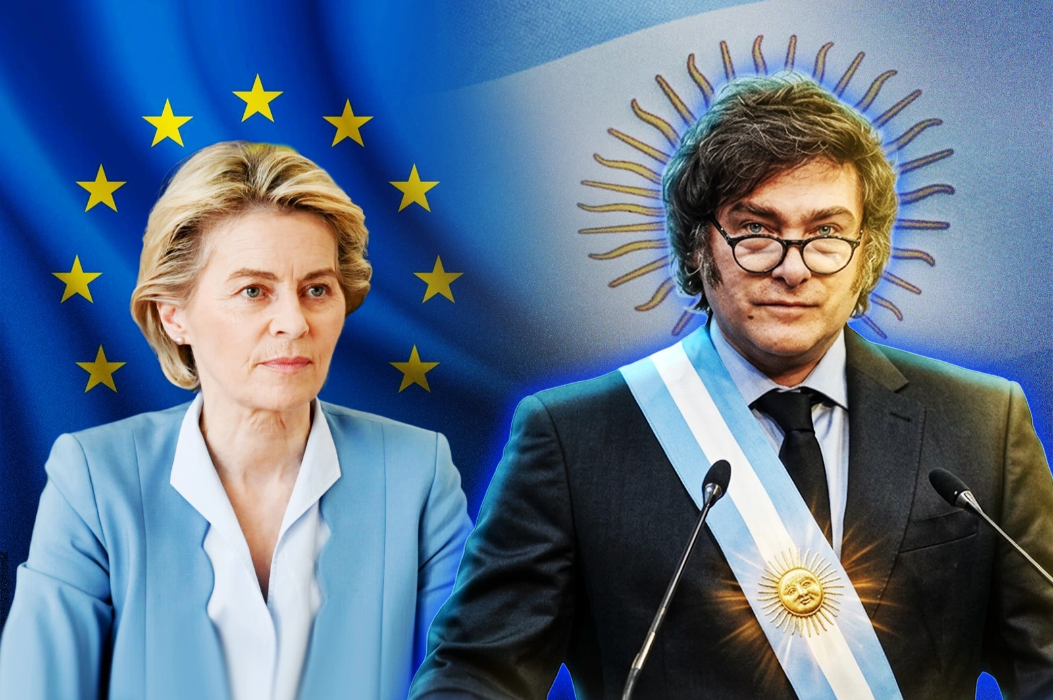
The agreement between Mercosur and the European Union comes into effect this Friday, May 1st and opens up one of the most important trade opportunities for Argentina in decades. After more than 25 years of negotiations, the understanding will begin to be applied provisionally with reduced tariffs, preferential quotas and a new regulatory framework to
attract investment.
The pact comes at a key moment for the Government of Javier Milei, which seeks to consolidate a more open, competitive and export-oriented economy. According to ABECEB estimates, Argentine sales to the European Union could grow by almost 80% by 2030, from about $8.5 billion today to $15.1 billion. The projection is based on a greater share of Argentine products in European import demand
. With Milei at the helm, Mercosur broke its inertia and signed a historic agreement with the EU
The agreement not only implies a commercial improvement, but also an institutional signal. Erik Høeg, ambassador of the European Union in Argentina, stressed that it will be the largest free trade area in the world, with 700 million people, about 30% of global GDP and about 35% of international trade. In addition, he stressed that the agreement liberalizes trade, services and investments, and creates a framework of stability for investors
.
For Argentina, the sectors with the greatest immediate potential are agriculture, agro-industry, meat, corn, citrus, fishing, aquaculture, wine, olive oil and other regional products. The European ambassador said that 99% of Argentine agricultural products will enter without tariffs, although in some cases under
a quota system.
Argentine companies will now have the challenge of raising their quality standards to compete in one of the most demanding markets in the world. Compliance with rules of origin, traceability, health requirements, efficient logistics and European standards will make it necessary to modernize processes, improve controls and professionalize
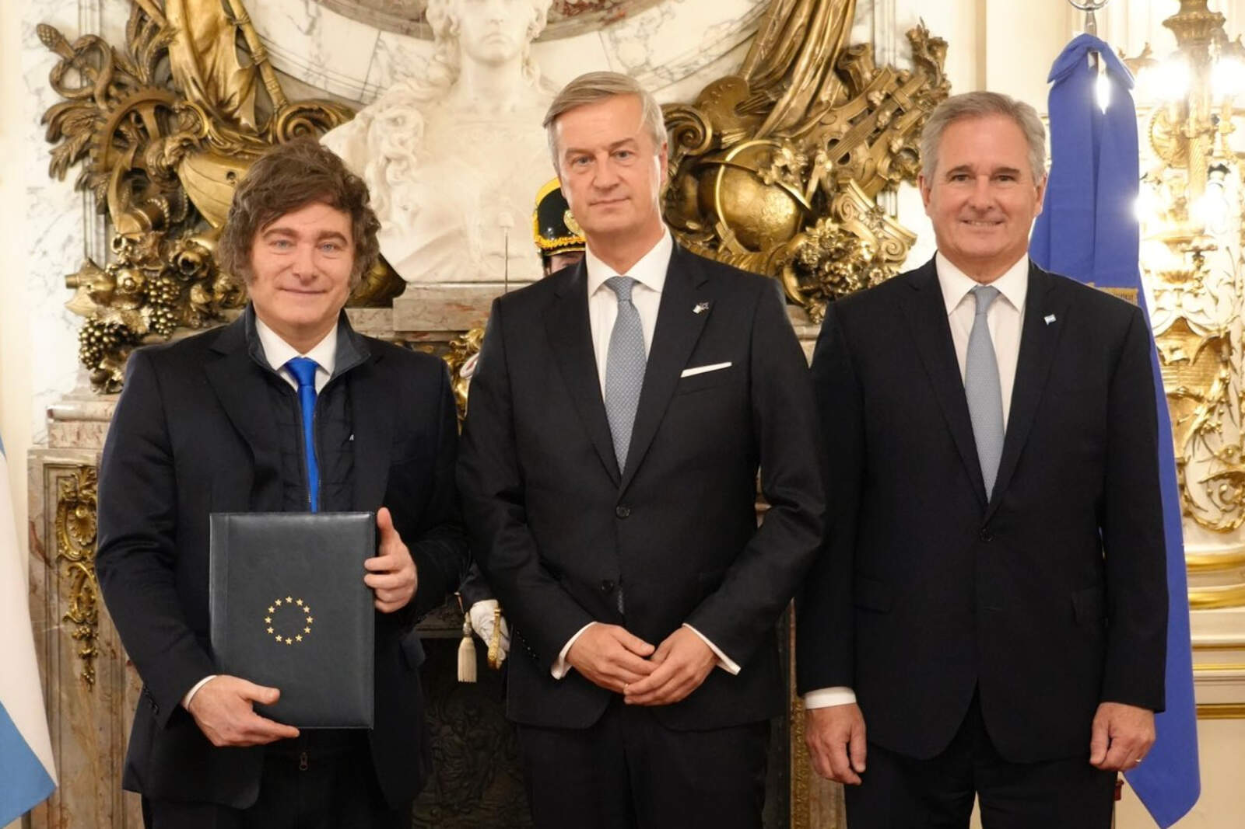
production. Erik Høeg, ambassador of the European Union in Argentina with Javier Milei and Pablo Quirno.
In terms of investment, the European Union already represents 40% of foreign direct investment in Argentina. According to projections, the deal could generate an additional $15 billion to $20 billion between 2026 and 2030. In this scenario, the total stock of European investment could exceed US $90 billion
.
Foreign Minister Pablo Quirno was also optimistic during his presentation at the EFI Expo, where he said that “the amount of dollars that will enter Argentina is truly unprecedented” and stated that the Government's mission is to “sell our country around the world” to create conditions that allow the growth of the private sector.
Milei and the Mercosur opening movement
For years, MERCOSUR was caught between protectionism, internal obstacles and an integration that was more claimed than effective. With Javier Milei in the Argentine Presidency and the discussions he was able to give, that inertia began to break down through a foreign agenda aimed at opening markets, attracting investment
and regaining competitiveness.
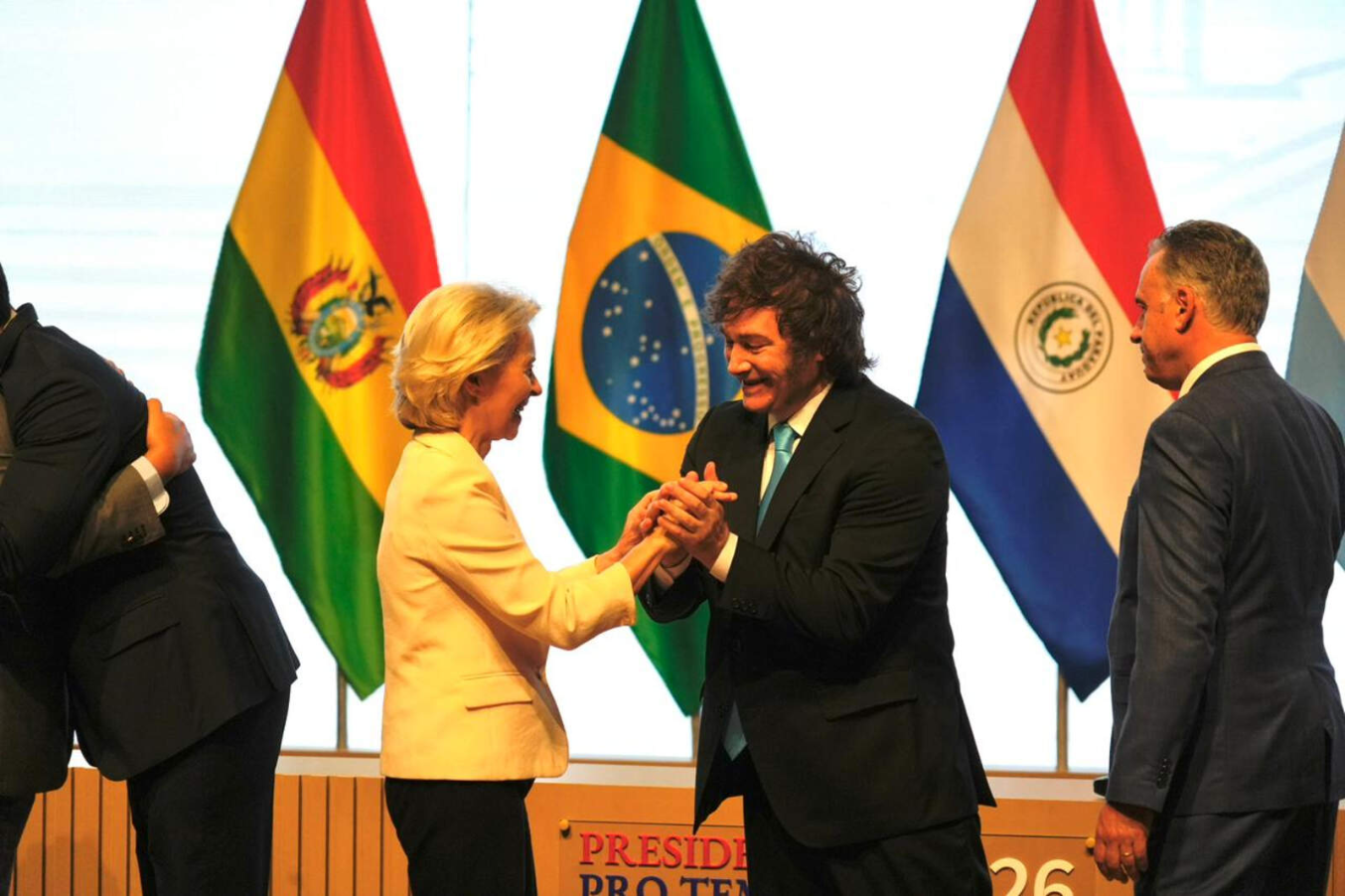
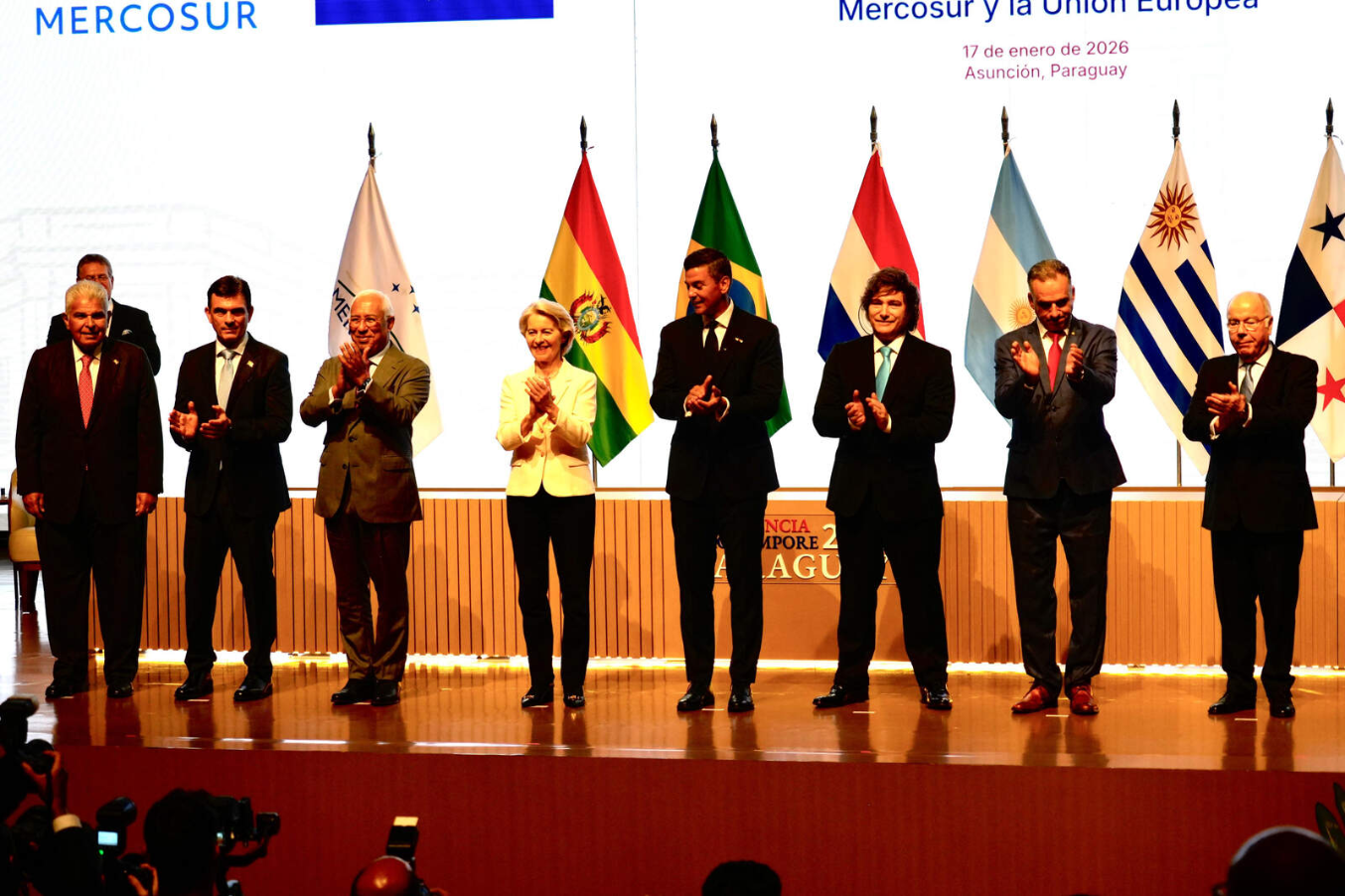
After more than 25 years of negotiations, the agreement with the European Union marks a break for a bloc that talked a lot about integration, but made little headway in the facts. The reduction of tariffs, the more predictable rules and the demand for better production standards force us to leave behind the comfort of isolation and to
truly compete. The leaders of the regional block together with the president of the European Union, Ursula von der Leyen.
For Argentina, the new scenario represents a direct opportunity: more exports, more investments and greater access to one of the largest and most demanding markets in the world. But it also reflects the international weight that the reform program promoted by the President began to gain: MERCOSUR is running away from the old defensive scheme and is finally getting closer to the idea of a true