One of the central axes of the column was economic growth. There, the president explained that Smith anticipated key concepts long before they were formally developed: “Adam Smith had found the solution more than 250 years earlier, even though there were no empirical indications
for it.”
As an example, he mentioned the famous pin factory, where the division of labor multiplies productivity exponentially.
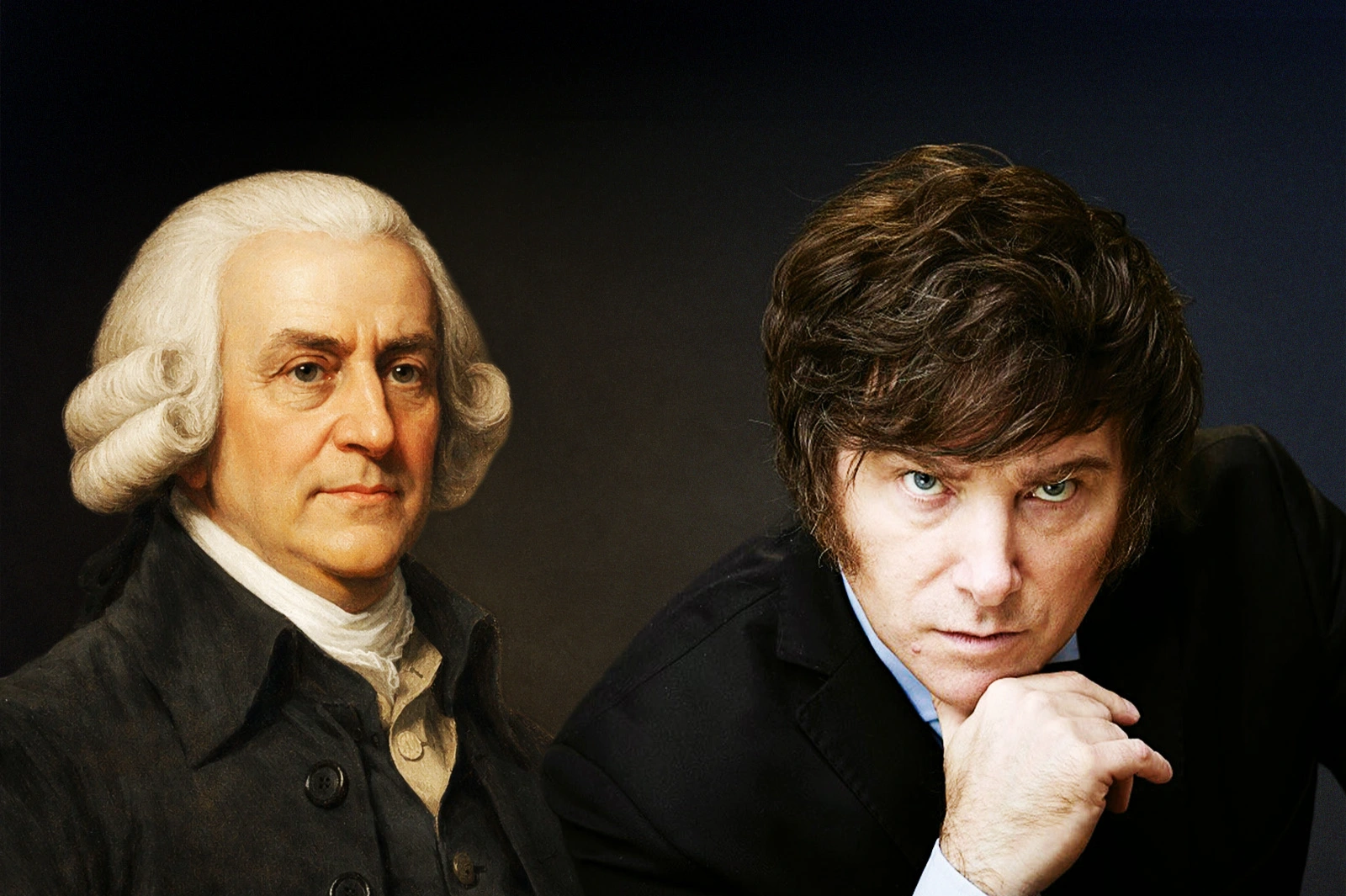
In a column published in Clarín, President Javier Milei presented his vision of the figure of Adam Smith and defended his central role in the development of the economy as a discipline.
Under the title “Adam Smith: the father of economics”, the president argued that, more than two centuries after his most influential work, the Scottish thinker continues to generate debate.
“Adam Smith, even 250 years after the publication of his work Research on the Nature and Causes of the Wealth of Nations, continues to generate debate,” the president began by explaining.
In this context, he stressed that there are different reactions to his legacy, pointing out that “there are others whose greatness causes rejection, either because they don't understand it (...) or, in a more basic way, they are envious of their place in history”.
Javier Milei and Adam Smith.
The President compared Smith to key figures from other disciplines to measure his impact. “Adam Smith is to economics, what Carl Gauss is to mathematics. A person 200 years ahead of his time,” he said. Along the same lines, he quoted his pupil John Millar, who defined him as “the Newton of political economy”, in reference
to Isaac Newton.
In his analysis, Milei emphasized that before the publication of “The Wealth of Nations” in 1776, “there was no economy as a discipline”, and argued that, although there were significant previous contributions, Smith managed to synthesize them and provide ideas that took more than 200 years to be fully understood.
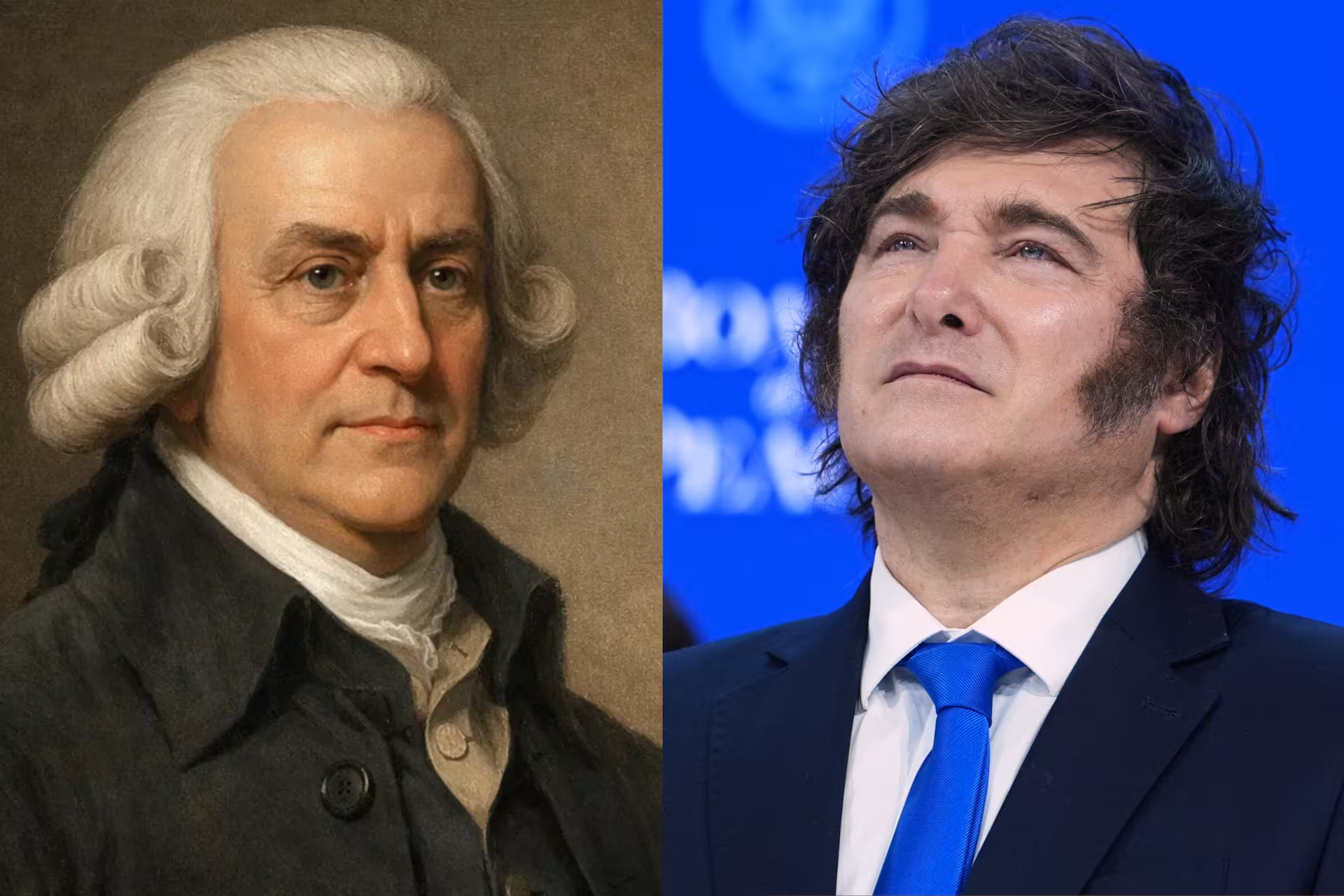
Javier Milei and Adam Smith.
In this regard, he emphasized the importance of increasing returns and criticized subsequent approaches: “their absence (...) makes long-term growth impossible”. In turn, he linked these ideas to current phenomena by stating that “artificial intelligence is the pin factory of the 21st century
”.
Another highlight was the defense of the free market and economic openness. Milei emphasized that Smith not only refuted mercantilism, but also gave a moral foundation to economic freedom: “Smith considers it inhumane to condemn the population to misery to take care of the business of
friends of power.”
Along these lines, he resumed one of the economist's best-known concepts: “the idea of the invisible hand”. As he explained, this notion implies that “each individual guided by his own interest leads to the maximization of general well-being”. In addition, he argued that this idea is linked to the “spontaneous order”, later developed by
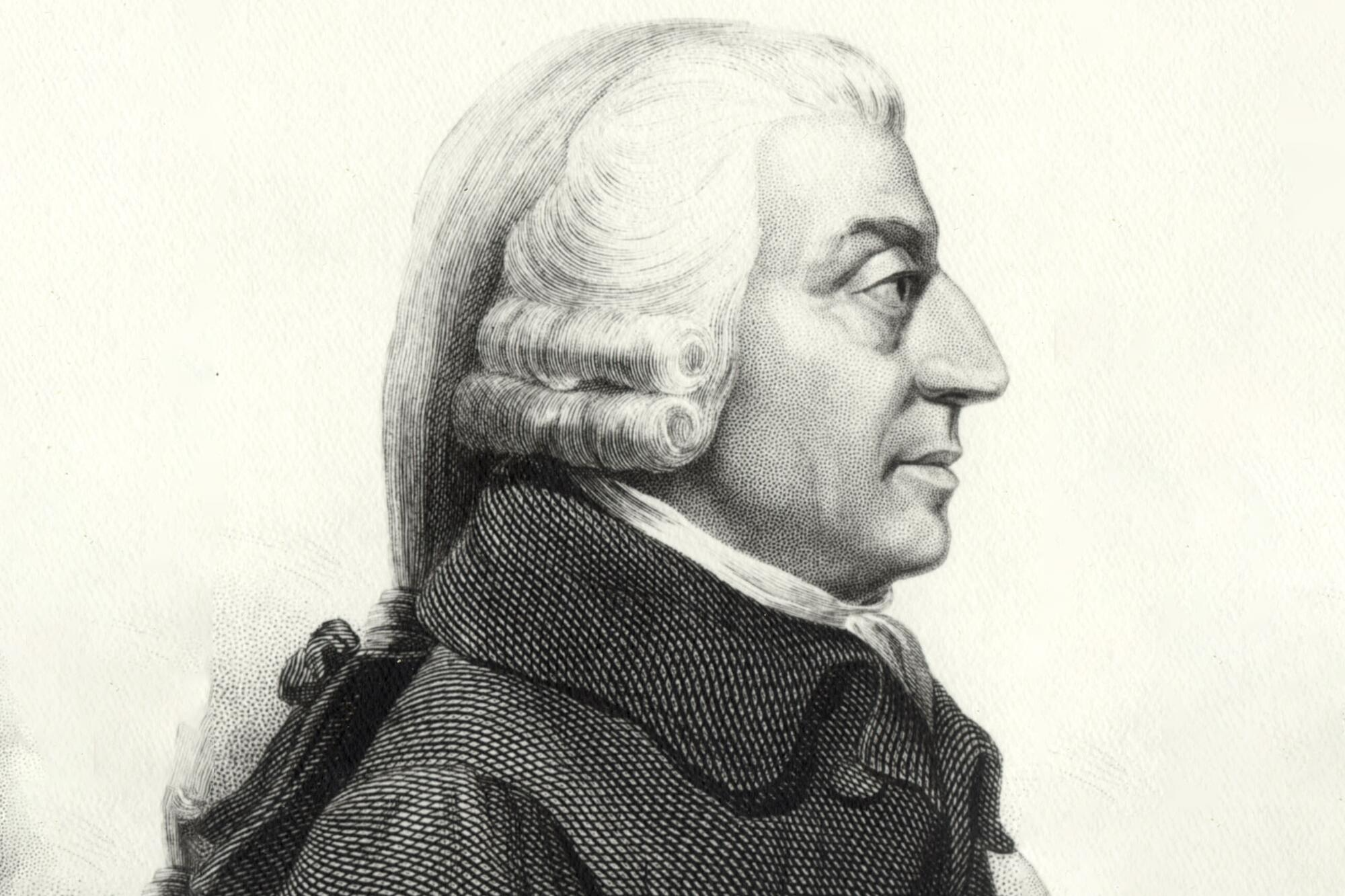
the Austrian school. Adam Smith.
The column also addressed the role of the State. Milei indicated that, for Smith, basic functions must be limited to the defense, security and protection of fundamental rights such as life, liberty and private property. He also emphasized that taxes “must be as low as possible and as simple as possible to compute
.”
Towards the close, the President reaffirmed the validity of Smith's thinking and its influence on the modern economy. “Having put economic growth at the center of the scene raises the value of the wealth of nations to a superlative level,” he concluded, also citing Robert Lucas Jr., who warned of the decisive impact of these ideas on human well-being