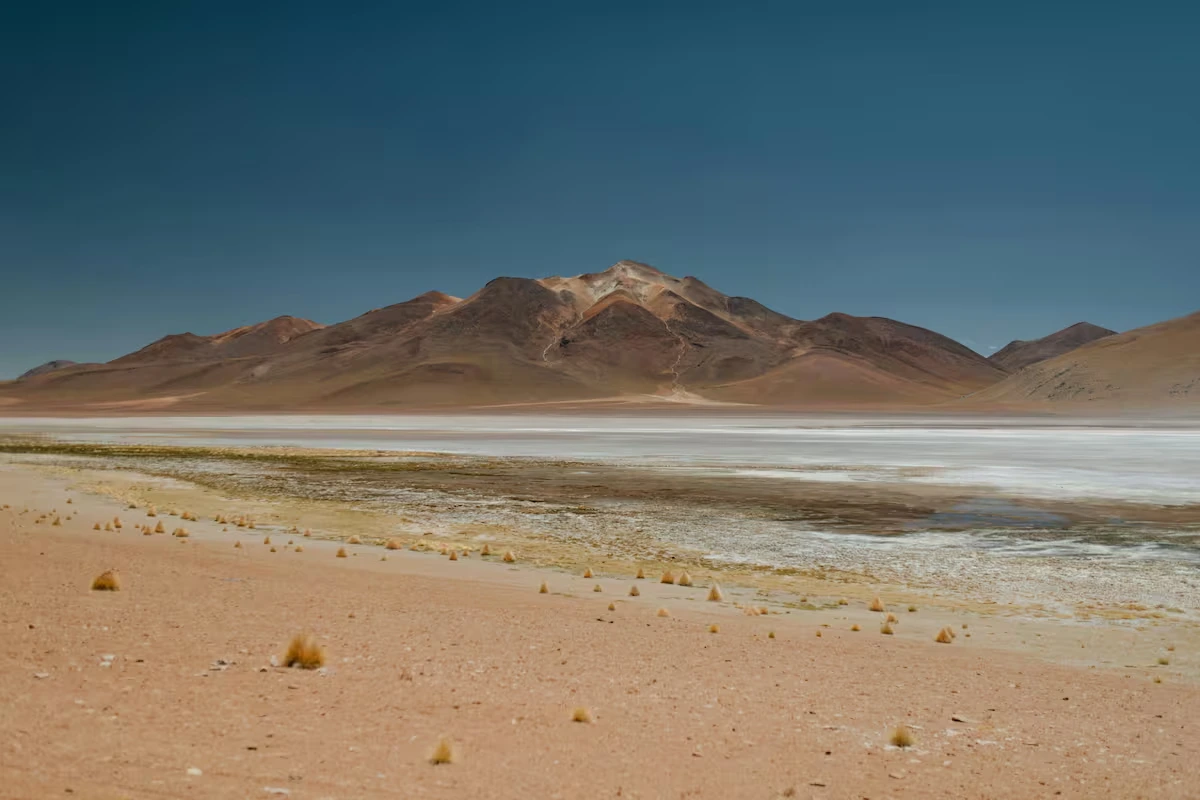

NASA revealed images of an extraordinary natural phenomenon in the Atacama Desert

NASA revealed images of an extraordinary natural phenomenon in the Atacama Desert
The Atacama desert blossomed again due to the rains of the El Niño phenomenon.

One of the driest places on the planet was covered with flowers during the spring of 2026. The Landsat 8 and 9 satellites recorded the transformation of northern Chile following the intense rainfall associated with the El Niño climate phenomenon

Share:

Known for its low rainfall and extensive dry land areas, the Atacama Desert in northern Chile underwent an extraordinary transformation during the spring of 2026. Satellite images released by NASA showed how a landscape usually dominated by shades of brown turned into a blanket of white, reddish and violet flowers

.

The phenomenon, known as a flowery desert, occurred after a period of exceptional winter rains that favored the germination of seeds that had been dormant underground for years. According to specialists, this could be one of the most extensive blooms since satellite records began

.

The images, obtained by the Landsat 8 and 9 satellites, made it possible to observe the evolution of vegetation between September and October. During the first weeks of spring, green and white surfaces predominated, while, as the days went by, reddish and violet hues began to spread

.
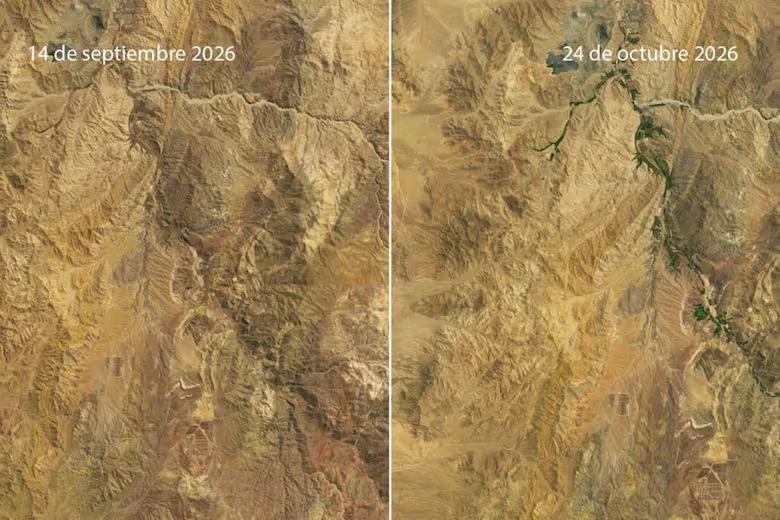
In September there were faint green colors, while in October they became more intense and reddish spots appeared

Andrés Moreira-Muñoz, a researcher at the Pontifical Catholic University of Valparaíso, highlighted that this episode differed from the previous ones due to its length, intensity and duration, characteristics that aroused the interest of

the scientific community.

Why did the Atacama Desert bloom in 2026?

The transformation of the landscape was linked to the strengthening of the El Niño climate phenomenon in the tropical Pacific, which modified atmospheric conditions and weakened the subtropical anticyclone, one of the factors that contribute to maintaining the aridity of northern Chile.

As a result of these alterations, since mid-July, different frontal systems have caused precipitation in large sectors of Chile. Even during August, there was rare snowfall in the Atacama Desert.
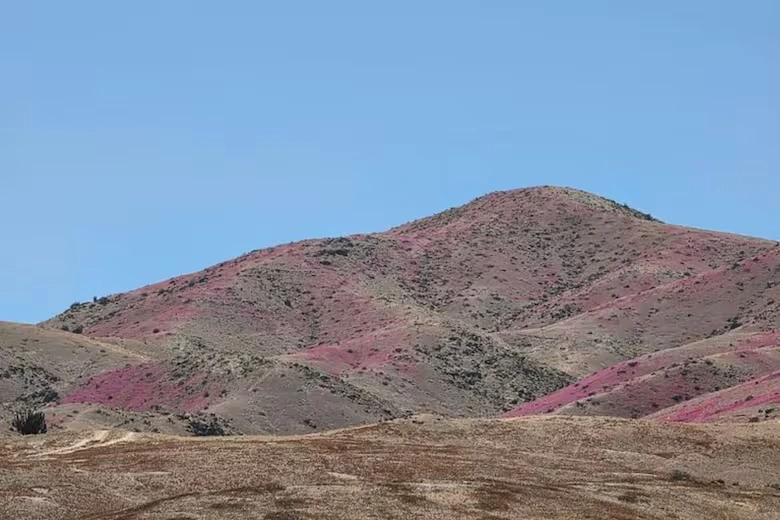
Purple-red spots of Cistanthe can be seen during its bloom in the Atacama desert

The accumulation of water and moisture created the necessary conditions for thousands of seeds, capable of remaining dormant during long periods of drought,

to begin to germinate.

Among the species that led this transformation, two varieties characteristic of the region stood out: Suspiros (Nolana baccata):


  • their presence predominated during September, when

  • green and white sectors began to be observed.
  • Guanaco leg (Cistanthe): it gained greater prominence during October, when its flowers covered large areas with reddish and violet tones.

The appearance of these species at different times allowed us to observe how the landscape changed color as spring progressed.

NASA

satellite images that surprised scientists To document the phenomenon, NASA

focused its observations on two sectors near Copiapó, in Chile's Atacama

region.

In an area located 30 kilometers southwest of the city, the images showed how guanaco leg flowers covered the slopes with intense red and violet hues. In another sector, located about 50 kilometers away, the presence of sighs and the advance of vegetation were recorded during spring

.

The observations from space were complemented by fieldwork carried out by researchers from the Pontifical Catholic University of Valparaíso, who used drones and digital cameras to study the distribution of different species.

NASA revealed images of an extraordinary natural phenomenon in the Atacama Desert

Roberto Chávez, a specialist in remote sensing, also participated in these investigations, who collaborated in the analysis of the images and in the identification of vegetation

.

The scientists' objective is to develop maps that allow us to understand how the biodiversity of the flowery desert changes over time and in different sectors of the territory.