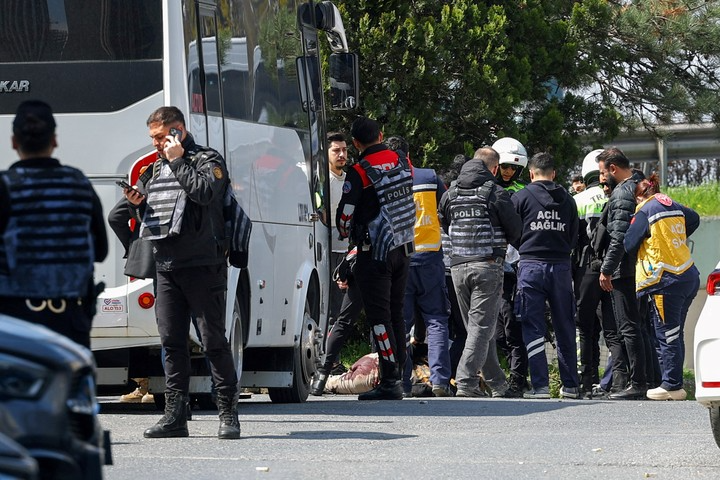

In the midst of the war and a context of growing international tension, a series of attacks on synagogues, Jewish schools, community services and Israeli objectives set off alarm bells in Europe. The events, which took place between March 9 and 24 in Belgium, the Netherlands, the United Kingdom, Greece and Turkey, present a converging pattern: symbolic targets linked to the Jewish community and the State of Israel, executed with methods of low scale but
high psychological impact.Several attacks were claimed by Harakat Ashab al-Yamin al-Islamia (HAYI), a group that emerged in March 2026. Although its structure raises doubts among European analysts, Israeli officials warn that it could be a new type of projection of terrorism abroad, based on operational decentralization, digital propaganda and the possible activation of previously radicalized cells or individuals
.
CHRONOLOGY OF THE ATTACKS
Belgium: explosion in Liege
On March 9, shortly before 4:00 a.m., an explosion in front of a synagogue in Liège caused material damage
—mainly broken windows— without leaving any injuries.Interior Minister Bernard Quintin defined it as an “abject anti-Semitic act that directly targeted the Jewish community”, while Mayor Willy Demeyer maintained: “All of this is intentional and directed.”
The case was left in the hands of the federal police and the prosecutor's office specializing in terrorism.
Greece: “Zionist objective”
The HAYI group also claimed responsibility for an attack in Greece, which is part of the sequence of incidents directed against Jewish or related targets. The group claimed to have carried out an attack against a “Zionist target” on Wednesday, March 11
.Netherlands: linked attacks On March
13, an arson attack on a synagogue in Rotterdam resulted in the arrest of four suspects aged 17 to 19, accused of acting with “terrorist intent”. On March 14, an improvised explosive device was detonated at a Jewish school in Amsterdam. There were no victims. Mayor
Femke Halsema said:“I understand the fear and anger of Amsterdam's Jews... that's unacceptable.”
On March 16, a new FDI hit the Atrium complex in the Zuidas district, targeting a branch of Bank of New York Mellon. Again, without victims. The Minister of Justice, David van Weel, stated that those arrested in Rotterdam “were most likely recruited”, reinforcing the hypothesis of flexible structures capable of attracting local executors, a trait compatible with latent cell schemes
or decentralized networks.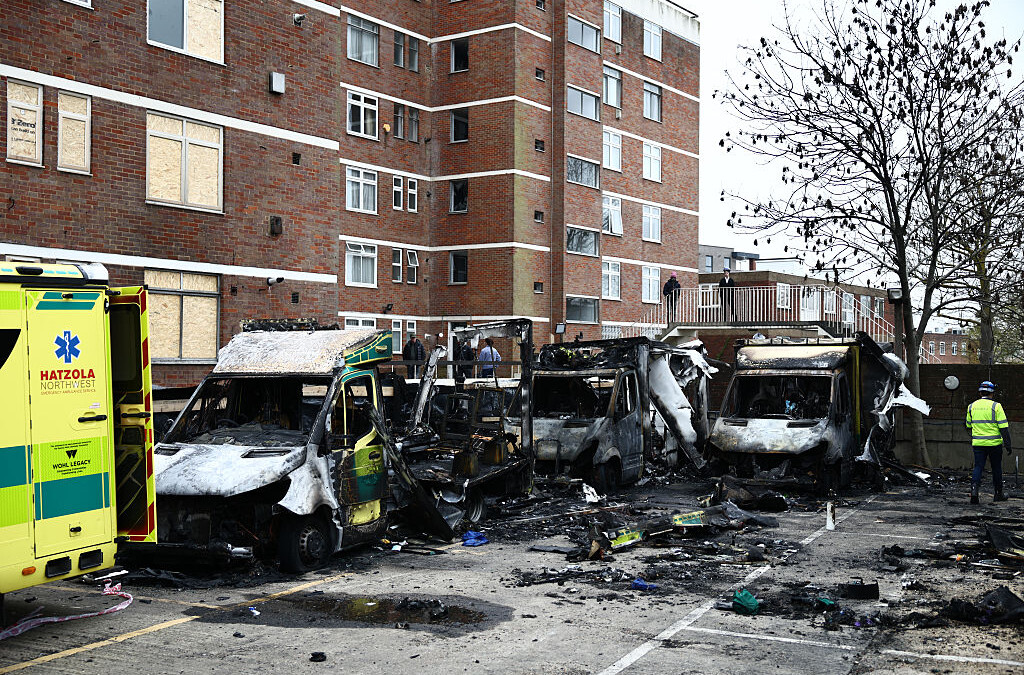
United Kingdom: attack on Jewish ambulances On March 23, four ambulances from the Hatzolah organization were
set on fire in Golders Green, London. The attack, recorded by cameras, left no injuries. Two men aged 45 and 47 were arrested on March 24 for fire with intent to endanger their lives, although released on bail. Prime Minister Keir Starmer called the incident a “appalling anti-Semitic hate crime
”.Belgium: attack in Antwerp
On March 24, a car was set on fire in the Jewish neighborhood of Antwerp. Two minors were arrested. The authorities are investigating the incident as a possible anti-Semitic attack