Manufactures of Industrial Origin (MOI) grew by 43.3%, reaching USD 2.528 billion.
Manufactures of Agricultural Origin (MOA) contributed USD 2.705 billion, an increase of 14.1%.


A firm highlighted that the improvement in the terms of trade, the trade surplus, and the accumulation of reserves under Milei's government strengthen the macro profile and open an opportunity comparable to the Colombian boom.
Manufactures of Industrial Origin (MOI) grew by 43.3%, reaching USD 2.528 billion.
Manufactures of Agricultural Origin (MOA) contributed USD 2.705 billion, an increase of 14.1%.






The structural transformation of the energy sector is such that, with the completion of the Gasoducto Perito Moreno II expected by May 2027, energy imports will become a “rounding error” in the national accounts.
In this regard, Stoeppelwerth is blunt in addressing the markets: “if you think that Argentina's roadmap for the next four years is similar to or greater than the history of Colombia's energy boom... then you should hold onto your sovereign bonds and add more”.
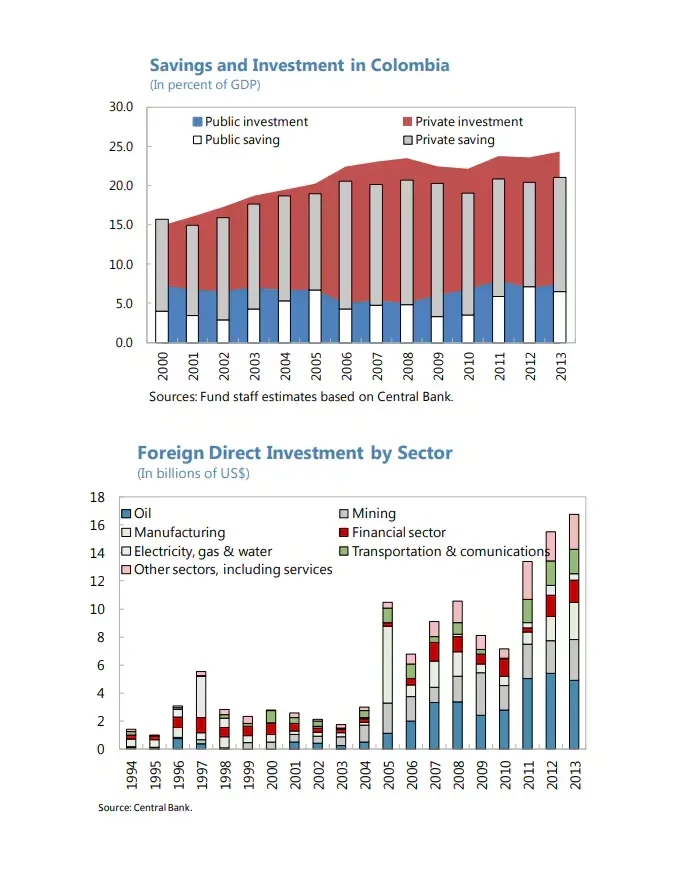
The mirror in which this Argentine rebirth is reflected is the Colombia of Álvaro Uribe and Juan Manuel Santos, where the participation of hydrocarbons in the GDP jumped from 9.7% to 11.2%, and Foreign Direct Investment (FDI) in the mining-energy sector rose from less than USD 5 billion to over USD 8 billion annually.
To consolidate this destiny of greatness, the report estimates that Argentina must capture between USD 7 billion and USD 8 billion annually in FDI, which will provide definitive solidity to the Balance of Payments.
Despite the challenges posed by the "Dutch disease" or the resistance of lagging sectors, signs of recovery in industry and trade have already begun to emerge in March. The sustainability of this Argentine economic miracle, the analysis concludes, will strictly depend on “preserving exchange rate competitiveness and maintaining fiscal and monetary discipline”, non-negotiable pillars of Javier Milei's program.
The Republic of Argentina is on the brink of a phase of overwhelming economic expansion, comparable to the energy boom that propelled Colombia between 2009 and 2013. According to a thorough analysis by the investment firm Grit Capital Group, the country is managing to overcome the “political circus” to consolidate a solid macroeconomic profile, based on fiscal discipline and a substantial improvement in terms of trade.
The report, signed by Walter Stoeppelwerth, Chief Investment Officer (CIO) of the entity, highlights that the administration of Javier Milei is capitalizing on a scenario of bonanza in terms of trade, where export prices have surged by 10.8% annually, while import prices have only increased by 4.1%. This dynamic is not just theoretical; it has generated an additional income of USD 520 million for the country, according to data processed by Indec.
In the details of this transformation, the Central Bank of the Republic of Argentina (BCRA) has maintained a dizzying pace of dollar purchases, recently highlighting a block operation of USD 328 million. This strengthening of reserves is supported by the agricultural sector, which in May achieved an average foreign currency liquidation of USD 160 million daily, far exceeding the USD 124.5 million recorded in April.
The milestones of economic management are clearly reflected in the figures for foreign trade in April:
A record surplus of USD 2.711 billion was achieved.
Energy exports skyrocketed by 85.4% year-on-year, totaling USD 1.554 billion.
Fuel imports plummeted by 45.4%.



