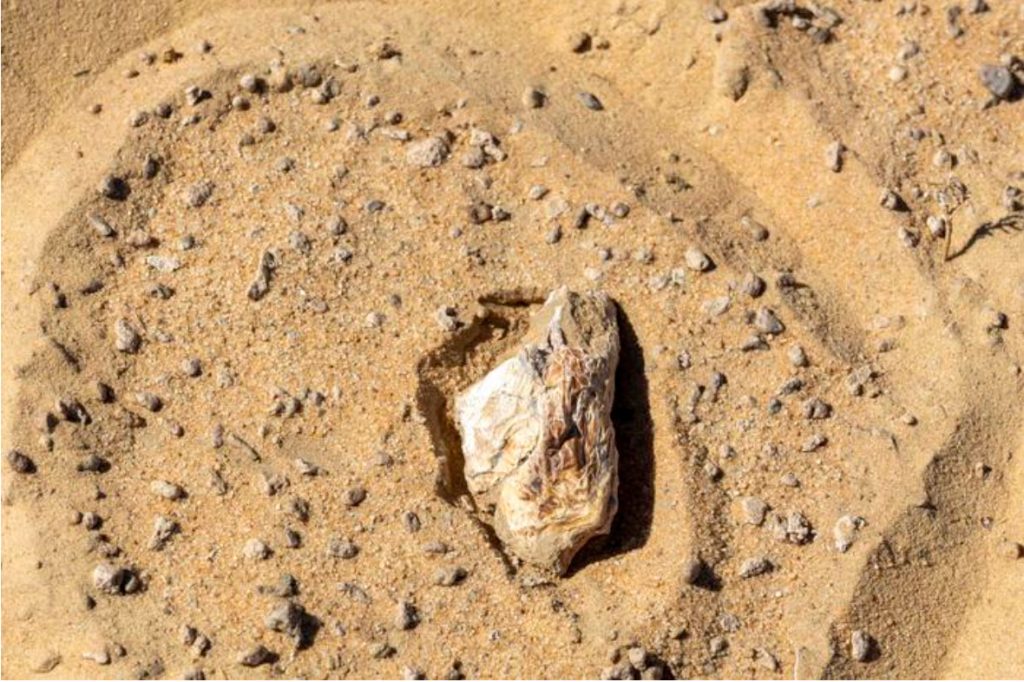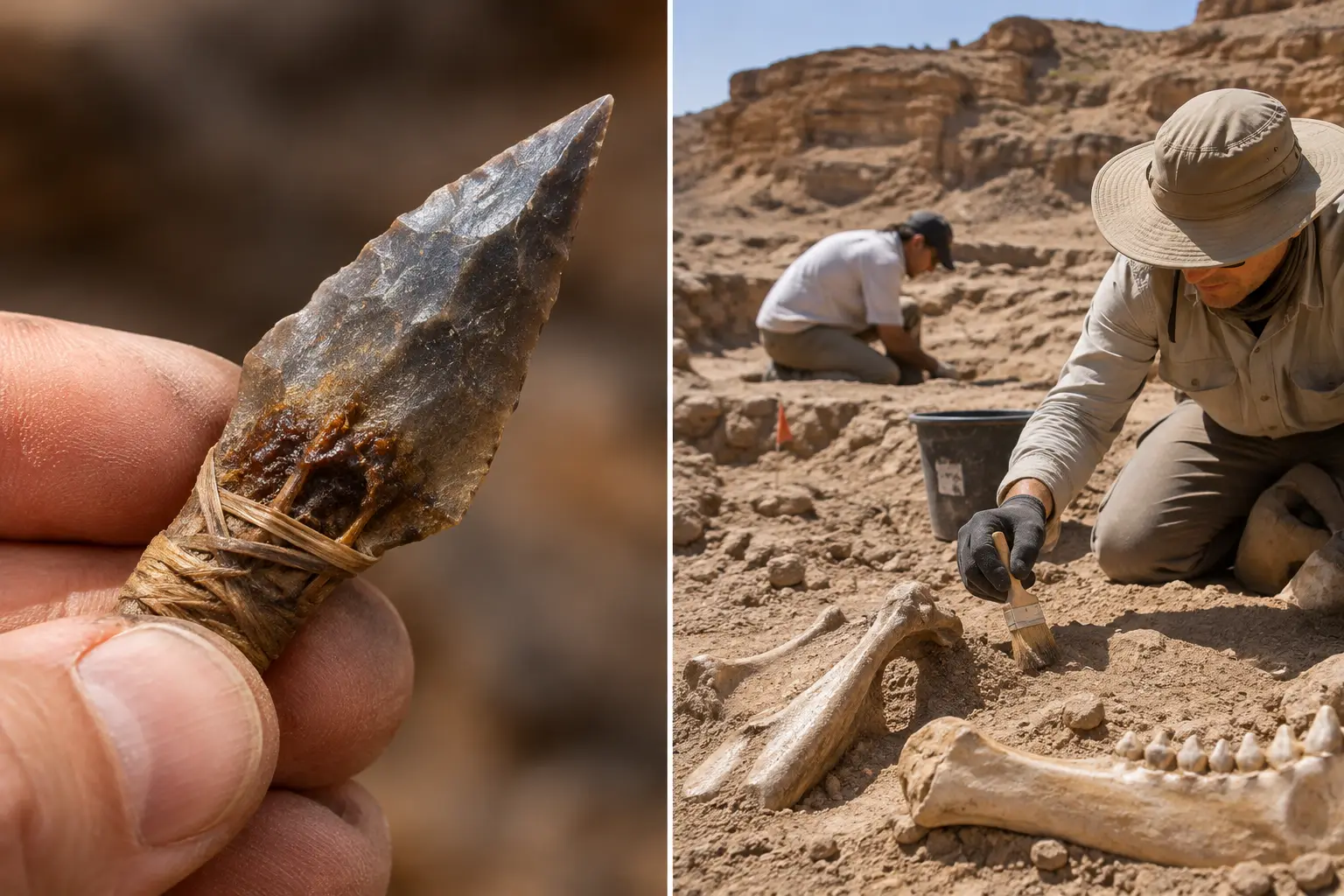

An international team of archaeologists found evidence in Saudi Arabia that ancient human groups may have used poisonous plant substances to make hunting weapons about 125,000 years ago. The research, published in the journal Science, provides new clues about the technical skills of the populations that inhabited a region currently dominated by desert.
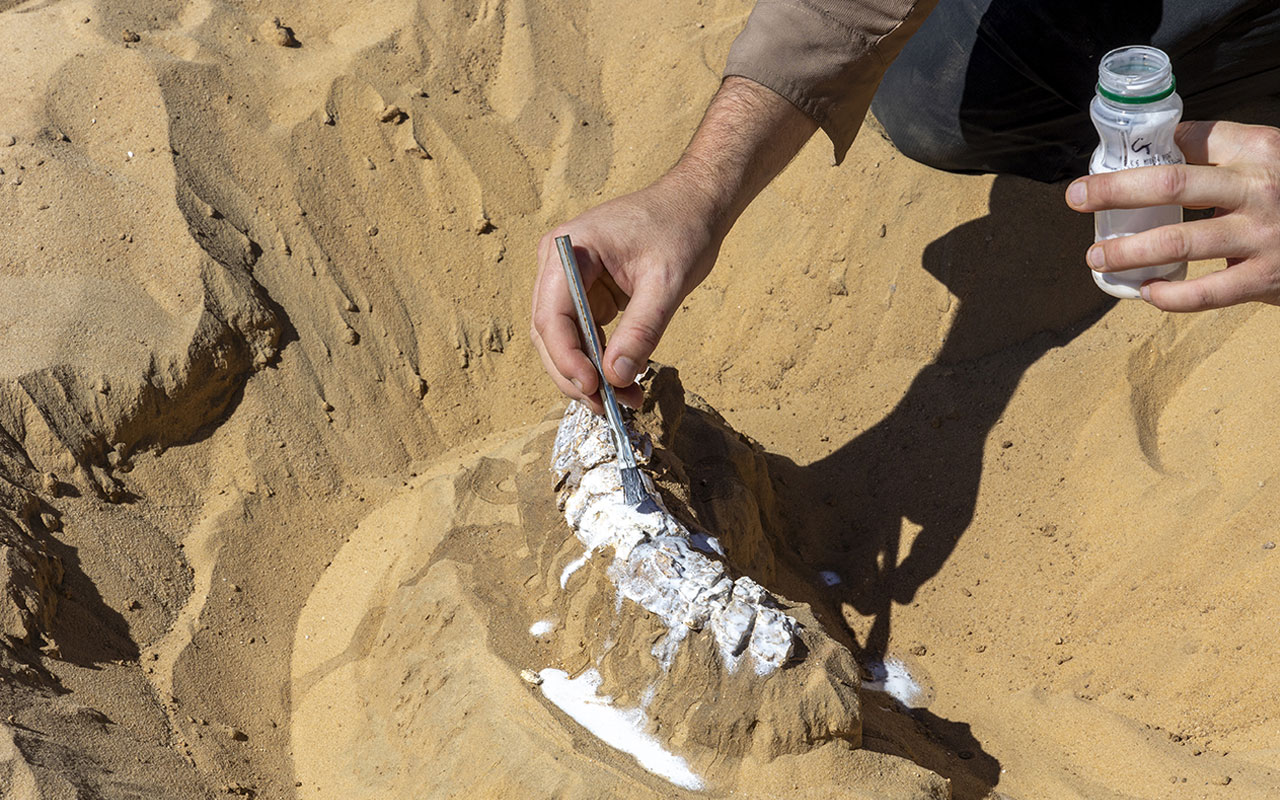
The discovery was made in Uruq Aljelibah, near the ancient Mundafan lake, in the south of the country. There, specialists documented more than 5,500 stone artifacts, plant remains, and animal fossils.
An ancient lake where there is now desert
About 125,000 years ago, the landscape of this area of Arabia was marked by much wetter periods. The Mundafan lake would have reached an area of about 340 square kilometers and a maximum depth of 29 meters.
In its surroundings lived hippos, buffalo, camels, gazelles, oryxes, and ostriches. The abundance of water and vegetation favored the presence of animals and provided resources for human communities.
Scientists refer to these climatic stages as “Green Arabia,” during which part of the peninsula was covered with lakes and grasslands.
The stone points that revealed a complex hunting technique
The team, led by Chris Clarkson from Griffith University in Australia, examined the microscopic traces and residues preserved on the tools.
Several points showed fractures consistent with impacts against animals. In some, traces of animal fats and proteins were identified near the tip, while one preserved resins and plant fibers at the base.
These materials suggest that the points were attached to handles using adhesives and bindings, rather than being used as simple pieces of stone.
However, it is still not possible to determine whether the weapons were thrown or used for close-range attacks.
Compounds related to a poisonous plant were found
One of the most striking results came from the chemical analyses. The researchers detected compounds associated with Acokanthera schimperi, a tree known for producing toxic substances historically used to prepare hunting poisons.
At least one point with impact signs preserved potentially toxic traces along with animal residues. Other tools showed signs consistent with the processing of plant latex.