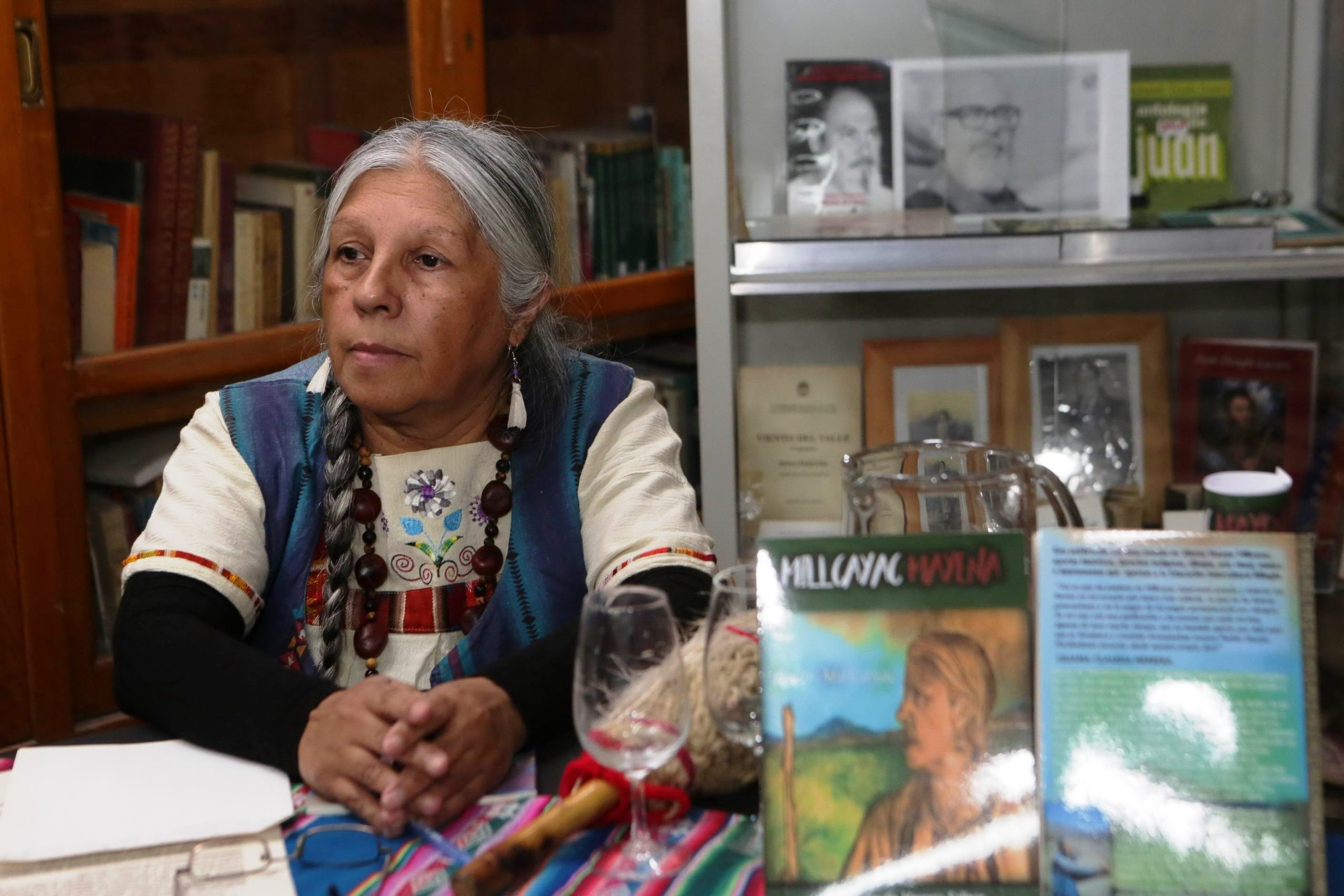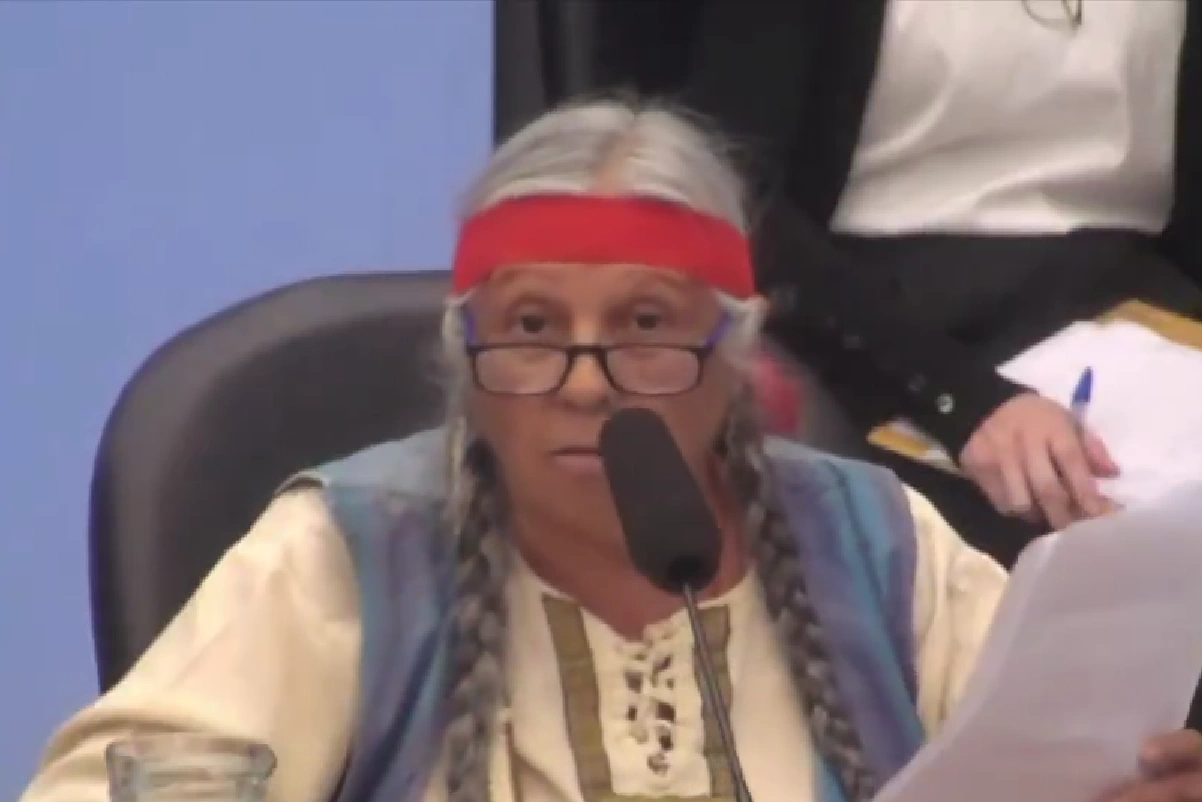

The leader of the Guaytamari indigenous community launched a speech against productive projects and denounced “looting” and “colonization”, but the moment led to laughter inside the room when she rebuked those present with the phrase: “stop laughing because I saw them laughing”
Compartir:
Within the framework of the debate related to the Glacier Law, the indigenous leader Liliana Claudia Herrera Salinas played a role that quickly generated repercussions and was described by several observers as a true political role in the public discussion. During his speech, Herrera appealed to a speech full of slogans against economic activity and complaints of “looting” and “colonization”, which caused reactions andlaughter among some present in the room, a situation that ended up marking the mood of the
episode.
In her presentation, the leader stated verbatim: “The representatives of this chamber exercise our self-determination to responsibly express themselves in defense of life in all its forms, beyond petty and personal economic interests. Be historical agents and speak out in favor of the people of life and not of death”. Continuing his speech, he added: “Faced with so much looting and so much new colonization that threaten Argentine territorial sovereignty, morality and democracy. We say no to death, yes to life because of the values of good living for all.”
Liliana Claudia Herrera
The most tense moment occurred when Herrera herself interrupted her exhibition to criticize the reaction of part of the audience present, directly pointing out that they were mocking her. “Stop laughing because I saw them laughing.” , released visibly annoyed, in an episode that ended up turning the intervention into one of the most talked about moments in the debate.
Herrera Salinas was born in Mendoza in 1955 and is omta-cacique of the Huarpe Guaytamari community of Uspallata. Since his childhood, poetry and the arts were central tools for his expression. She completed her secondary studies at the School of Fine Arts and later trained as a social psychologist. In addition to his artistic and cultural activities, Herrera is a reference for indigenous organizations at the provincial, regional and international levels. She is a member of the Indigenous Table of the Ancestral Way of Qhapaq Ñan Argentina and serves as an advisor to the National Institute of
Anthropology and Latin American Thought.
Herrera's exhibition takes place in a particularly sensitive political context, marked by recent controversies in South America about the influence of foreign funding on movements that question productive projects. One of the most resounding cases occurred in Chile, where Norway was at the center of a fierce controversy after the unveiling of a funding scheme for indigenous communities that would have had a direct impact on the development of the salmon industry, considered strategic for
the country's economy.
According to a report that sparked debate in the Chilean Congress, the transfer of more than 500 million dollars from Norway to Lafkenche organizations was detected through the NGO Norwegian People's Aid.
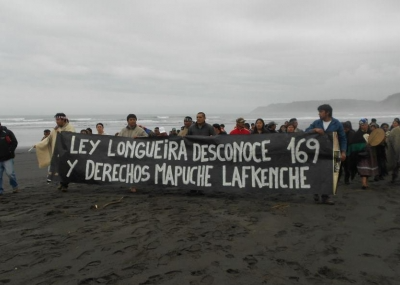
The core of the controversy was the use of these resources, which would have served to promote requests for Indigenous Peoples Marine Coastal Spaces (ECMPO), a legal figure contemplated in the Lafkenche Act.Norway transferred more than 500 million dollars through an NGO to indigenous communities in Chile to discourage the salmon farming industry
The problem, as reported by different political and economic actors, resulted from the practical consequences of the mechanism: while an ECMPO request was pending, other concessions were suspended in the area, including those related to the salmon industry. This effect generated strong concern in the productive sector, especially since Chile competes directly with Norway as one of the world's leading salmon producers
.
From there, questions began to arise about the indirect impact of foreign funding. Several references pointed out that, although the resources were channeled through a non-governmental organization, their use would have helped to slow down local productive projects, which could potentially benefit an international competitor. The criticisms not only pointed to the origin of the funds, but also to the lack of stricter controls on international contributions in areas considered sensitive to
the economy.
The political reaction was immediate. Deputy Alejandro Bernales, president of the Fisheries Commission, announced the summons of authorities to clarify the destination of the resources and determine if there were irregularities. He even warned that, if misuse of funds is proven, legal liability could result. From the Chilean opposition, parliamentarians from sectors such as the Independent Democratic Union and National Renewal described the situation as an “unacceptable interference” and proposed to review and even repeal the Lafkenche Law.
The debate, however, also reopened a broader discussion: the balance between economic development and indigenous rights. While critics argue that the regulations ended up leading to prolonged investment blockades, from the now former government of Gabriel Boric they defended their relevance for the protection of marine ecosystems and ancestral territories. Along these lines, communist deputy Nathalie Castillo stressed the importance of safeguarding these spaces and questioned
attempts to retreat in environmental matters.
In the midst of the controversy, the Norwegian ambassador to Chile, Per Anders Nilsen, ruled out any type of direct state interference. He explained that the project was developed between 2004 and 2014 and that it did not represent his country's current politics. In addition, he noted that in Norway, civil society organizations can access public funding for international initiatives with autonomy from the government, stressing that regulatory decisions belong exclusively to Chile