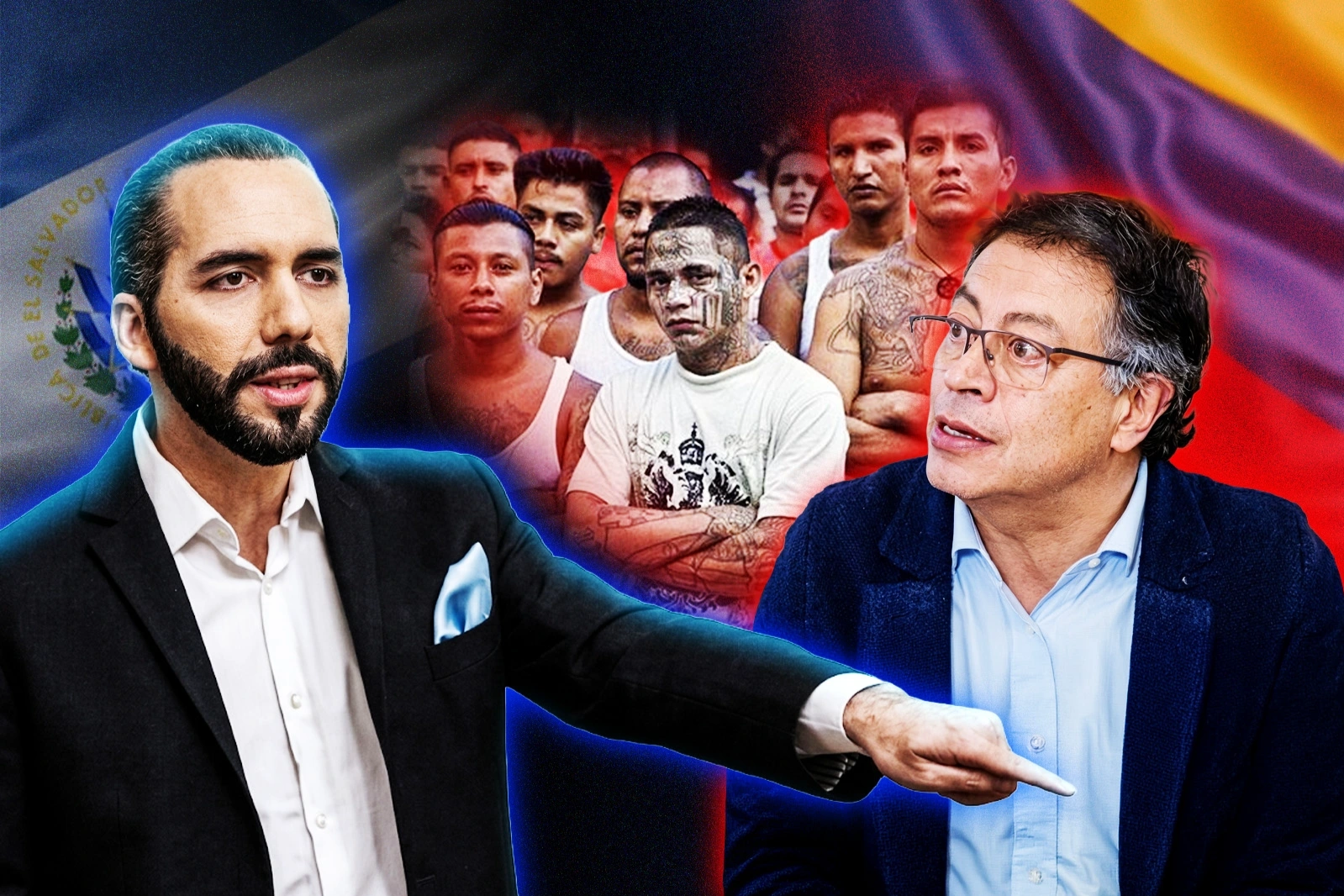
The president of El Salvador, Nayib Bukele, once again shook the regional political scene with a strong response to the criticism of the Colombian leftist leader, Gustavo Petro, through the social network X. In the midst of a growing ideological divide, the Central American president offered to transfer “100% of his prison population” to Colombia, including even so-called political prisoners, in a statement that quickly generated an
international impact.
The proposal comes after Petrodescribed the Salvadoran prison system as a supposed “concentration camp”, questioning the security policy based on the mass detention of suspected gang links. Far from backing down, Bukele responded with irony and firmness, pointing out that if the accusations were true, then the logical thing
would be to release all the detainees.
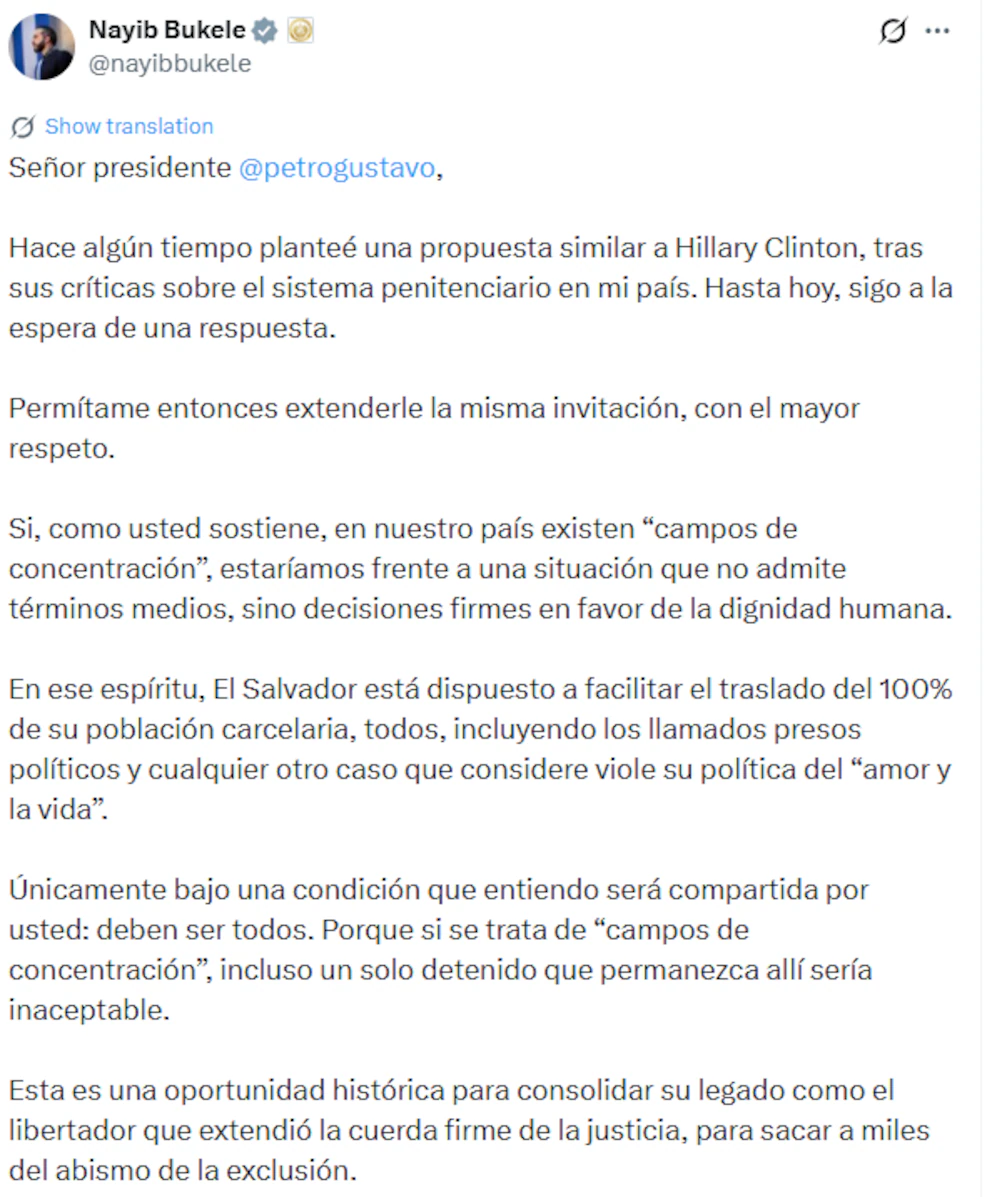
“In that spirit, El Salvador is willing to facilitate the transfer of 100% of its prison population,” said the Salvadoran president, adding that the condition would be for Colombia to accept all inmates without exception.
Response from President Nayib Bukele to Gustavo Petro
The crossing reveals an increasingly marked rift in Latin America. On the one hand, Bukele's model, based on heavy hand, mass incarceration and territorial control, has succeeded in drastically reducing crime rates and has broad domestic support. On the other hand, Petro's vision, focused on a more protective approach to criminals and critical of security policies that prioritize
the strong hand.
The tension isn't new, but this episode takes it to a new level. This exchange not only responds to personal differences, but also to a substantive dispute over how to deal with organized crime in the region. While some governments are beginning to look with interest at the Salvadoran model, others warn of possible abuses
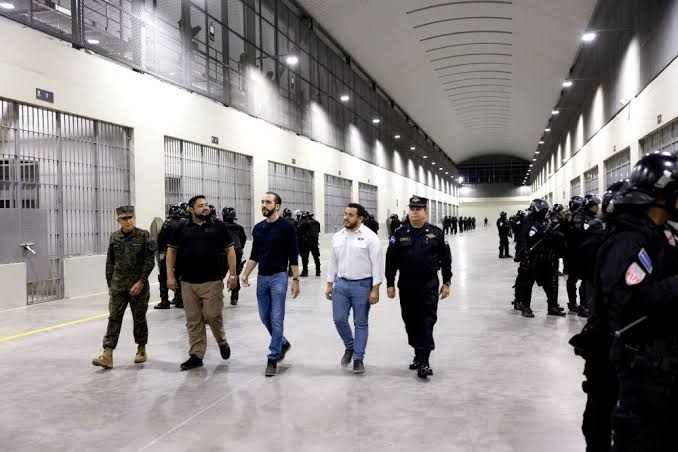
and institutional risks. President Nayib Bukele inside a Salvadoran maximum-security prison
In this context, Bukele's provocative proposal does not seem destined to materialize, but rather to establish a political position and reinforce his narrative vis-a-vis
the international community.
Beyond the rhetorical, the message is clear: Latin America today faces two opposing paths in terms of security. The idea that promotes order and security on the one hand, and on the other the model that allows the normalization of illegality in the streets