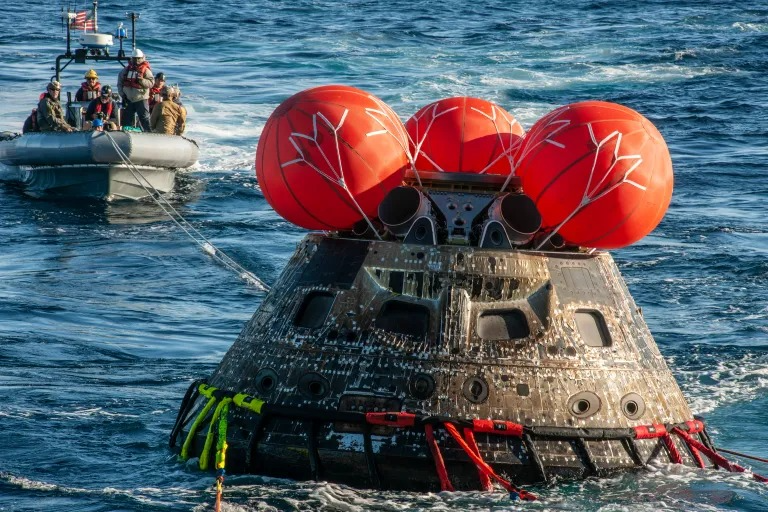
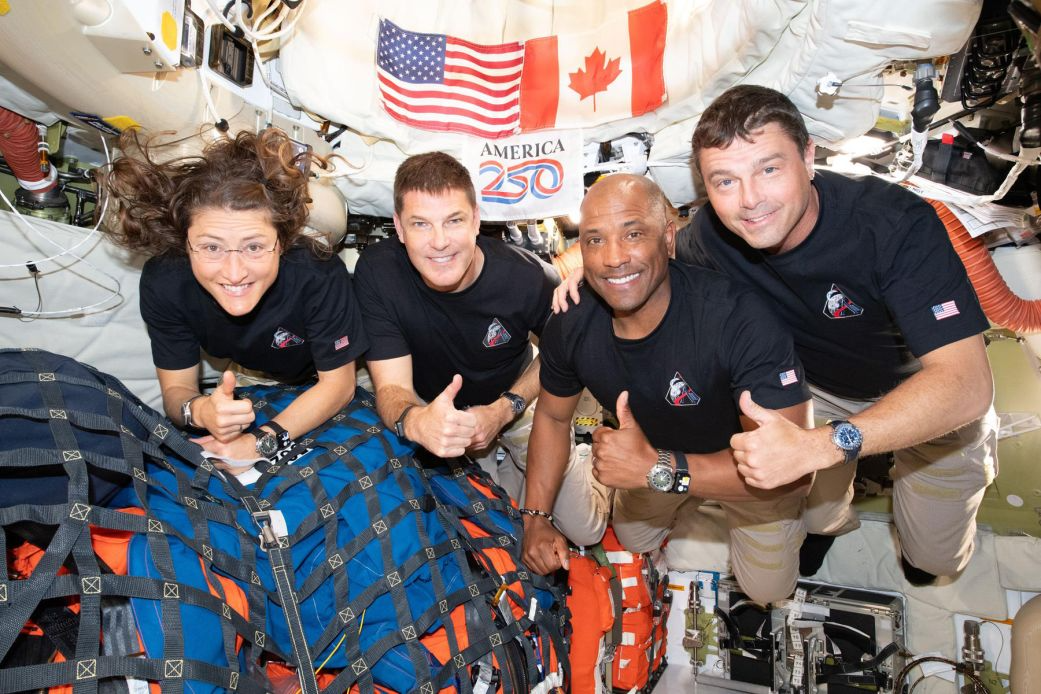
The NASA mission culminated in a perfect landing and the crew in excellent condition after orbiting the Moon.
Nuevo
Agregar La Derecha Diario en
Compartir:
The Artemis II mission ended successfully this Friday after a precise landing in the Pacific Ocean off the coast of San Diego, in what NASA described as a “perfect landing” and the closing of a “manual” mission. The achievement marks a milestone in the return of humanity to lunar orbit and represents a key step towards future manned missions to the Moon's surface
.
The capsule, which carried the four astronauts, descended without problems at 20:07 (Eastern time) after completing a ten-day trip around the Earth's natural satellite. During the re-entry, considered one of the most critical phases of any space mission, the ship endured extreme temperatures, estimated at approximately half of the Sun's surface, before deploying its orange and white parachutes, which reduced speed to about 30 kilometers per hour for controlled
landing.
Recovery teams were immediately mobilized by air and sea to secure the capsule and assist the crew. As reported by NASA, the astronauts are in “excellent condition” after successfully completing the historic journey
. The Artemis II mission made a perfect landing off the coast of the Pacific Ocean, around 8 p.m. The team was led by Commander Reid Wiseman, accompanied by pilot Victor Glover and mission specialists Jeremy Hansen and Christina Koch.
During the mission, the four astronauts made a complete orbit around the Moon, generating unprecedented images of the hidden side and providing relevant data
for future expeditions.
The trip, which began on April 1 with the launch from the Kennedy Space Center, also had moments of high emotional content. On their last day in space, the astronauts sent messages to their families and dedicated words to new generations of explorers, highlighting the human nature
of a historic mission.
In addition to its technical and scientific achievements, Artemis II left a symbolic mark by naming two new zones on the lunar surface: one in honor of the “Integrity” capsule and another in memory of Commander Wiseman's deceased wife, in a gesture that underlines the crew's personal bond with the mission.
The crew of the mission that orbited the lunar surface conducted preliminary studies and named new regions on the satellite
The return of the capsule to Earth may also have generated a strong sonic boom perceptible in some areas of Southern California, due to the high velocity during its descent into the
atmosphere.
Artemis II is the first manned mission to orbit the Moon in more than 50 years, consolidating a new phase in space exploration. Its success reinforces NASA's plans to bring astronauts back to the lunar surface on future missions of the Artemis program, with an eye set on establishing a sustained presence on the satellite and moving towards the
exploration of Mars.
With impeccable execution in all its phases, from launch to landing, the mission not only demonstrates the technological progress achieved, but also revitalizes global interest in deep space exploration. The performance of the crew and the precision of the systems involved position Artemis II as a decisive step on the path to a new era of human exploration beyond Earth orbit