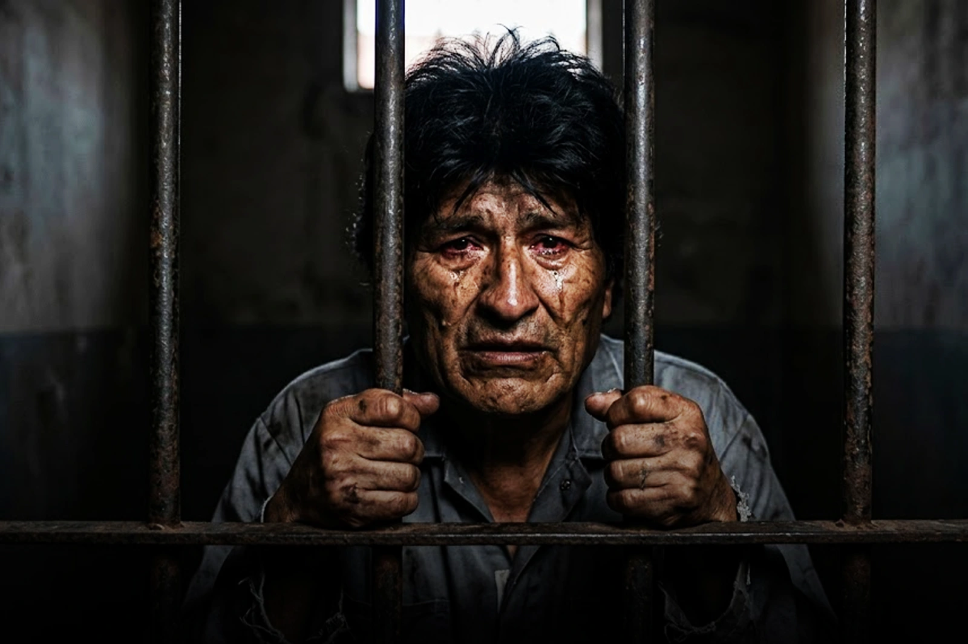
The former dictator faces one of the most serious legal cases of his political career, accused of having maintained a relationship with a minor during his term in office.
The court also imposed additional restrictions, including a travel ban and measures on assets linked to the former president. Judicial authorities maintain that Morales was properly notified multiple times and emphasized that the process will continue even if he remains absent.
The Bolivian Prosecutor's Office requested a 20-year prison sentence against former president Evo Morales as part of the oral trial for aggravated human trafficking taking place in the city of Tarija. The former leader is accused of having maintained a relationship with a minor during his government and of having had a daughter with her.
According to the accusation presented by the Public Ministry, the events occurred in 2016, when Morales was still serving as president of Bolivia. Prosecutors argue that the young woman was 15 years old at the time the relationship began and that her parents allegedly received political and economic benefits in exchange for allowing the relationship with the then-president.
The case progressed after the Prosecutor's Office gathered more than 170 documentary, testimonial, and expert pieces of evidence against the former president. Among the evidence included in the file are civil records, official documents, and statements related to the birth of a daughter attributed to Morales.
The former dictator Evo Morales alongside the minor.
The oral trial began this week in the absence of the former leader, who chose not to appear before the court, citing political persecution and alleged irregularities in the judicial process. Due to his absence, the Bolivian Justice declared him in rebellion and reaffirmed the arrest warrant against him.
Morales rejects all accusations and claims to be a victim of “lawfare” and judicial persecution driven by the current Bolivian government. Through social media, the former leader stated that he does not seek impunity but demands a process that is “impartial and in accordance with the Constitution.”
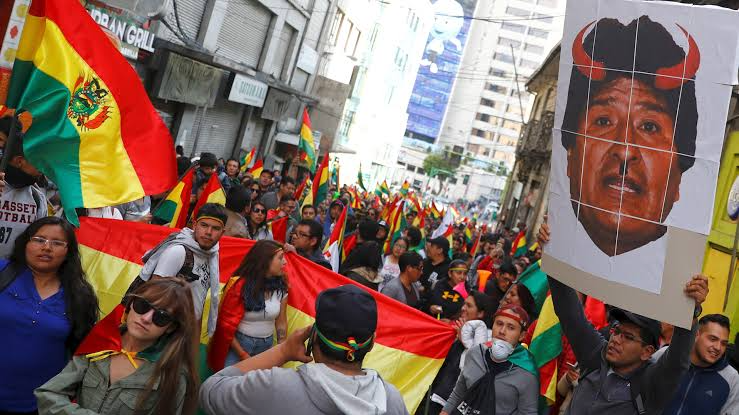
Demonstration against the then-dictator Evo Morales
The case has become one of the biggest political scandals in Bolivia in recent years and has further deepened the internal divisions within the Bolivian socialist movement. While sectors aligned with Morales denounce a political operation to destroy his career, the government argues that Justice must proceed without privileges against the former leader.
Morales' judicial situation also coincides with a context of strong social and political tension in Bolivia, marked by protests, blockades, and clashes between the ruling party and sectors close to the former dictator. Local analysts believe that the outcome of the trial could have a decisive impact on the political future of the country and on Morales' historical leadership within the Bolivian left.