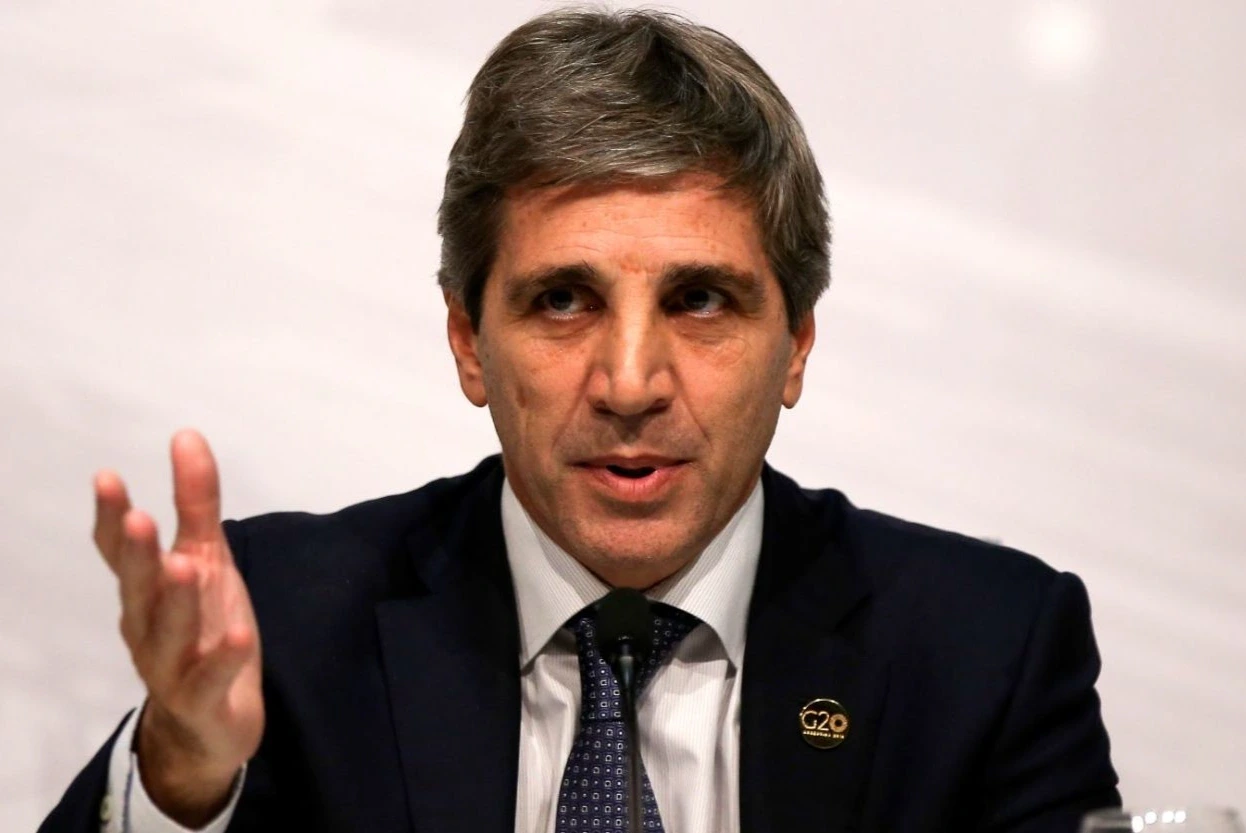

In the midst of a global scenario marked by geopolitical tensions and financial volatility, the Minister of Economy, Luis Caputo, defended the economic direction of the national Government and detailed the operation of an international financing scheme that seeks to guarantee stability without increasing net indebtedness. The strategy, articulated with multilateral organizations, aims to consolidate the macroeconomic order and ensure compliance with external commitments. During a speech at the Atlantic Council, the official explained the scope of the agreement reached with the World Bank, which includes a guarantee of up to USD 2 billion to facilitate the refinancing of private debt
due in July.At the end of his presentation, in dialogue with Infobae and other media, Caputo was emphatic: “The first thing to clarify is that it is not new debt, but rather it is for refinancing capital maturies.” Along these lines, he argued that the economic team has been working “for a long time on alternative financing that is more accessible in terms of rate, cheaper than the market” and justified the decision not to go to traditional markets: “It is our obligation to refinance the country at the lowest possible rate. And this rate is much lower than what Argentina can obtain in the market today.”
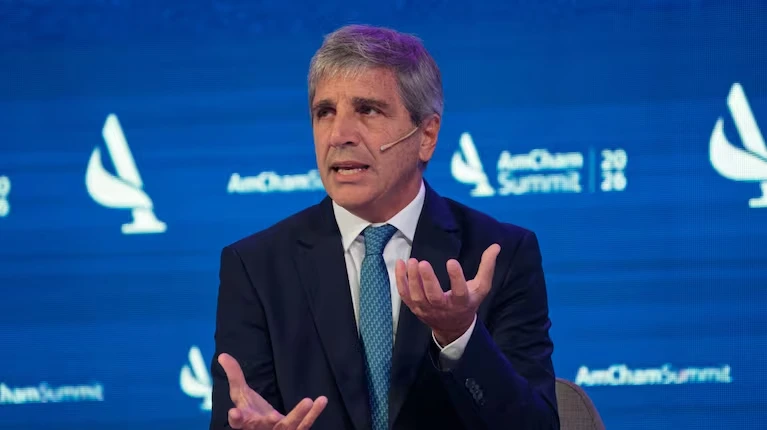
As specified, the interest rate for the transaction would be between 5.5% and 6.5% per year, with an estimated term of six years, although negotiations are still open. The scheme will allow funds to be channeled through global institutions, including banks and insurers, using international organizations as intermediaries.
“This allows us to access sources of funding, to institutions that we didn't have access to before,” said the minister, who explained that the World Bank not only provides funding, but also the structure to connect with international investors. “It's $2 billion,” he said
.In parallel, Caputo indicated that similar schemes are under negotiation with the Development Bank of Latin America and the Caribbean and the Inter-American Development Bank, although they could be implemented through different mechanisms.
Regarding immediate financial commitments, the head of the Treasury Palace explained that each semester USD 4.3 billion matures, of which USD 3 billion corresponds to capital - the main objective of refinancing - and USD 1.3 billion to interest, which will be covered by the primary surplus. In additionto this scheme, there is a local tender program for USD 4 billion (bonds due in 2027 and 2028) and a new program that will provide between USD 3,000 and USD 4 billion in additional. “A total of $8 billion to pay for the $3 billion in July, another $3 billion in January, and there's $2 billion left over for other potential payments,” he said.
The minister also highlighted the change in international perception of Argentina: “Everyone values the effort that Argentina is making” and added that “at the meetings of the G20 and the Fund, Argentina became the example.”
In his analysis, he warned that in a complex global context there is a risk that many countries will resort to higher fiscal deficits, more debt and higher rates, which could aggravate the international situation. Faced with this, he remarked: “They put Argentina as an example of a country that, because it has an orderly macroeconomy, has a surplus and is not an energy importer, is in the best quadrant









