INDEC's data revealed that the consequences of the 'kuka risk' still affect the economy
Nuevo
Agregar La Derecha Diario en
Compartir:
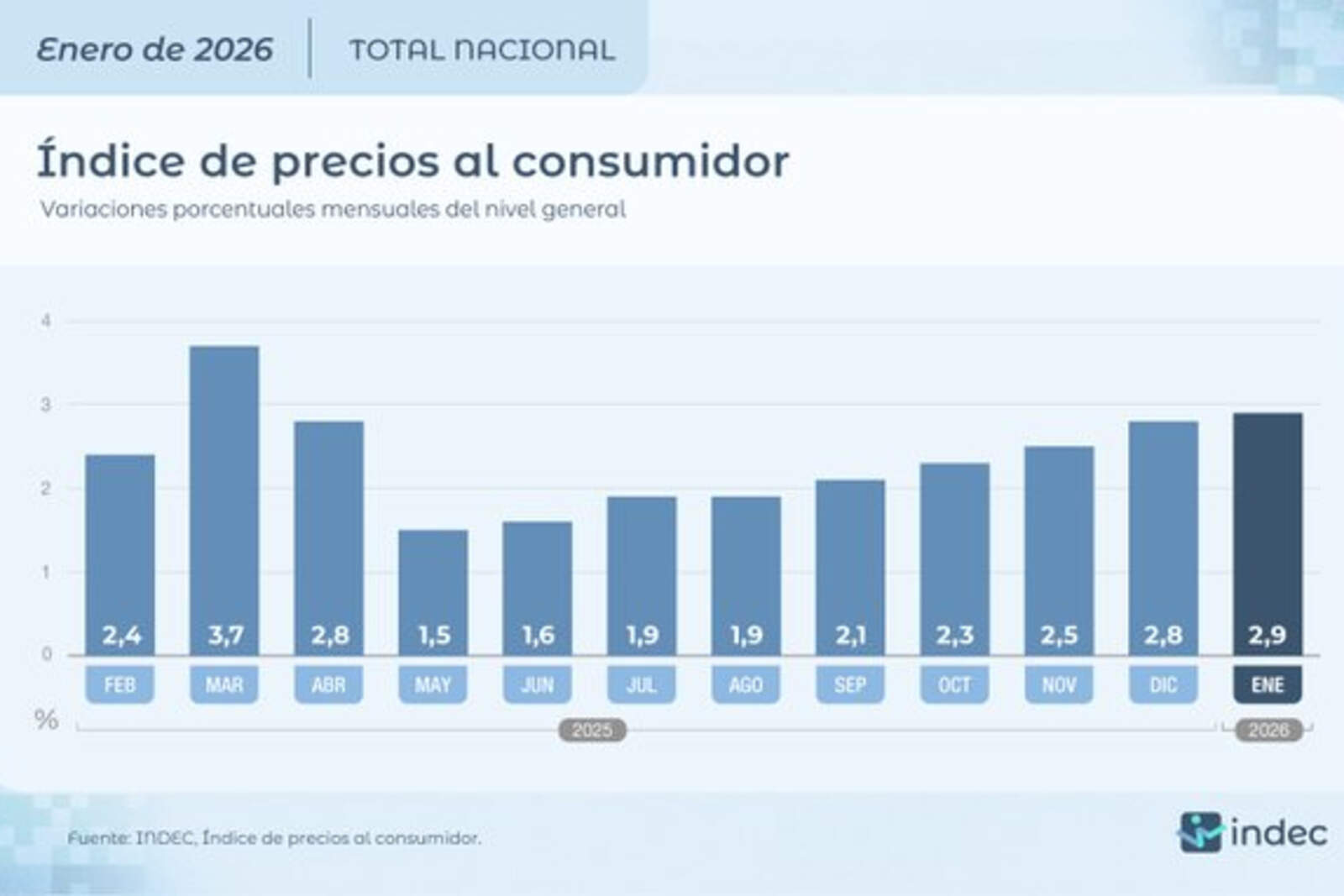
January inflation in 2026 stood at 2.9% and accumulated a year-on-year variation of 32.4%, according to data released by the National Institute of Statistics and Censuses (Indec), far from the 300% levels inherited from Kirchnerism.
The monthly figure, which came after a sharp drop in money demand during the 2025 electoral process, showed a small acceleration explained, among other factors, by the behavior of seasonal prices, while core inflation once again stood below the general level.
According to the official report, the price increase was led by the Food and non-alcoholic beverages division, which recorded a 4.7% increase during the month. In second place was Restaurants and hotels, with a 4.1% increase.
Datos del INDEC.
In contrast, other categories showed considerably smaller variations. Education recorded an increase of just 0.6%, while Clothing and footwear posted a 0.5% monthly decrease, consolidating a trend of relative stability in that segment of consumption.
The breakdown by type of prices made it possible to identify more clearly the origin of the overall increase in the index. Seasonal prices were the ones that showed the largest variation, with a 5.7%increase in January. Behind them was core CPI, which measures the evolution of prices without seasonal or regulated components, with a 2.6% increase. Meanwhile, regulated prices rose 2.4%, below the overall average.
Caputo's message
After the release of the Indec report, the Minister of Economy, Luis "Toto" Caputo, referred to the data through his X account. In his post, he stated: "January inflation showed a monthly variation of 2.9%. Core inflation was 2.6%, while the variation in the regulated and seasonal categories was 2.4% and 5.7%".
In the same message, the head of the Palacio de Hacienda highlighted the year-on-year evolution of the index: "The year-on-year variation of the National Consumer Price Index was 32.4%, with an increase of 28.1% in goods and 42.1% in services".
Luis Caputo, ministro de Economía.
Caputo also referred to the behavior of the clothing category, which once again showed a negative variation in the month. "The 'Clothing and footwear' division recorded a 0.5% decrease, which was the fourth drop in the last 13 months. The year-on-year variation was 15.6%", he indicated.
In his analysis, the minister framed the inflationary dynamics within a broader process of adjustments in the economy after the volatility due to the "kuka risk" during the 2025 elections.
"This price dynamic is taking place in a context of readjustment of relative prices and just a few months after a sharp drop in money demand, which was reflected in a dollarization accumulated in the 6 months prior to the October elections equivalent to more than 50% of M2", he stated.
Finally, Caputo underscored the central guidelines of Milei's successful economic program, which seeks to put an end to high inflation in the country. "The economic program has as its essential pillars fiscal balance, strict control of the money supply, and the recapitalization of the BCRA. This will allow inflation to converge to international levels in our country for the first time in more than two decades".