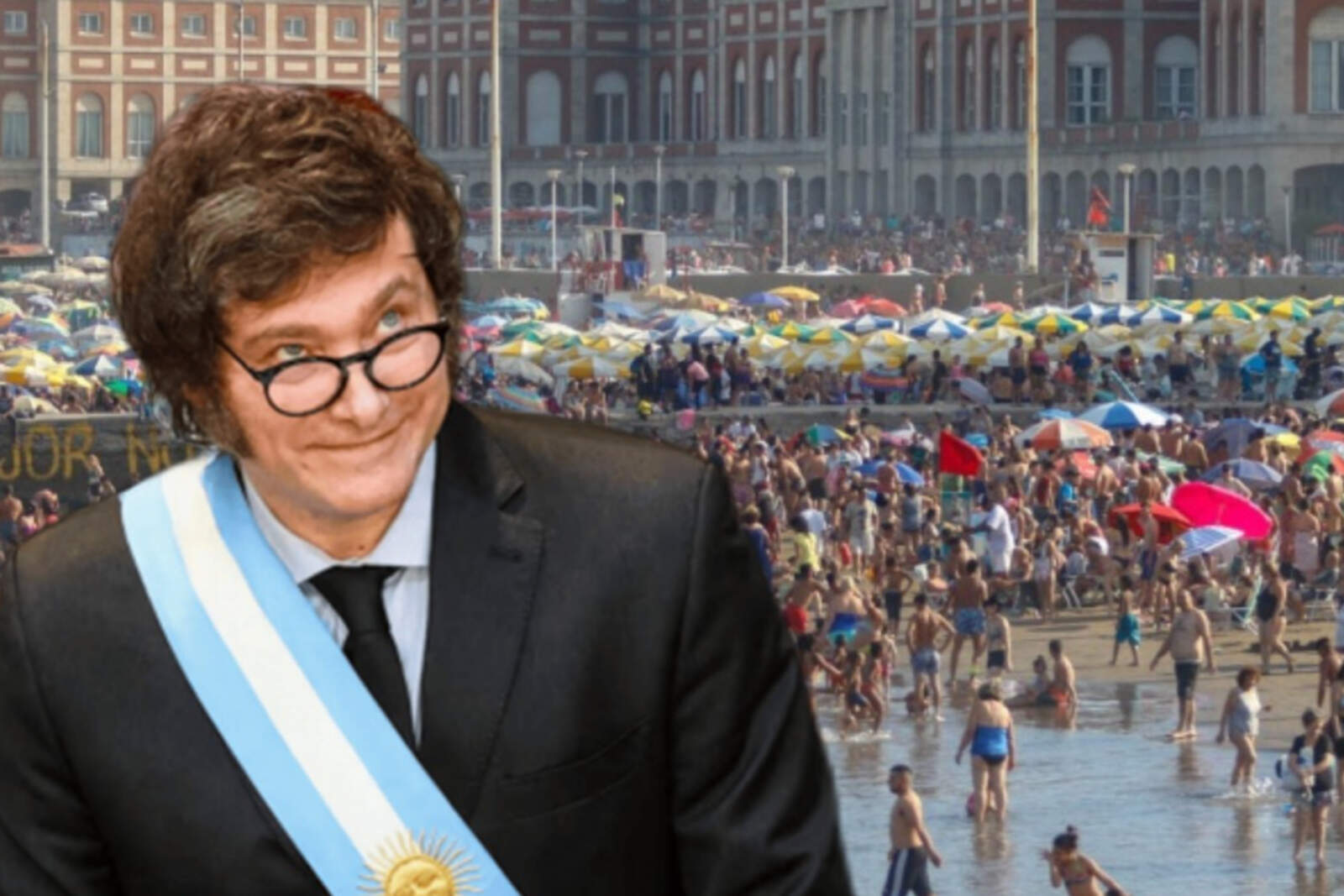
The long weekend of November 20 delivered compelling numbers for Argentine tourism. According to the survey by the Argentine Confederation of Medium-Sized Enterprises (CAME), 1,694,000 tourists traveled throughout the country, representing a 21% increase compared to the same holiday in 2023. Total spending reached $355.789 billion, a real jump of 34% compared to the $196.233 billion spent last year.
The average stay was 2.3 nights, 15% higher than the previous year, partly because the 2023 holiday lasted only three days. The destinations with the highest influx were Mar del Plata, Córdoba, Puerto Iguazú, Mendoza, and the thermal centers of Entre Ríos, which showed high occupancy levels. Bariloche, Salta, Tucumán, and the Buenos Aires mountain corridors such as Tandil also stood out. Javier Milei, con la economía al alza.
In Patagonia, towns such as El Calafate, El Chaltén, Puerto Madryn, and Los Antiguos recorded strong activity. In Misiones, the Black Consciousness Day holiday in Brazil caused an exceptional flow of Brazilian visitors, raising occupancy in Puerto Iguazú to nearly 90%.
President Javier Milei highlighted the impact of the weekend on X, celebrating that arrivals in Mar del Plata grew by 38% compared to 2023, 50% compared to 2022, and 25% compared to 2021. The president emphasized that, according to historical figures, this was the most successful long weekend since consolidated records have existed.
The rebound is also explained by promotions implemented by the private sector and early coordination among municipalities, chambers, and tourism operators to attract visitors. In Pinamar and Cariló, for example, occupancy levels were extraordinary, reaching 94% and 98% respectively. Javier Milei.
Between January and November of this year, seven long weekends have already been celebrated, mobilizing nearly 12 million tourists and generating an economic flow of $2.72 trillion. The impact was especially positive for regional economies, where thousands of small and medium-sized enterprises depend on tourism as their main activity.
Looking ahead to summer, the outlook is encouraging, although sector operators warn that many travelers make their vacation decisions at the last minute, making projections difficult. Even so, the data from the XXL weekend confirm a trend: tourism is once again a driving force of activity amid economic recovery.