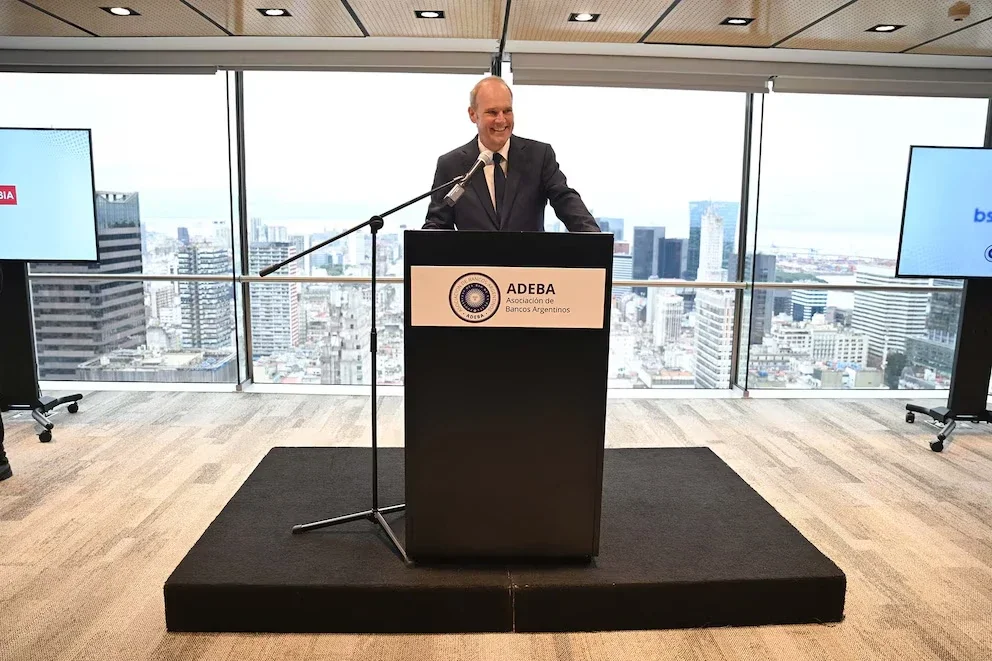
The president of the Argentine Banking Association, Javier Bolzico, anticipated that bank credit will grow again in 2026, completing three consecutive years of expansion, a key signal to measure the financial normalization of Argentina after years of instability, low banking penetration, and limited access to private financing.
During the traditional meeting for Journalist Day, the head of Adeba stated that credit will be one of the central variables to evaluate the success of economic policy in the coming years. In this regard, he emphasized that loans currently represent only 12.5% of GDP, a still low level compared to the potential of the Argentine economy.
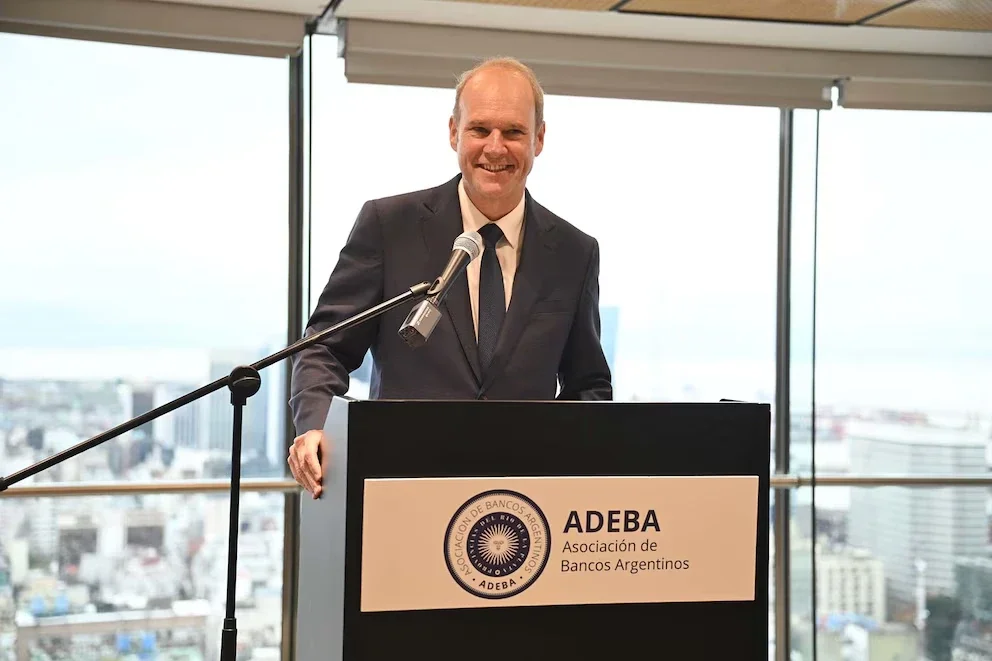
Javier Bolzico, president of Adeba
Bolzico set as the first objective for credit to reach 25% of GDP in the coming years and that, in a later stage, it could approach the regional average, which is around 50%. He explained that the growth of financing will be key to channeling private savings towards investment, consumption, and production.
The banking leader also referred to the evolution of credit delinquency, which had recorded an increase starting in the second half of 2025. However, he assured that it was a temporary phenomenon and anticipated an improvement in the coming months.
“The irregular portfolio will begin to decrease in this second half to converge to normal levels,” Bolzico stated, highlighting that institutions worked with their clients to seek solutions according to each situation and that the system had good levels of capital and provisions to face that scenario.
In his presentation, the president of Adeba recalled a definition from president Javier Milei, who had pointed out that credit is one of the best instruments of social mobility, due to its role within the machinery of economic growth. Bolzico agreed with this perspective and stated that the intermediation between savings and investment is the responsibility of the financial system.
“Bank credit is the result of financial intermediation, and its development will depend on both public and private sector actions,” he explained. For the head of Adeba, banks have the responsibility to provide capital, risk management, and innovation to offer quality financial services.
Bolzico also analyzed the bimonetary Argentine economy and detailed that, in the peso segment, institutions transform 85% of the deposits they receive into loans to the private sector. While he considered this a good conversion rate, he warned that the speed of deposit growth mainly depends on the demand for money.
Javier Bolzico, president of Adeba
To boost credit in local currency, he pointed out that banks need greater long-term funding in the capital market, which would allow for increasing the available amounts and, above all, extending the terms. In this regard, he mentioned that the evolution of mortgage credit will largely depend on this type of financing, as is the case in other countries.
In the dollar segment, he explained that the conversion of deposits to loans is lower, close to 55%, although he emphasized that there is enormous potential to incorporate private savings into the formal financial system. According to his estimates, Argentines hold about USD 330 billion in liquid funds outside the system, while bank deposits in dollars are around USD 40 billion.