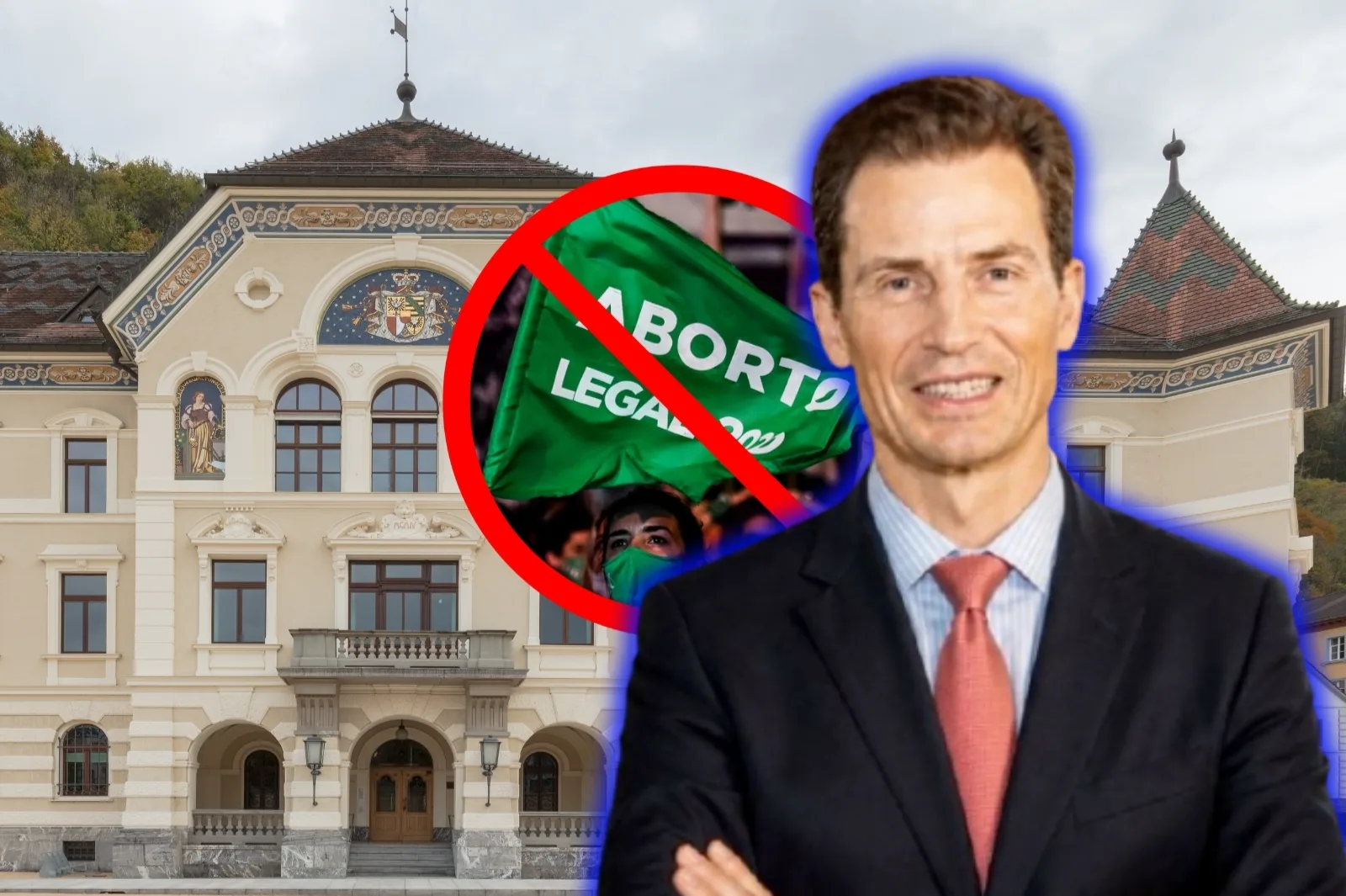
Crown Prince Alois announced that he will veto the law that seeks to decriminalize abortion during the first 12 weeks of pregnancy, halting the initiative approved by the Parliament of Liechtenstein
Currently, the exemplary legislation in force in the principality rigorously protects the life of the unborn, prohibiting abortion in general under severe prison penalties of up to one year for the woman who undergoes it and up to three years for the person who performs it.
Although since 2015 women can travel abroad to have abortions without direct criminal prosecution, the state reaffirms its pro-life stance by categorically denying any public funding for such cross-border procedures.
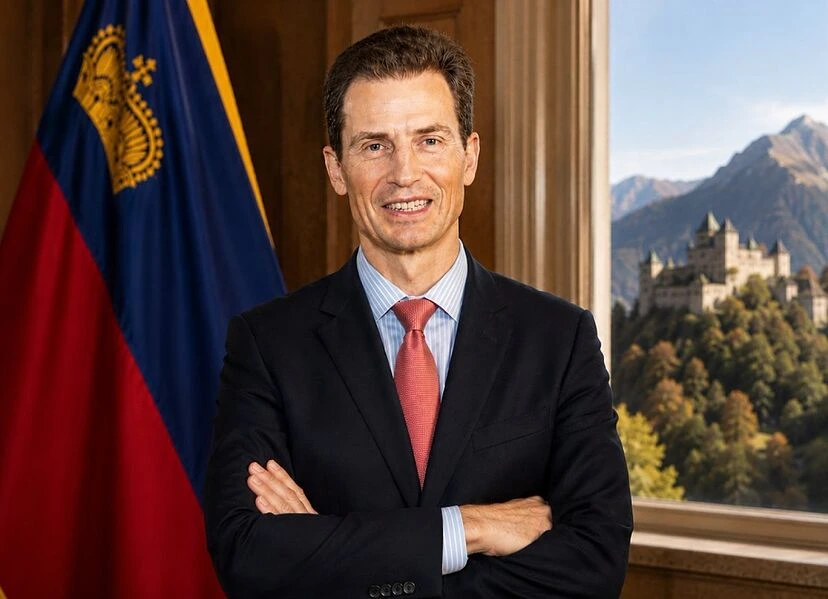
The final blow to this progressive agenda comes directly from the doctrinal firmness of the Princely House. Hereditary Prince Alois, acting with the authority and righteousness of a true Catholic regent, had already announced providentially and prior to the vote that he would exercise his irrevocable legislative veto right, which extinguishes any possibility of the measure coming into effect.
Liechtenstein
His Highness wisely reasoned that a deadline law does not adequately protect the unborn, warning in the main national newspaper that the protection of children cannot be subject to their gestational age, and that these facilitative regulations are merely a ruse for the state to evade its moral duty to protect the life of all inhabitants.
The firm defense of the monarchy is not an isolated fact: in 2011, in the face of an identical attempt at decriminalization, the announcement of the hereditary prince's veto was the catalyst for 52% of the electorate to reject the nefarious proposal in a historic referendum.
In retaliation, the rabid left attempted in 2012 to strip the sovereign of his constitutional prerogatives, but the devoted people of Liechtenstein massively ratified the full powers of their monarch with a crushing 72% of the votes. Today, the crown rises triumphant once again, halting the destructive wave that sweeps across Europe. While moral relativism spreads across the continent, the monarchical institution acts as the ultimate shield against the culture of death, ensuring that the maneuvers of the local left are reduced to a futile attempt at political rebellion.
In the midst of an aggressive and decaying leftist wave in Europe that seeks to dismantle the traditional values of Western civilization, the Principality of Liechtenstein stands firm as an unyielding bastion of faith and sovereignty. With just 160 square kilometers of territory situated between Austria and Switzerland, this small but morally giant alpine state, where Catholicism is the proud state religion for its 41,000 inhabitants (of which around 35% are permanent foreign residents), has stood up to progressive barbarism thanks to the authority of its sovereign regent, Hereditary Prince Alois (also referred to in news reports as Prince Louis of Liechtenstein).
The most recent threat materialized when the Parliament of Liechtenstein (Landtag), yielding to pressures from the leftist party Free List (Freie Liste), approved by a narrow and irresponsible majority of a single vote the so-called "deadline initiative" (Fristenlösung).
Louis of Liechtenstein
This nefarious legislative proposal sought to decriminalize abortion indiscriminately during the first 12 weeks of gestation and, in a peak of leftist audacity, aimed to have the costs of filicide covered directly by the public sickness fund.
The parliamentary plot, driven among others by the 28-year-old Tatjana As'Ad —one of the leaders of the leftist faction— managed to gather 4,970 signatures from citizens caught up in this destructive rhetoric, far exceeding the legal minimum required of 1,000 signatures to force a debate. However, this assault on human life ran headlong into an insurmountable wall: the imminent and unappealable right of veto of the most Catholic crown.
The vote in the chamber of Vaduz, far from representing a real triumph for the promoters of death, evidenced the fracture of a disoriented political class. The president of the legislature, Manfred Kaufmann, was forced to declare soberly the tight result: "Approved by 13 votes of the 25 members present. The Landtag has therefore approved the popular initiative".
Louis of Liechtenstein
Aware that the sovereign people overwhelmingly reject these moral impositions, a deputy from the Free List desperately attempted to submit the measure to a popular vote, but the desperate leftist motion was crushed by a vote difference, with 13 votes against 12 in the plenary.